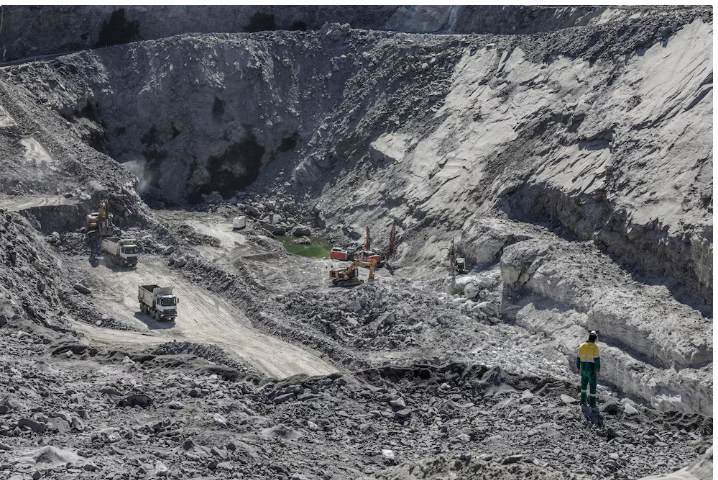
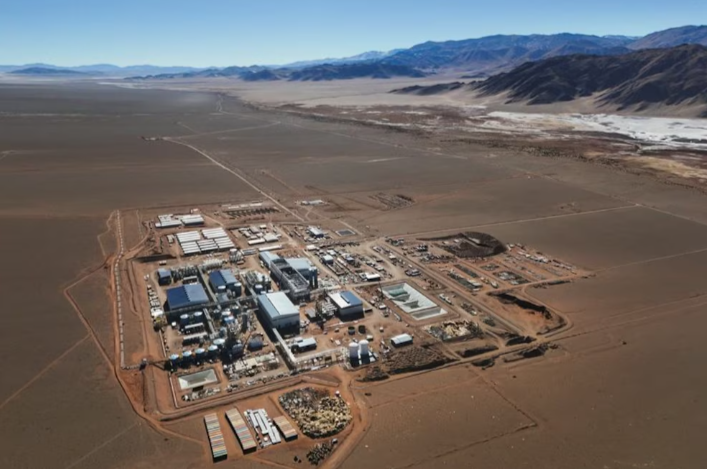
The expansion in the Salar del Hombre Muerto will add 9,500 tons per year of production, will generate 1,143 jobs in construction and 504 in operation, and the Government expects that between 15 and 20 new projects will be incorporated into RIGI before 2027.
The copper sector also includes strategic projects, such as Los Azules, led by McEwen Cooper, which is advancing in San Juan with a projected investment of USD 2,672 million for the exploration and exploitation of the mineral.
In terms of logistics and infrastructure, in Timbues, province of Santa Fe, a multipurpose port will be built thanks to an investment of USD 277 million, where fertilizers, iron, steel products, grains and fuels will be stored.
Another outstanding project is Gualcamayo, which seeks to extend the useful life of a mine in San Juan that is nearing the depletion of its resources. The plan envisages an investment of USD 665 million and the generation of approximately 1,700
direct jobs.
Added to this is the expansion of the Veladero gold mine in San Juan and the development of Diablillos, a new gold and silver mine that will require an investment of 760 million dollars in Salta and Catamarca.
The Government assures that the program still has room to expand.
Between 15 and 20 additional initiatives could be incorporated into RIGI before July 2027, as anticipated by Daniel González, coordinating secretary of Energy and Mining, during his participation in the CERAWeek by S&P Global forum, one of the main events in the oil and gas industry held in Houston.
The official argued that the central attraction of the regime is the framework of regulatory and fiscal stability it offers to investors and that, as he said, “it has no recent history for projects of this scale.”
González specified that there are currently about 40 projects within RIGI and that the program, in force after its approval almost three years ago, will continue at least until July 8, 2027. “Probably the characteristic that investors value most is that it offers thirty years of regulatory and fiscal stability,” he said.
The RIGI includes key incentives for the development of large investments, such as the reduction of income tax, the exemption from VAT for capital investments, the elimination of import tariffs and the absence of export withholding.
In this context, González projected the potential impact of the program on the mining sector: “Only the projects that have been submitted to RIGI assume that we will produce between 1.5 and 2 million tons of copper per year in the next five to seven years.”
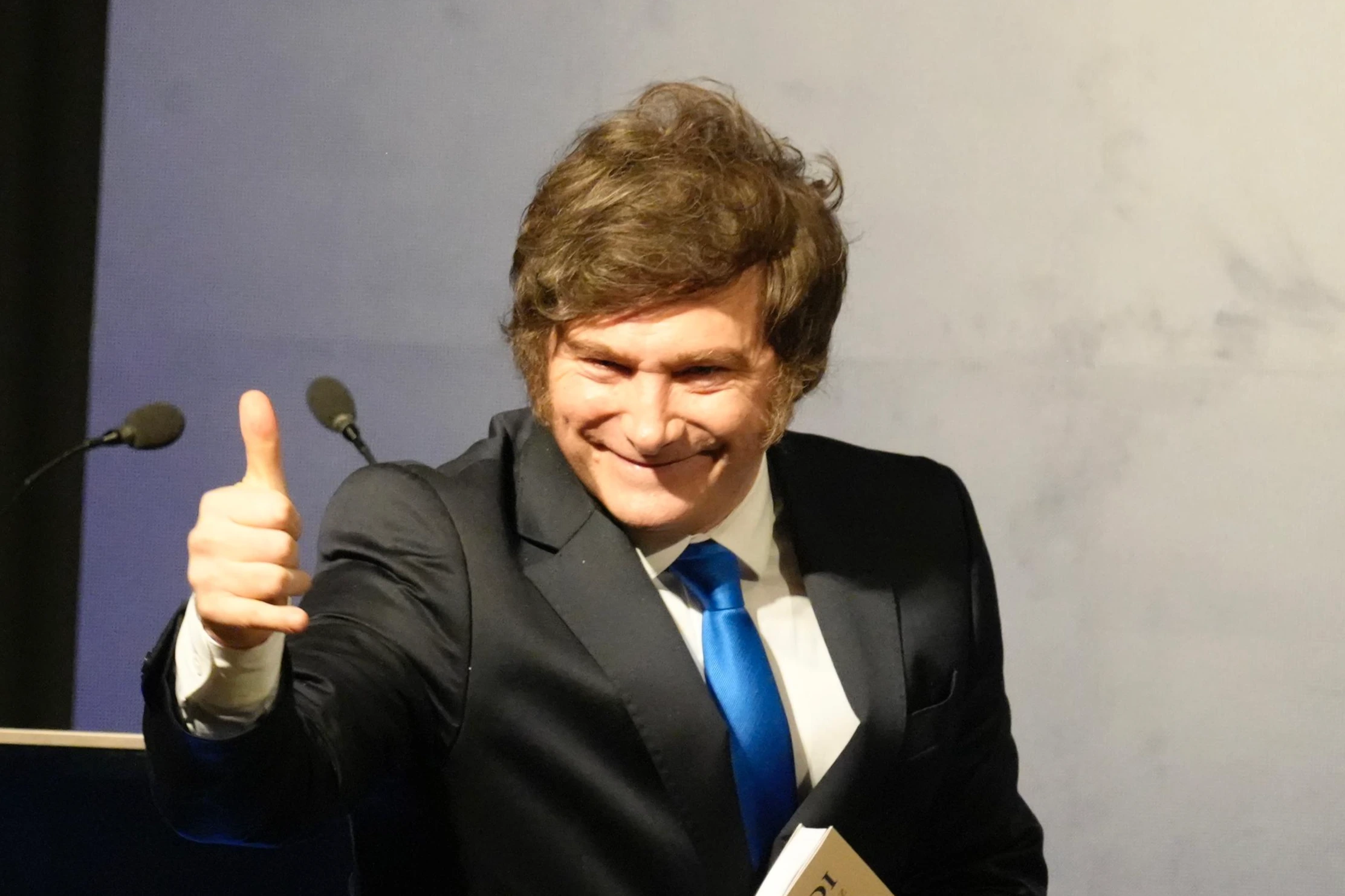
As part of the Government's strategy to attract large scale investment and strengthen Argentina's export profile, the administration of Javier Milei announced the expansion of a mining project that is already part of the Incentive Regime for Large Investments (RIGI) and which aims to increase the production of lithium in the coming years. The Minister of Economy, Luis Caputo, confirmed that the RIGI Evaluation Committee approved the expansion of the Rio Tinto company Fénix lithium project, located in the Salar del Hombre Muerto, in the province of Catamarca. The initiative involves an investment of USD 530 million and will allow the addition of 9,500 tons of additional production capacity
per year.
“It will also generate 1,143 jobs during construction and 504 during the operation phase, between direct and indirect jobs. In addition, it will provide USD 165 million in exports per year, consolidating the growth of Argentine lithium,” Caputo said through his official X account.Rio Tinto is a global mining company based in London and Melbourne, specializing in the extraction and processing of minerals such as iron, copper, aluminum, lithium, uranium and diamonds. It operates in more than 30 countries and is among the world's largest producers of raw materials for the industry.
Rio Tinto Project
The firm had already joined RIGI with a USD 2,724 million project aimed at expanding the Rincón de Litio project in Salta, with the objective of achieving a production capacity of 60,000 tons per year for batteries, including the construction of a new plant. Currently, the RIGI has more than 27 submitted proposals, although only 12 have obtained official approval so far. These initiatives are distributed in provinces such as Neuquén, Rio Negro, San Juan, Mendoza, Salta, Buenos Aires, Catamarca and Santa Fe, and reflect the interest of different productive sectors in the scheme promoted by the Government
.
Among the approved projects is YPF, which is moving forward in Mendoza with the “El Quemado” solar park, a project that will require an investment of USD 211 million and will be developed in two phases: the first will have 200 MW of capacity and the second another 105 MW.
Also noteworthy is the Vaca Muerta Sur plan, promoted by YPF together with Pan American Energy (PAE), Vista, Pampa Energía, Pluspetrol, Chevron and Shell. The project foresees initial investments of USD 2,486 million, with the potential to reach USD 3 billion. Infrastructure will be installed in Neuquén and Rio Negro to increase oil exports.
The designed pipeline could carry up to 700,000 barrels per day, representing annual revenues of up to USD 17 billion with a price of USD 68 per barrel.
Another important initiative is Southern Energy (Pan American Energy and Golar LNG), which will install a barge to produce Liquefied Natural Gas (LNG) in the Gulf of San Matías, Rio Negro. The estimated outlay amounts to USD 2.9 billion over the next decade and could reach USD 6.878 million over 20 years of operation
.
In the industrial sector, Sidersa plans to build a steel plant in San Nicolás, province of Buenos Aires, with an investment of USD 296 million. It will have a capacity for 360,000 tons of long steels per year and will use sustainable technology to produce “green” steel. The plan envisages the creation of more than 300 direct jobs and 4,000 indirect jobs.
For their part, PCR and Acindar will invest USD 255 million in a new wind farm in Olavarría, also in the province of Buenos Aires.Rio Tinto Project In lithium mining, the company Minera Galán Lithium will develop the Western Dead Man (HMW) project in Catamarca, with an outlay of USD 217 million focused on the production of high-purity lithium chloride.
It is estimated that by 2029 exports will reach USD 180 million annually