
The same State that saved an Etarra terrorist murdered the rape victim, Noelia Castillo

The same State that saved an Etarra terrorist murdered the rape victim, Noelia Castillo
porEditorial Team
Argentina

The comparison that outrages Spain: while the State immobilized and fed etarra Ignacio de Juana Chaos to prevent his death during a hunger strike, rape victim Noelia Castillo Ramos, 25, ended up dying after authorized euthanasia.

Compartir:

The death of Noelia Castillo Ramos, a 25-year-old girl who suffered gang rape while under state guardianship and who died on March 26 after a euthanasia procedure authorized by Justice, rekindled a profound debate in Spanish public opinion. Many citizens and political leaders question the government of Pedro Sánchez because of what they consider to be a moral contradiction of the State: whereas in the past all resources were deployed to prevent an ETA terrorist from dying during a hunger strike, today, as they report, the system allowed a victim of one of the worst atrocities

to end up dying.

In Spain, a comparison was established that directly hits the current government and the institutional system. For years, the Spanish State did everything possible to prevent the terrorist Ignacio de Juana Chaos, convicted of multiple crimes and linked to the terrorist organization ETA, from dying after starting a hunger strike as a form of political pressure against institutions. However, the recent case of Noelia Castillo once again opened the wound in the public debate: many wonder why the system acted with such determination to preserve the life of a terrorist while, according to critical sectors, it failed to protect a victim who had suffered extreme violence

.
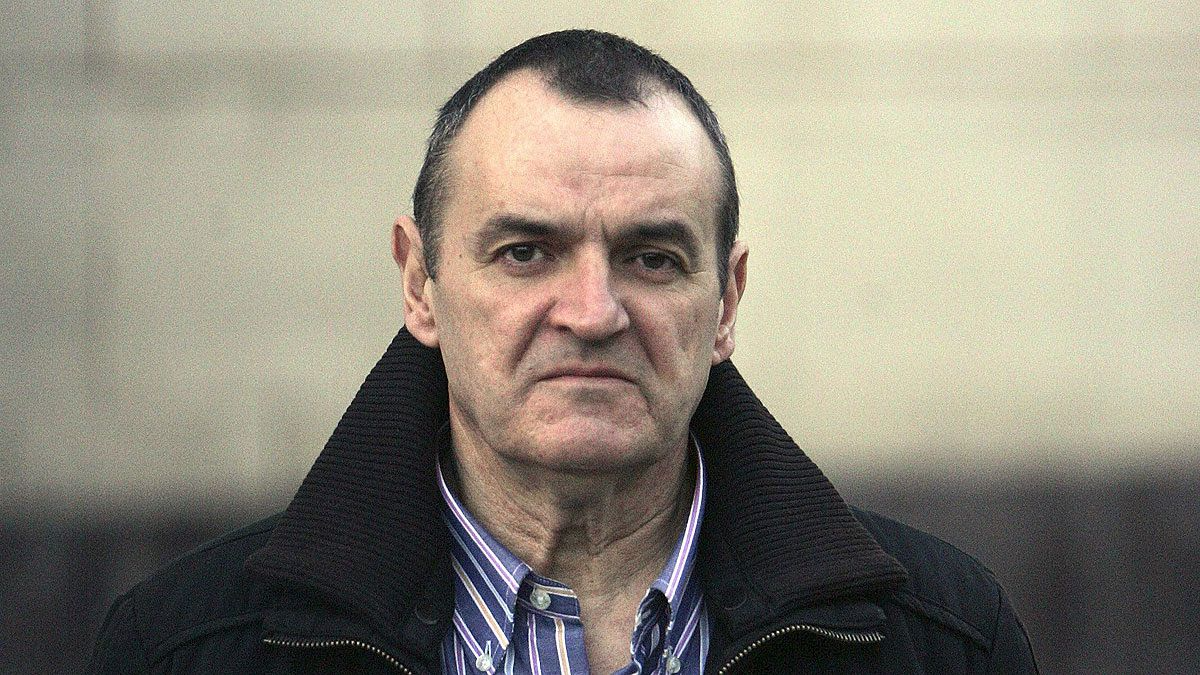
Ignacio De Juana Chaos

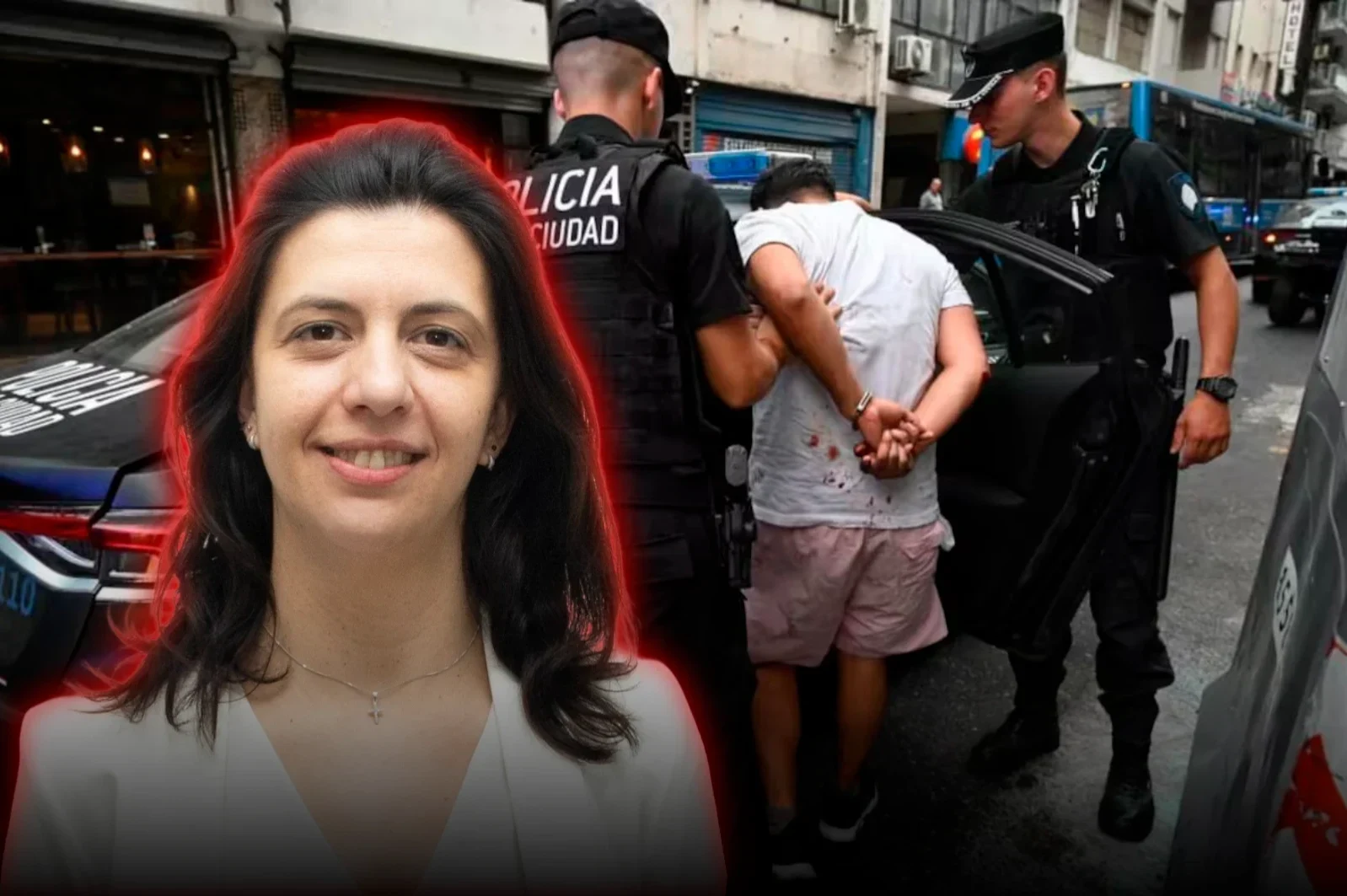
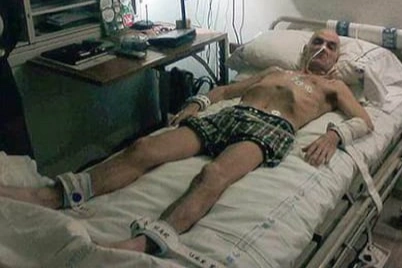
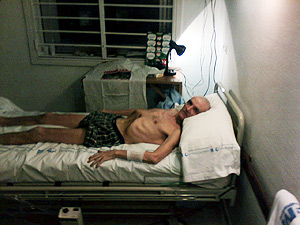
The story of Ignacio de Juana Chaos was one of the most controversial episodes in the fight against terrorism in Spain. On February 5, 2007, the British media outlet The Times published extensive coverage of the hunger strike of the prisoner Etarra, who was hospitalized while protesting a sentence handed down by judges of the National High Court after having committed a crime of threats. The image that accompanied the report occupied the entire width of a page of the newspaper and showed the terrorist in a hospital bed, apparently weakened, with the headline: “Chained and emaciated, the ETA murderer cries out for peace from his deathbed

”.

However, what appeared to be a scene of suffering concealed a key fact: the State had ordered that the prisoner be immobilized and fed through a tube to prevent him from dying. The restraints that appeared in the photograph were not “chains”, but devices used by health personnel to prevent the terrorist from removing the probe that allowed him to remain alive and the sensors that controlled his vital signs. In other words, the Spanish judicial and health system acted to prevent his death even against his own will, considering that the State could not allow the political blackmail of a hunger strike to end with a death that put pressure

on democratic institutions.

The controversy was amplified because the coverage of The Times, signed by journalist Thomas Catan, was harshly criticized for presenting the terrorist with language that many considered misleading. Instead of describing ETA as a terrorist organization, the report used the expression “Basque separatist group”, a semantic choice that raised strong questions in Spain. For many analysts, this type of language could contribute to distorting the reality of terrorism and favoring the propaganda of those who sought to delegitimize the

democratic State.
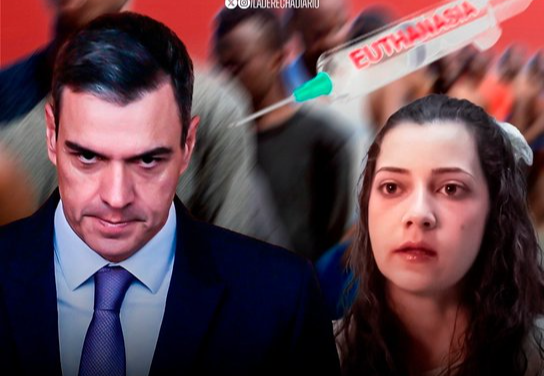
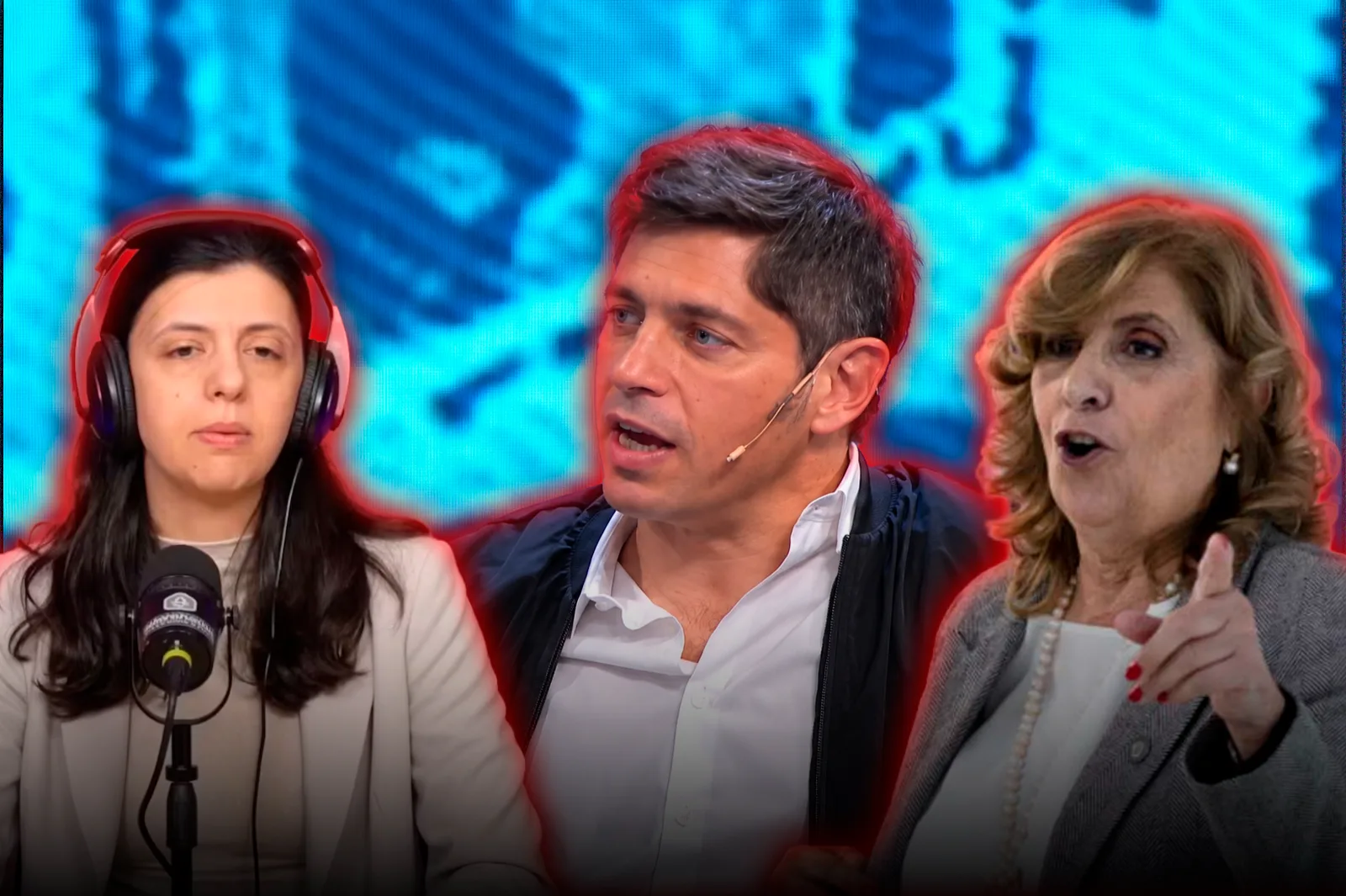
Pedro Sánchez and Noelia Ramos

At the time, the prisoner Etarra was trying to project an image of a victim while putting political pressure on Spanish institutions. His communication strategy, according to various academic analyses, sought to transform an action of extortion —the hunger strike—into an emotional story capable of generating international empathy. And the truth is that the State responded by preventing him from dying, even when the terrorist himself intended to use his body as an instrument of political pressure

.

That comparison is the one that emerges strongly today after the death of Noelia Castillo. The young woman had been left with irreversible paraplegia in 2022 after throwing herself from the fifth floor of a building after being the victim of gang rape by illegal immigrants in a juvenile center where she was under state guardianship. The physical consequences were devastating: neuropathic pain, sensory disorders, fecal incontinence and total functional dependence that prevented him from regaining autonomy

.

On April 10, 2024, in this context, he formally began his request for euthanasia before the corresponding commission in Catalonia, a process that went through different judicial instances until its final approval. Finally, the procedure was finalized on March 26, generating enormous social controversy

.

Outrage grew even more when complaints began to spread about what happened in the days before his death. The president of Christian Lawyers, Polonia Castellanos, publicly assured that the hospital would have pushed for euthanasia due to issues related to organ donation. As she explained, the young woman's mother said that from the hospital they told her: “You can't do that because we already had all your organs compromised.”

Ignacio De Juana Chaos

Castellanos also argued that Noelia came to consider euthanasia in a context of emotional and medical pressure. According to the lawyers in the case, he was even mentioned that “there were several people who could be saved with their organs”, something that the mother categorically rejected

.

The contrast with the treatment received by etarra in the past is precisely what dominates the public debate today. In the case of De Juana Chaos, the State not only intervened to keep him alive, but medical and prison protocols were even deployed to prevent the tube that fed him from being removed. Meanwhile, in the case of Noelia, government critics argue that the system that failed to protect her when she was attacked ended up

allowing her to die.

The outrage was also reflected in statements by political leaders. The leader of Vox, Santiago Abascal, expressed one of the most common phrases after the news broke: “The State takes a daughter from her parents. The Menas rape her. And the solution given to her by the State is to commit suicide. Sanchez's Spain is a horror film.”

In that same climate of debate, different sectors argue that the case reflects a deeper institutional crisis. For many Spaniards, the comparison between the two episodes — extreme care to prevent the death of a terrorist and the authorization to euthanize a victim — became a symbol of what they consider to be a moral investment in

the system.

Noticias relacionadas

The prosecutor Luciani warned that Cristina violates her house of residence and could go to a common jail

The prosecutor Luciani warned that Cristina violates her house of residence and could go to a common jail

Brazil establishes penalties of up to 5 years for interrupting a woman

Brazil establishes penalties of up to 5 years for interrupting a woman

Oil record: Argentina's Milei surpassed its historic production and aims for 1 million barrels per day in 2026

Oil record: Argentina's Milei surpassed its historic production and aims for 1 million barrels per day in 2026

RIGI: Milei expands Rio Tinto's Phoenix project with USD 530 million to boost lithium exports in Catamarca

RIGI: Milei expands Rio Tinto's Phoenix project with USD 530 million to boost lithium exports in Catamarca

A poll about the next Peruvian election shows two right-wing candidates fighting for first place

A poll about the next Peruvian election shows two right-wing candidates fighting for first place

Why did Pedro Sánchez murder the rape victim and not the rapists?”

Why did Pedro Sánchez murder the rape victim and not the rapists?”

La Derecha Diario logo
ESX logoInstagram logoYouTube logoTikTok logo
ARGENTINABOLIVIAECUADORISRAELMEXICOURUGUAYDERECHA DIARIO TV
  • ESXInstagramYouTubeTikTok
  • DERECHA DIARIO TV
  • Secciones
  • ARGENTINA
  • BOLIVIA
  • ECUADOR
  • ISRAEL
  • MEXICO
  • URUGUAY
  • Países
  • La Derecha Diario logoLA DERECHA DIARIO
  • La Derecha Diario México logoLA DERECHA DIARIO MÉXICO
  • La Derecha Diario Uruguay logoLA DERECHA DIARIO URUGUAY
  • La Derecha Diario Ecuador logoLA DERECHA DIARIO ECUADOR
  • La Derecha Diario Bolívia logoLA DERECHA DIARIO BOLÍVIA
  • La Derechadiario República Dominicana logoLA DERECHADIARIO REPÚBLICA DOMINICANA
  • La Derecha Diario Israel logoLA DERECHA DIARIO ISRAEL
  • La Derecha Diario Estados Unidos logoLA DERECHA DIARIO ESTADOS UNIDOS
  • Temas
  • GUERRA EN IRÁN
  • El Diario
  • QUIENES SOMOS
  • AUTORES
  • PUBLICIDAD
  • DONAR
La Derecha Diario logo
TwitterInstagramYouTubeTikTok
Derecha Diario TV

Nosotros

  • Quienes Somos
  • Autores
  • Donar

Privacidad

  • Protección de datos
  • Canales
  • Sitemap

Contacto

  • info@derechadiario.com.ar
PUBLICIDAD