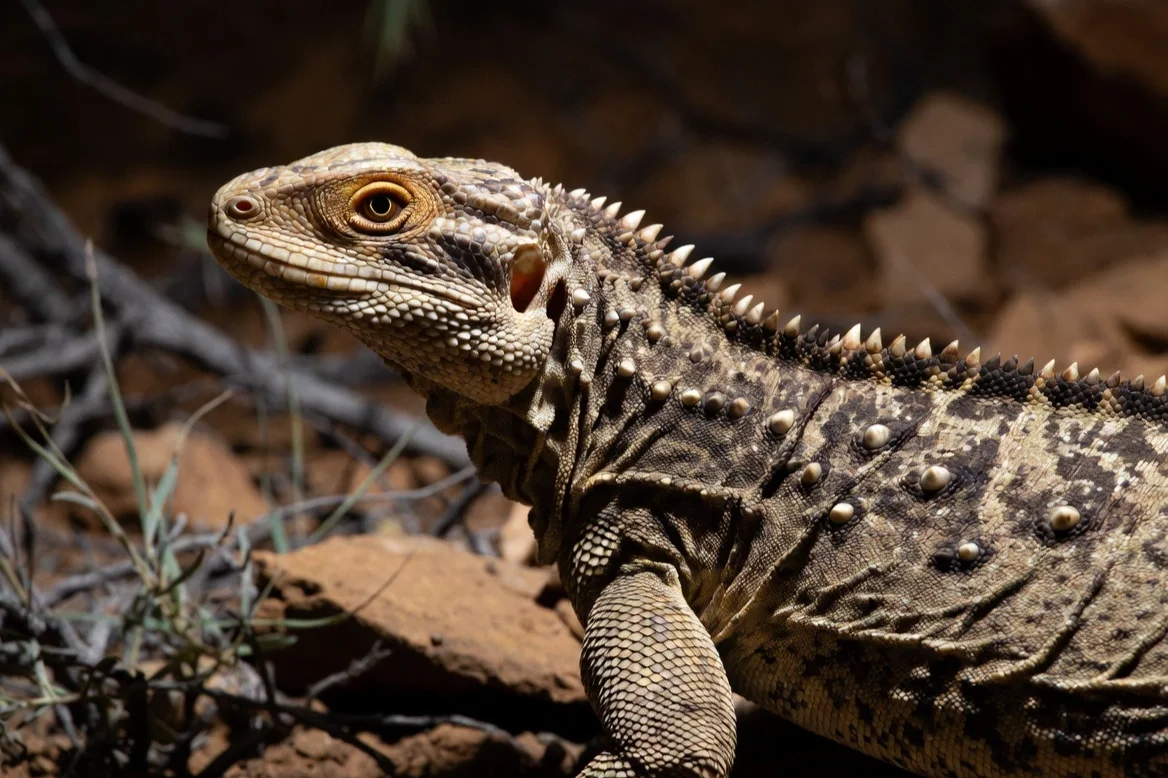
Scientists have solved a mystery that has lasted over 320 million years: how bone armor developed in the skin of reptiles. A new massive study shows that these bony skin structures, known as osteoderms, did not arise from a single armored ancestor, but appeared independently in multiple groups of lizards.
The research, which combines fossils and modern computational tools, reconstructed the evolution of these tissues over hundreds of millions of years. The results are surprising because they indicate that reptiles have developed and lost this armor multiple times throughout history.
Osteoderms are bones that form in the skin and have reappeared time and again in different lineages. They helped vertebrates adapt to terrestrial life, offering protection against predators and harsh environmental conditions. However, in most groups, they eventually disappeared, only to re-emerge in reptiles.
A story told by fossils and current species
The researchers analyzed 643 species, both living and extinct, to piece together the puzzle. They discovered that most lizards developed osteoderms during the Late Jurassic and Early Cretaceous, over 100 million years ago, in a time dominated by large dinosaurs like Brachiosaurus and Stegosaurus.
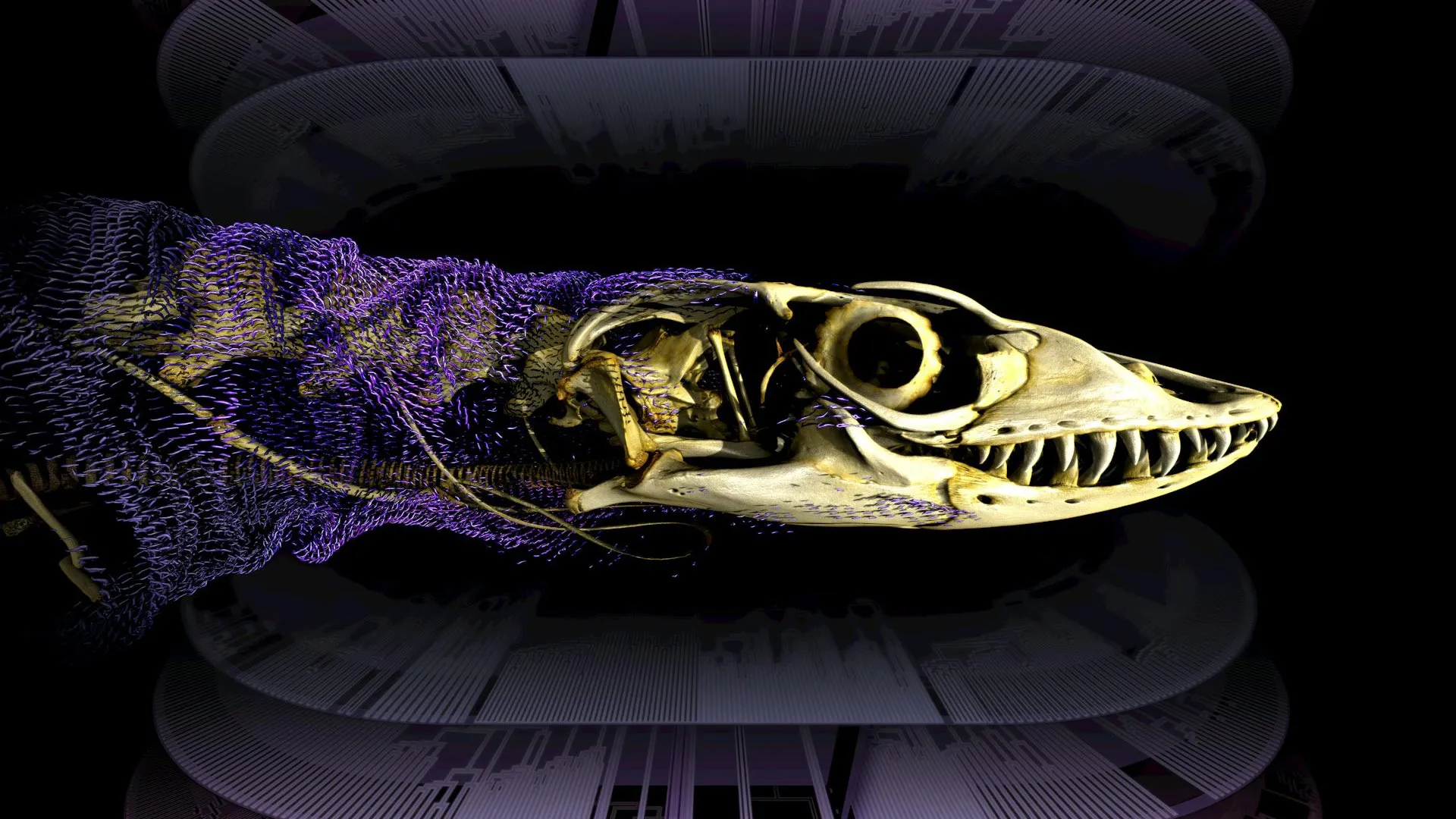
During that period of rapid climatic and ecological changes, armor may have been key to survival. After those initial impulses, most groups retained their osteoderms. But there was one notable exception.
The ancestors of monitor lizards, known in Australia as goannas, completely lost these bones. Their active lifestyle and efficient bodies likely functioned better without the extra weight of armor. However, when their descendants arrived in Australia about 20 million years ago, something extraordinary happened: they redeveloped them.
The surprising return of the goannas
This re-evolution occurred during the Miocene, when Australia's climate became drier. Osteoderms may have helped reduce water loss and provide protection in arid and open landscapes. In this way, goannas became the only known lineage of lizards that regained armor after having lost it.
This finding challenges Dollo's law, which states that a complex trait that disappears cannot reappear. The study provides a solid foundation for understanding the origin of osteoderms and opens the door to future research on the genetic and developmental mechanisms that control them.
During the 20th century, scientists debated whether lizards inherited osteoderms from a common ancestor or if they evolved independently. This new evidence resolves the debate in favor of multiple and independent evolution in different lineages over hundreds of millions of years.
The work combines fossil evidence with advanced computational analyses, allowing for the evaluation of thousands of evolutionary scenarios. The results were published in a historic journal, the same one where Charles Darwin presented his revolutionary ideas.
This pattern of loss and recovery fits with other evolutionary oddities of Australia, such as dominant marsupials and egg-laying mammals. It demonstrates that evolution does not follow a straight path but constantly adapts to the changing conditions of the planet.
Now that the history of osteoderms is better understood, scientists will be able to delve into how these bones form at the molecular level and what specific advantages they provide in different environments. The case of Australian goannas stands out as one of the most fascinating examples of evolutionary resilience.