Productivity numbers in the United States have been surprising both experts and laypeople. Even Jerome Powell, the chairman of the Federal Reserve, admitted his astonishment at several consecutive years of solid growth. While many pointed to artificial intelligence as the main culprit, a Stanford expert has a different explanation: the rise of remote work after the pandemic accounts for much of this rebound.
Nicholas Bloom, an economics professor at Stanford and a leading figure in remote work studies, argues that the shift in the labor model weighs much more than many executives want to acknowledge. Data from the Bureau of Labor Statistics supports this: productivity in the non-farm private sector grew by 5.3% in 2020, followed by 2% in 2021, fell by 1.5% in 2022, rebounded by 1.8% in 2023, advanced by 3% in 2024, and closed 2025 with a 2.2% increase.
This average close to 2% annually since 2020 sharply contrasts with the meager 1% recorded for much of the previous decade. For Bloom, timing is key: the jump began in 2020, well before the launch of ChatGPT in 2022, which weakens the idea that AI is the main driver.
Remote work brings concrete and measurable advantages. Less time wasted on commutes, fewer office distractions, and greater ability to focus on important tasks. Additionally, it allows for the creation of new businesses and the addition of talent from anywhere in the country, without geographical ties. This expands the labor market and reduces fixed costs like office space.
Why companies insist on returning to the office
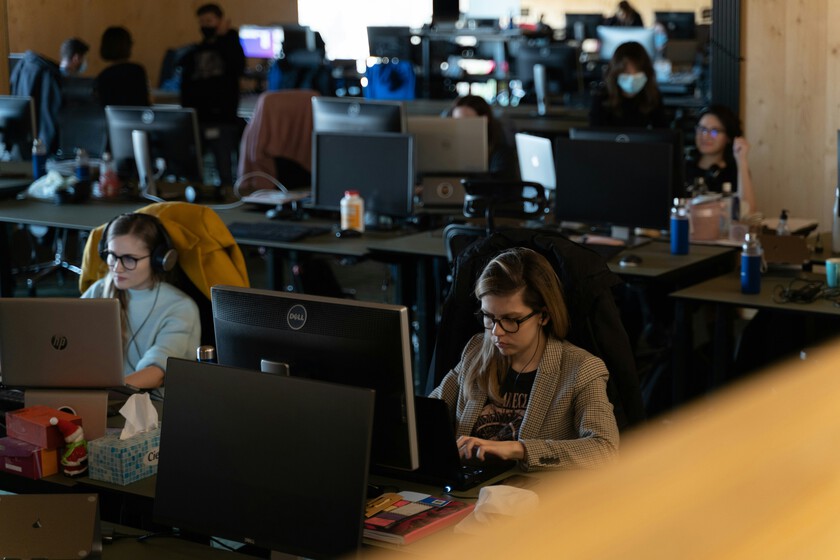
Despite this evidence, many large companies continue to push for a full return to in-person work. They argue that it improves collaboration, decision-making, and the learning of younger employees. Bloom acknowledges that these benefits exist, but questions the necessity of being in the office every day.
According to his research, a hybrid model of two days in-person and three remote is more efficient. The office is used for what truly requires interaction, while concentrated work is left for home, where there are fewer interruptions. "Remote work correlates with greater productivity growth," summarizes the economist.
The pandemic forced a massive experiment in remote work that, against many predictions, not only maintained but improved the indicators. This allowed for weathering a global crisis without a productive collapse and, in several years, with notable advances. Saving hours in traffic jams and gaining quality of life seems to translate directly into more output per hour worked.
AI still needs to demonstrate its real impact on a large scale. Although there are initial signs of improvements due to automation, economists agree that it has not yet been implemented on a massive scale to explain the leap of the last five years. It is likely to contribute more in the future, but for now, the main credit goes to the change in the way of working.
This American productivity "miracle," then, would have less to do with sophisticated algorithms and much more with people working from home, in a more comfortable and flexible environment. As boomers retire and new generations prioritize balance, remote work could experience a second youth. Companies that continue to resist may be missing out on a clear competitive advantage.