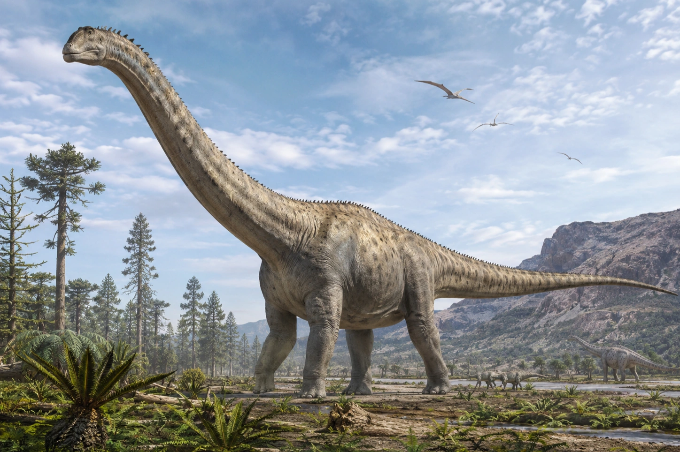
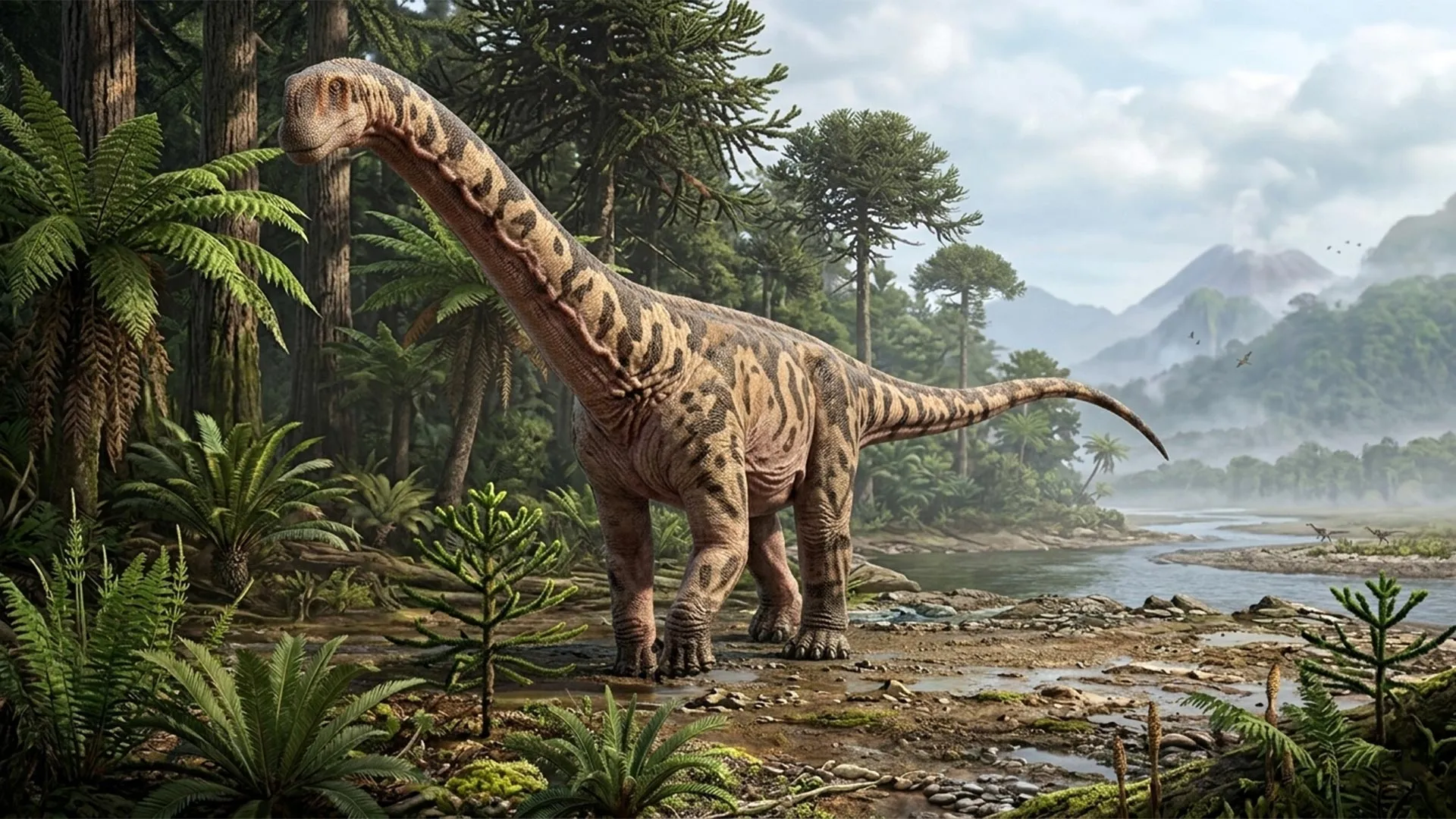
A new giant dinosaur found in Argentine Patagonia is generating excitement among paleontologists due to its strange combination of characteristics. This is Bicharracosaurus dionidei, a sauropod about 20 meters long that lived approximately 155 million years ago.
The fossil remains include more than 30 vertebrae from the neck, back, and tail, several ribs, and part of the pelvis. These bones belonged to an adult specimen that lived in Gondwana, the ancient southern supercontinent.
The most striking aspect of the discovery is the unusual mix of traits: some parts of the skeleton resemble those of Giraffatitan, an African brachiosaurid, while other features, especially in the dorsal vertebrae, are more reminiscent of Diplodocus and its North American relatives.
Scientists believe this finding could be the first Jurassic brachiosaurid identified in South America, helping to fill an important gap in the fossil record of dinosaurs.
A mix that challenges previous ideas
Until now, knowledge about the evolution of Late Jurassic sauropods was primarily based on fossils from the northern hemisphere, with only one relevant site in the south, in Tanzania. The site in the province of Chubut provides key comparative material to better understand how these giants developed in Gondwana.
"Our phylogenetic analyses indicate that Bicharracosaurus dionidei was related to the Brachiosauridae, making it the first of this Jurassic group in South America," explained Alexandra Reutter, a doctoral student at LMU and the first author of the study.
Sauropods are famous for their long necks, enormous bodies, small heads, and long tails. They include the largest land animals in Earth's history, with species reaching lengths close to 40 meters. Well-known examples are Diplodocus and Brachiosaurus.
This new dinosaur, although smaller than the largest titans, is still impressive and provides fresh data on the diversity of these giant herbivores in the southern hemisphere.
Named in honor of a local shepherd
The first fossils were found on a rural property by shepherd Dionide Mesa, whom the researchers honored by choosing his name for the species. The genus Bicharracosaurus comes from the colloquial term "bicharraco," which is used to refer to a large animal.
The remains come from the Cañadón Calcáreo formation in Chubut Patagonia and are currently housed in the Egidio Feruglio Paleontological Museum in Trelew.
The finding allows experts to reevaluate the evolutionary history of macronarians, the group to which this dinosaur belongs, and to better understand how these colossi were distributed and adapted during the Jurassic in the southern continents.
With this specimen, paleontologists add a fundamental piece to the puzzle of prehistoric life in Argentina.