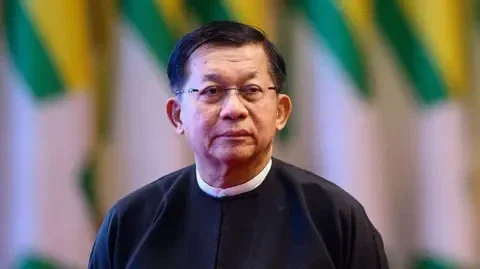
The Myanmar army has intensified a series of military offensives in strategic border regions of the country in recent weeks, marking a new phase in the internal conflict that has plagued the nation since the 2021 coup. The operations are led by the new military chief, General Ye Win Oo, who took command in March after Min Aung Hlaing stepped down from direct leadership of the armed forces to become president.
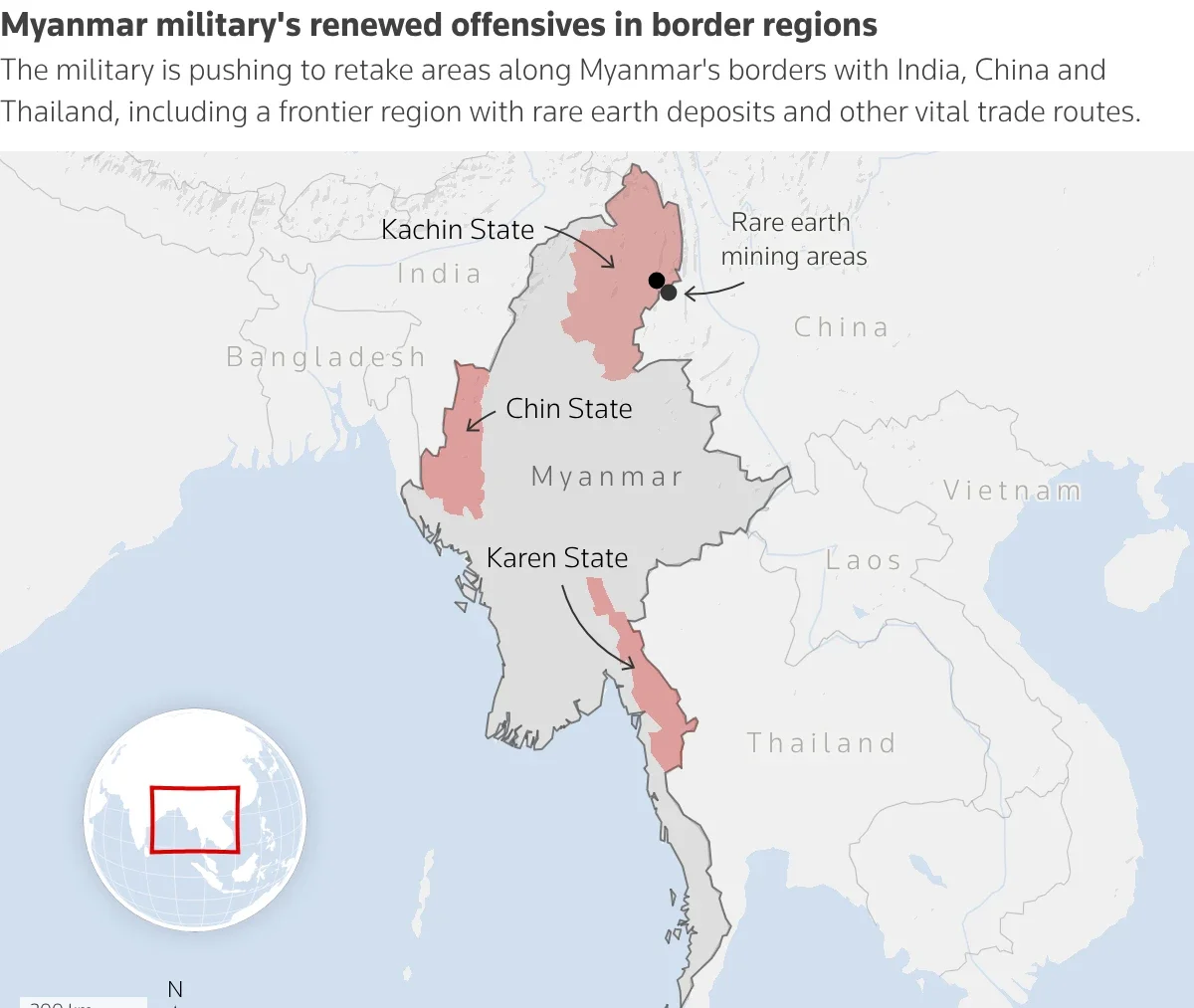
The military actions are primarily concentrated in the states of Kachin, Chin, and Karen, areas considered crucial due to their economic, commercial, and geopolitical importance. Analysts and spokespeople for rebel groups claim that the army's objective is to regain control of trade routes and strategic territories that have been under the dominance of ethnic armed organizations in recent years.
One of the main focal points of the offensive is located in Kachin state, in the northern part of the country and bordering China. The region hosts significant heavy rare earth deposits, essential minerals for the production of advanced technologies such as electric vehicles, wind turbines, and electronic components. According to international estimates, this area produces nearly half of the world's heavy rare earths, making it a territory of enormous strategic value.
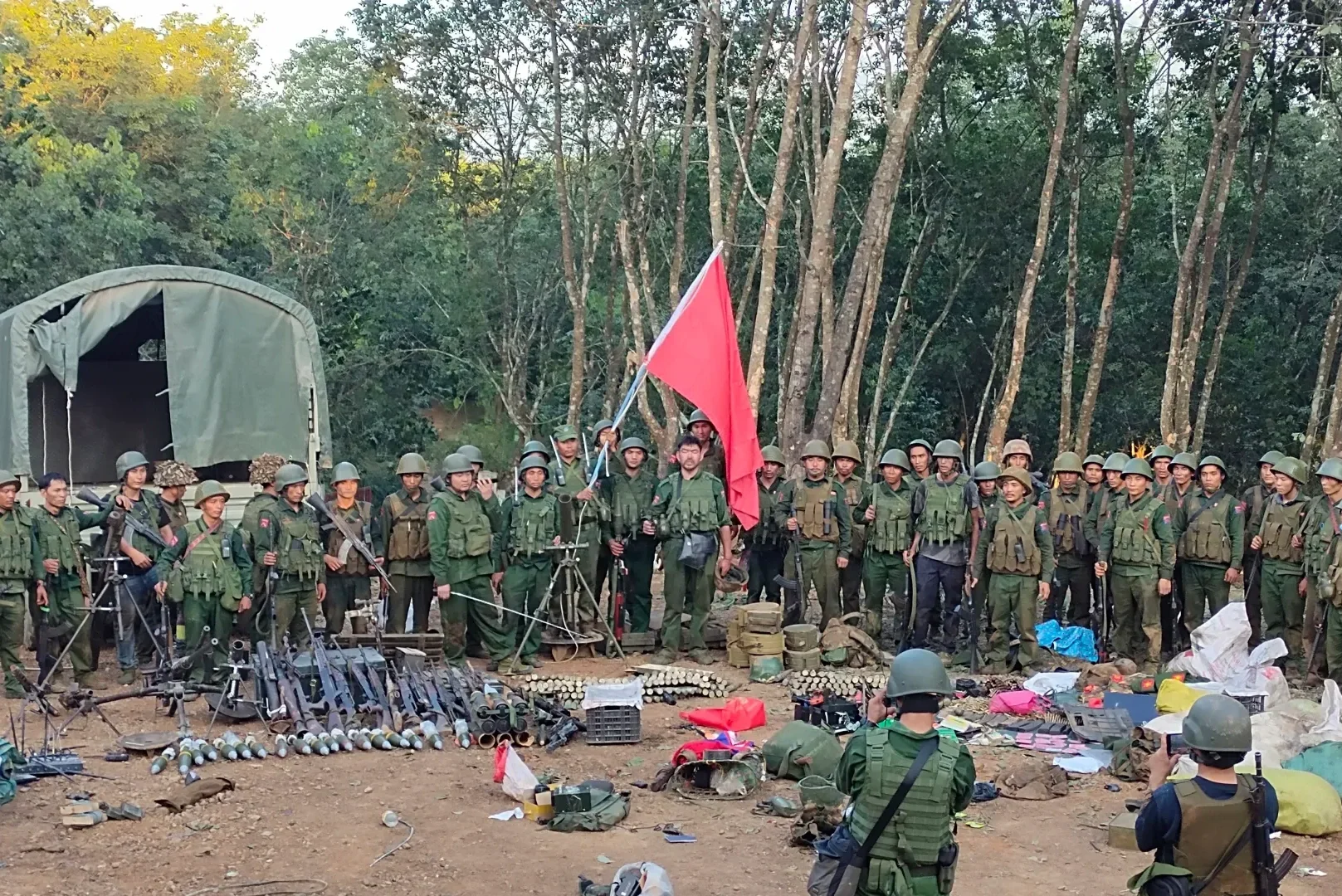
The armed forces of Myanmar carried out a new offensive, extending the conflict to more strategic areas of the Asian country.
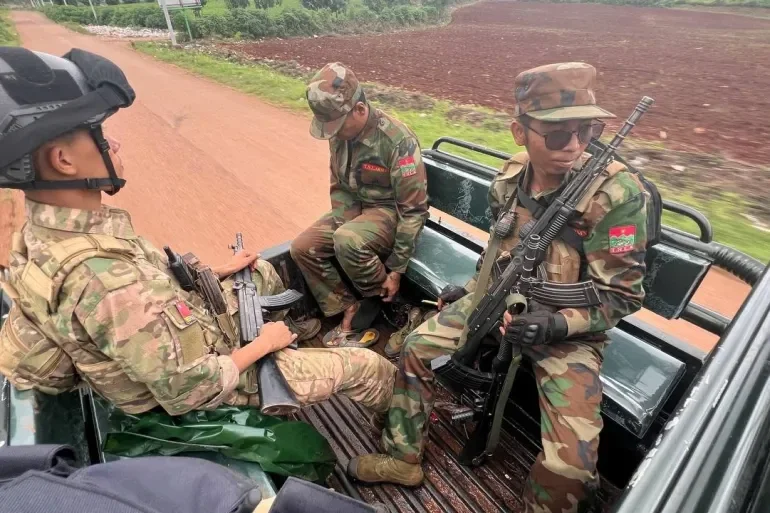
Since October 2024, part of these territories has been under the control of the Kachin Independence Army (KIA), one of the most powerful ethnic armed groups in Myanmar. Its spokesperson, Naw Bu, stated that the rebel forces have already reinforced their defensive positions, especially in the towns of Chipwi and Pangwa, and warned that they will respond militarily to any attempt by government troops to advance.
At the same time, the army has increased its operations in Chin state, on the western border with India. There, the armed forces seek to regain towns and logistical corridors used by opposition groups for supplies and to maintain connections with the outside. Spokespeople from the Chin National Front reported that rebel fighters conducted strategic withdrawals from the cities of Falam and Tonzong due to the intensity of the airstrikes deployed by the army.
The air offensives have become one of the pillars of the regime's military strategy. Previous investigations indicated that the army managed to sustain an extensive bombing campaign thanks to illicit supplies of aircraft fuel from Iran.
According to those reports, more than a thousand civilian targets were hit during a fifteen-month period. Although the global energy crisis and the conflict in Iran affected fuel supplies, the operational capacity of the Myanmar military aviation appears to remain stable.
The Kachin region is home to one of the largest strategic mineral corridors in the Asian country.
Another area under military pressure is Karen state, in the southeast of the country, near the border with Thailand. There, an offensive is underway to regain control of the road between Myawaddy and Kawkareik, a key trade route for cross-border exchange. Clashes in this region intensified since 2024, when the Karen National Union (KNU) advanced on the border town of Myawaddy.
The KNU is among the rebel organizations that recently rejected the dialogue proposal put forth by President Min Aung Hlaing. The former military junta leader had requested armed groups to initiate peace talks within a hundred-day timeframe, but most organizations rejected the offer almost immediately.
''The armed forces have repeatedly violated peace agreements and commitments,'' stated Saw Taw Nee, spokesperson for the KNU, who asserted that there is currently a ''total absence of trust'' towards the military regime.
The conflict in Myanmar originated in February 2021, when the army overthrew the democratically elected government led by Aung San Suu Kyi. The coup sparked massive protests across the country and subsequently led to a large-scale civil war. Since then, multiple rebel groups and ethnic armies have managed to expel military forces from various regions of the national territory.
The conflict in Myanmar originated after the president was overthrown by the armed forces, which led to a civil war.
Analysts believe that the new offensive aims to reverse those losses and re-establish state control over the main communication and trade routes in the country. ''The army is desperately trying to regain cities that serve as gateways for border trade,'' noted analyst Sai Kyi Zin Soe.
However, despite the renewed military push, armed groups maintain strong positions in various areas of the country and rule out a negotiated solution in the short term. The combination of ground offensives, air bombardments, and rejection of peace talks anticipates a new escalation of the internal conflict that continues to destabilize Myanmar and exacerbate the humanitarian crisis in the region.