Washington's decision ends 47 years of Syria's presence on the list and opens new possibilities for investment, trade, and the reconstruction of the country
The decision may have significant economic consequences. By being removed from the list, Syria eliminates one of the main legal obstacles for U.S. and international companies to participate in the reconstruction of the country after years of war. Infobae noted that the measure, combined with the lifting of other sanctions, could promote trade and attract investments.
The change was also positively received by several governments in the region. Turkey, Jordan, and the six countries of the Gulf Cooperation Council celebrated the decision and considered that it could contribute to Syria's economic recovery and stability.
The logo of the Gulf Cooperation Council
With Syria's exit, Cuba, Iran, and North Korea are currently the only countries remaining on the U.S. list of state sponsors of terrorism.
The lifting of the designation thus represents one of the most significant changes in the relationship between Washington and Damascus in decades and a new step in the Trump Administration's strategy to integrate the new Syrian government into the international system and facilitate the country's reconstruction.
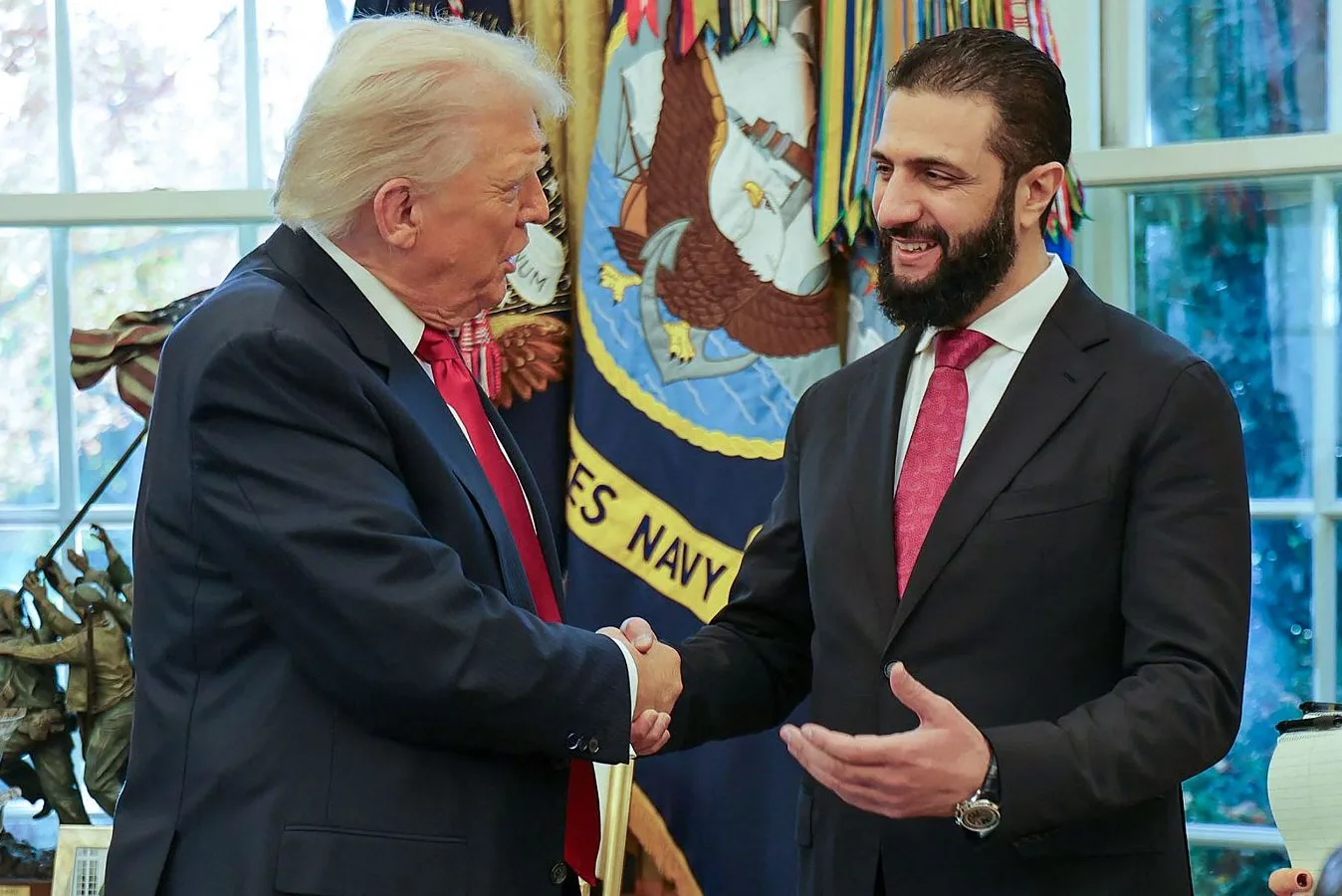
The president of Syria, Ahmed al Sharaa, celebrated the decision by the United States to remove his country from the list of state sponsors of terrorism, a classification that had been in effect since 1979 and imposed significant economic, financial, and commercial restrictions on Damascus for decades.
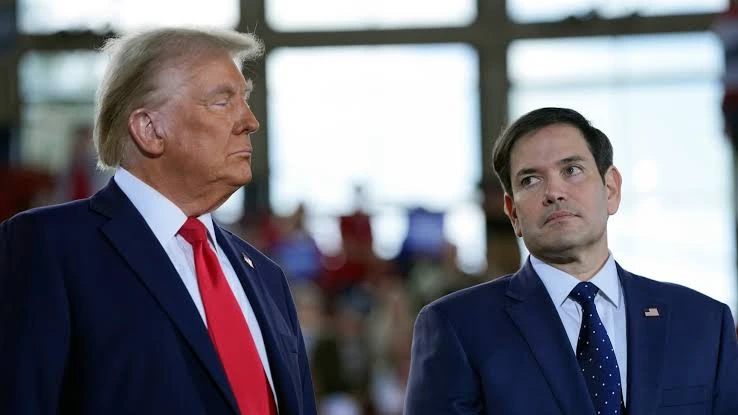
“I thank His Excellency President Donald Trump for his historic decision,” Al Sharaa wrote on his X account, where he also congratulated the Syrian people on the change. The measure had been announced by U.S. Secretary of State Marco Rubio and went into effect after the congressional review period ended.
President Donald Trump alongside Secretary of State Marco Rubio
The removal of Syria from the list represents a significant shift in Washington's policy towards Damascus. The designation as a state sponsor of terrorism had limited the country's access to U.S. assistance, certain financial operations, technology, and military cooperation, in addition to complicating trade relations with international companies.
The U.S. government justified the decision by the changes made by the new Syrian authorities following the fall of Bashar al Assad in December 2024. Rubio highlighted the commitments made by Al Sharaa to dissociate the Syrian state from international terrorist activities and mentioned Syria's inclusion in the Global Coalition to Defeat ISIS, as well as operations against networks of the Islamic State, Al Qaeda, and Hezbollah.