The Gran Rosario regained its leadership in 2025 as the main agro-exporting port node in the world, consolidating the strategic role of Argentine agro-industry in global trade. With shipments of 75.7 million tons of grains, oils, and by-products, the complex located on the Paraná River surpassed the port district of New Orleans in the United States and the port of Santos in Brazil.
The result marks a strong rebound compared to previous years, when the historic drought that affected Argentine agricultural production had relegated Gran Rosario to second and even third place in the international ranking. The recovery of soybean and corn harvests, combined with the reduction of export taxes and the pro-export policies promoted by the government of Javier Milei, allowed the region to regain world leadership.
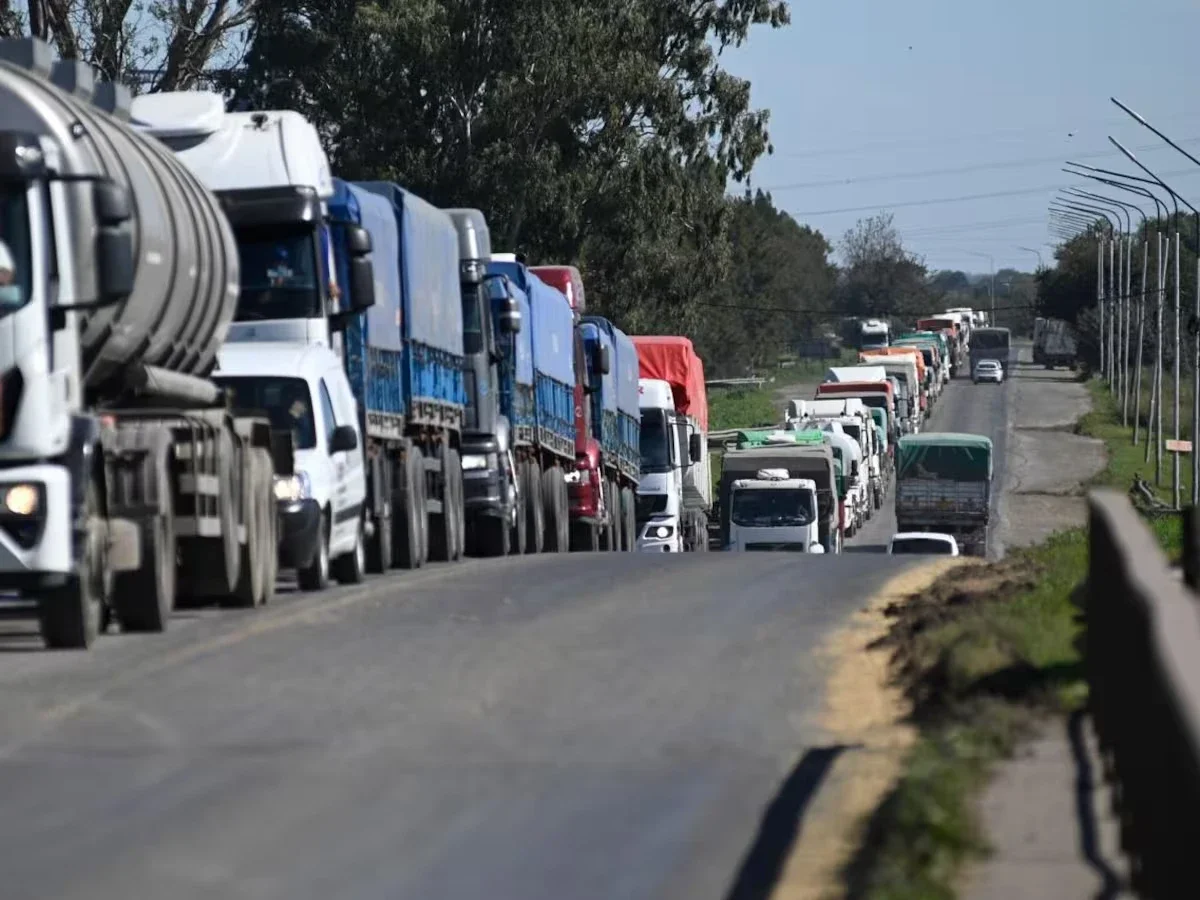
Truck lines are collapsing the routes of Greater Rosario to export their products.
The region known as Up-River Paraná has unique characteristics on a global level. In just 70 kilometers of coastline, between Timbúes and Arroyo Seco, there are 30 port terminals, of which 18 operate agro-industrial products. From there, exports generate nearly one-third of the dollars that enter the country from sales of goods abroad.
In addition to port infrastructure, Gran Rosario concentrates more than 52 million tons annually of oilseed crushing capacity, equivalent to 75% of all installed capacity in Argentina. This integration between production, industrial processing, and logistics explains much of its international competitiveness.
Above the United States and Brazil
During 2025, the Rosario node shipped 75.7 million tons, surpassing the 74.8 million dispatched by New Orleans. The third place went to Santos, the main Brazilian port under the management of the communist Lula da Silva, with 60 million tons exported.
Lula da Silva crying.
The magnitude of the performance is even more relevant considering that Argentina exported a total of 97.5 million tons of agricultural commodities during the 2024/25 campaign. This means that only the shipments made from Gran Rosario would have been enough to position it among the world's leading exporters of agro-industrial products.
In the soybean complex, the Santa Fe hub reached shipments of 40.9 million tons of beans, oil, and meal, ranking behind Santos but ahead of New Orleans. In corn, with 22.8 million tons exported, it established itself as the second global node, only surpassed by the U.S. terminal.
Record Expectations for 2026
Javier Milei alongside his Minister of Economy, Luis "Toto" Caputo.
During the first four months of 2026, 34.6 million tons of grains, oils, and by-products were shipped from Argentine ports, the largest volume recorded for that period. Of that total, 25.2 million tons left from Gran Rosario terminals, setting a new record for the first four months of the year.
If the trend continues, the port complex of southern Santa Fe could close 2026 as the world's leading agro-exporting node for the second consecutive year, an achievement that has no precedent in the recent history of global agro-industrial trade.