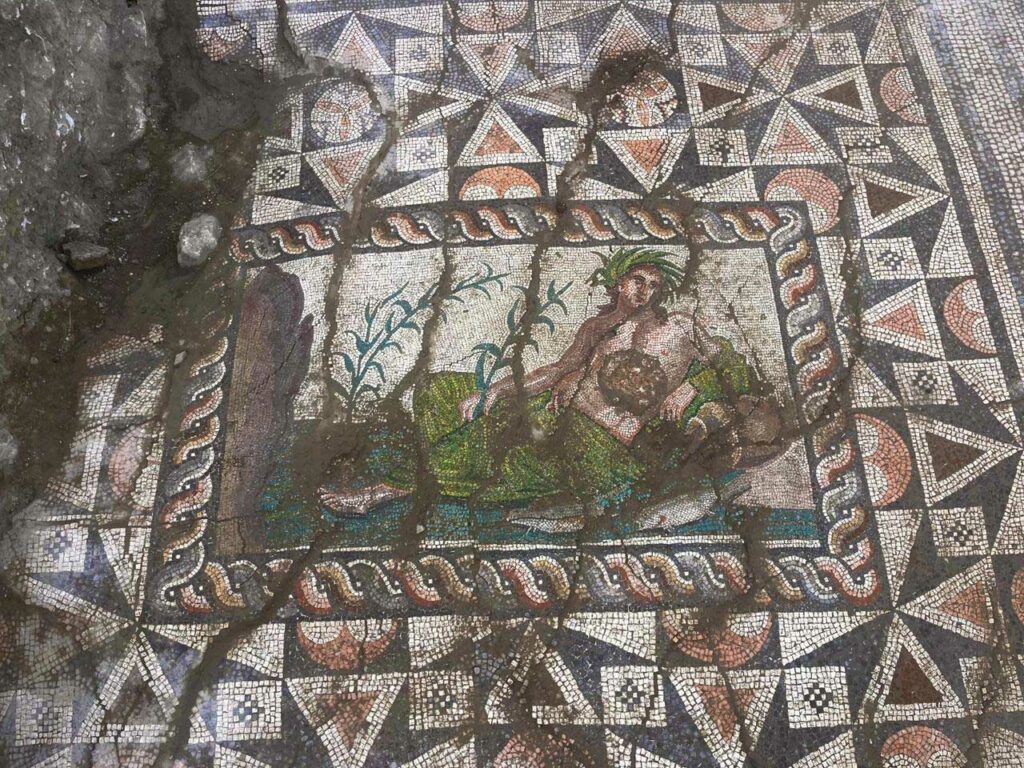

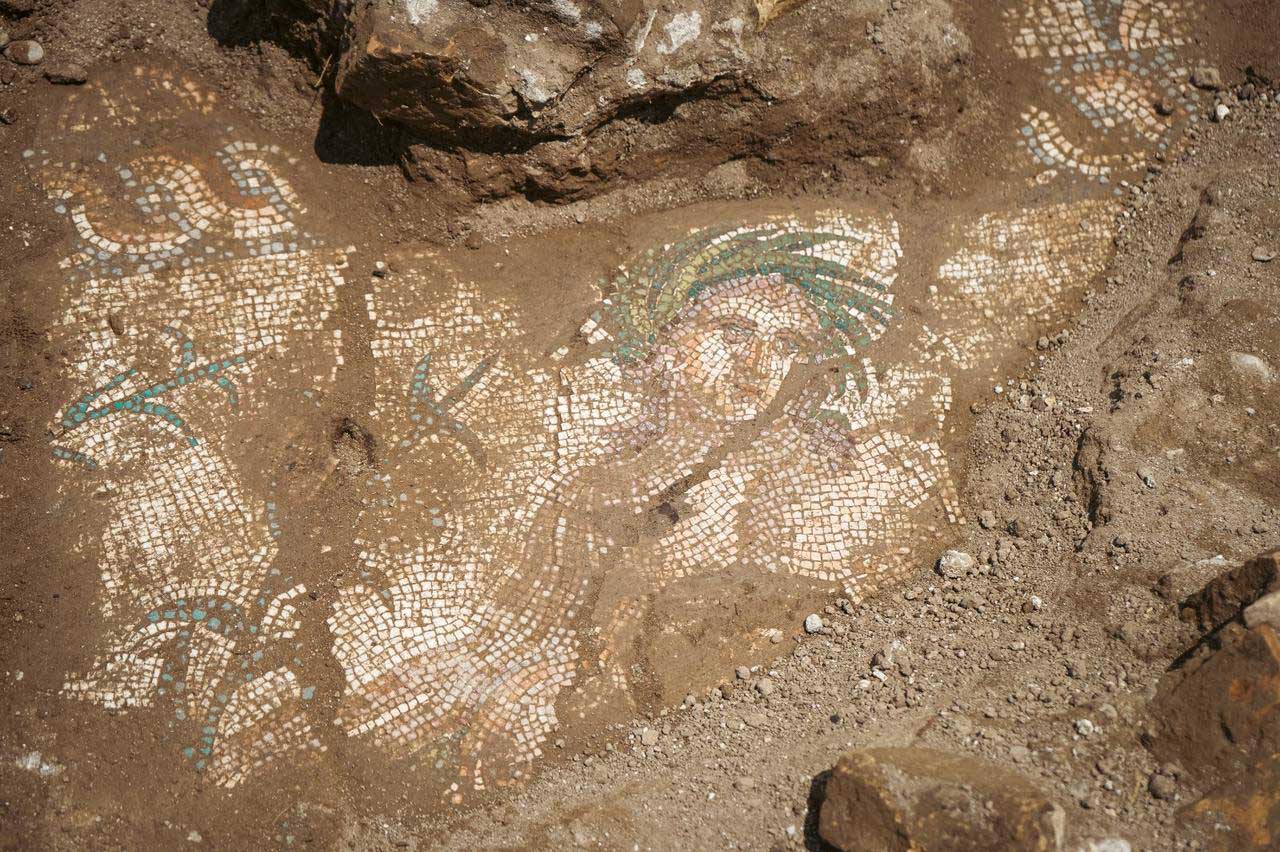
In the ancient city of Aspendos, in southern Anatolia, an archaeological team discovered a 3rd-century A.D. mosaic depicting a river god. The piece, found in Turkey, shows the "Young Eurimedon," the personification of the Eurimedon River that flowed near the city.
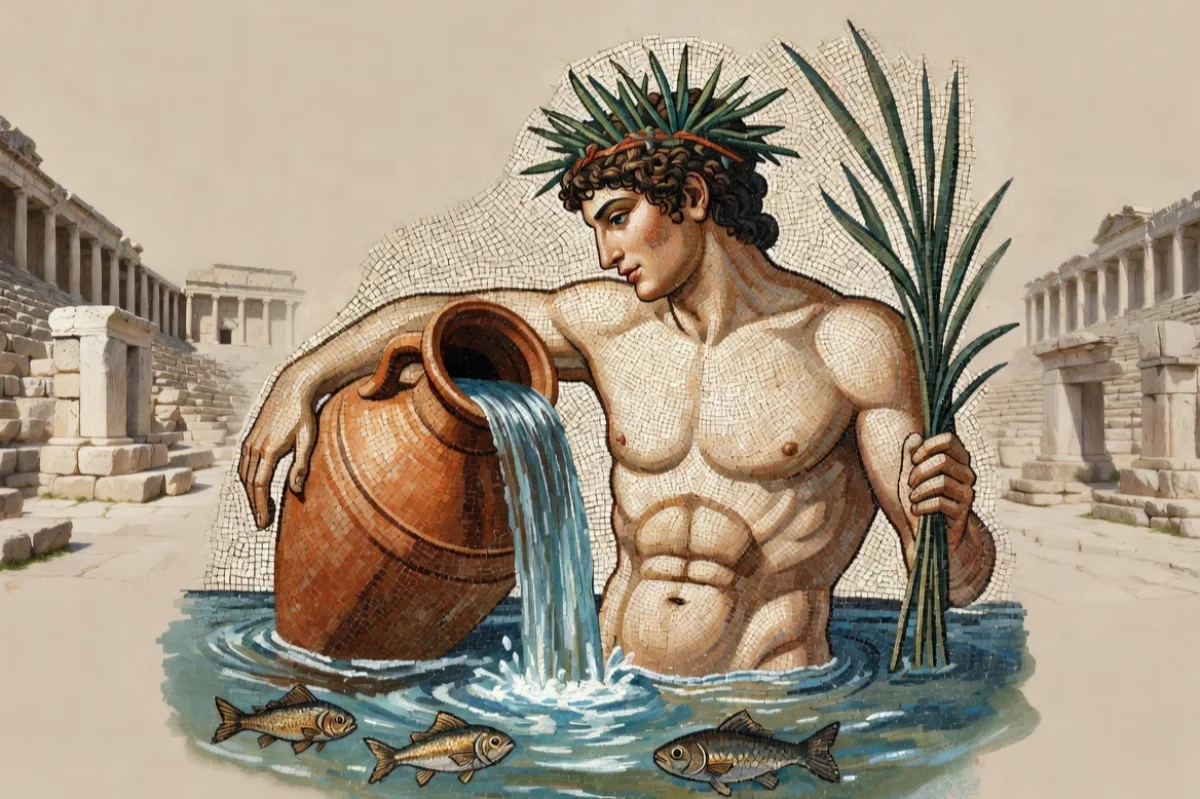
The figure wears reed leaves on its head and holds some in one hand, while leaning on an amphora from which water flows, symbolizing the fertility of the land. Fish swim in the vital waters, highlighting the importance of the liquid element for life in the region.
This discovery not only enriches knowledge about Roman art in Anatolia but also provides valuable data on the mosaic techniques of the time. This was expressed by Nuri Ersoy, Turkey's Minister of Culture and Tourism, who emphasized the artistic richness of the site.
The mosaic appeared in a structure that likely functioned as a pool, about 24 meters long and 6 meters wide, located along the street of the Theater, which connected the acropolis with the city's theater.
Historical context of the finding
According to indications, the pool would have been divided with interior walls after an earthquake shook the area in 262 A.D. This detail helps to understand how the inhabitants adapted their constructions after natural disasters.