They discovered an intact Egyptian tomb dating back 4,400 years, and inside it, the oldest evidence of a deadly disease

They discovered an intact Egyptian tomb dating back 4,400 years, and inside it, the oldest evidence of a deadly disease
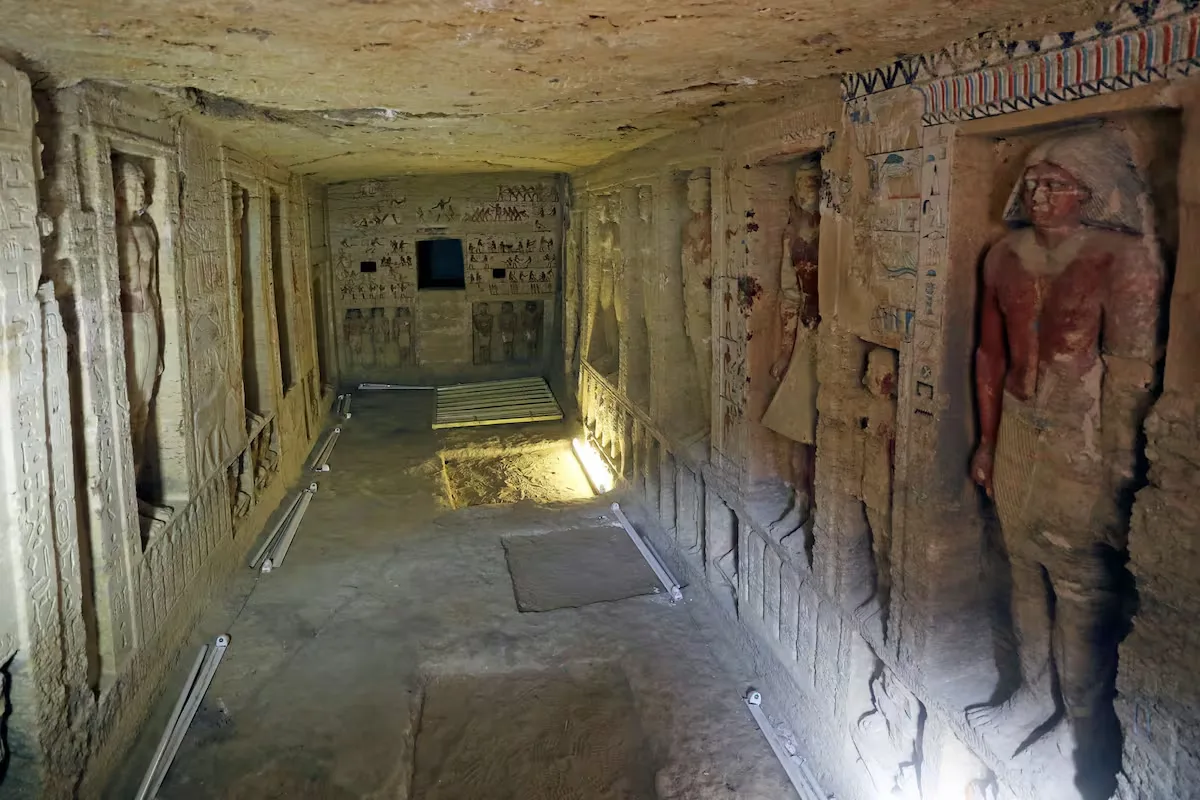
Inside the tomb of the high-ranking official, 45 stone statues were found

Most read in Argentina

Bone marrow: the silent factory of blood cells

  1. The Government expanded the zero tariff for electric cars and allowed the entry of models costing up to USD 35,000

  2. Máximo Kirchner was arrested while driving a truck with an outstanding warrant

  3. Yanina Latorre accidentally called Ángel de Brito and her insult went live on LAM

  4. The Argentine National Team crushed Bolivia 4-0 in their first friendly of the FIFA date

Imagen de Editorial Team
porEditorial Team
Argentina

The tomb belonged to Wahtye, a high-ranking priest who lived during the Fifth Dynasty of Ancient Egypt. The analysis of his remains and those of his family opened a surprising hypothesis

Add La Derecha Diario on
Share:

The mystery hidden beneath the tomb

Under the chapel, researchers excavated five burial shafts. The work allowed them to recover remains belonging to the priest and members of his family, whose presence had also been recorded in the representations on the walls.

The condition of those burials contrasted with the decorative richness of the upper level. Wahtye himself appeared in a relatively simple wooden coffin, and his remains did not show the type of preparation one might expect given his social position.

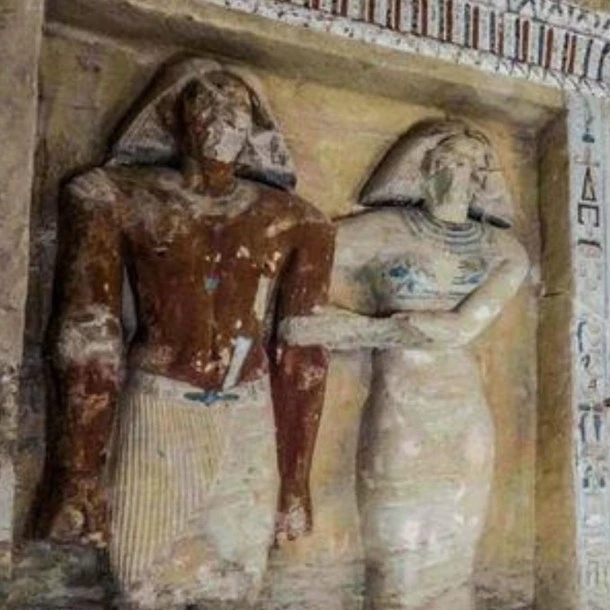
Researchers also located remains attributed to his wife Weret Ptah, his mother Merit Meen, and his children.

The number of family members who had died young raised questions about what might have happened. The possibility that a disease had affected the group began to gain traction.

It was the analysis of the skeletons that provided a crucial clue.

What specialists found in the bones

Dr. Amira Shaheen examined the bone remains and detected alterations consistent with anemia.

One of the elements that caught her attention was the distension of certain bones. Similar changes were also observed in remains attributed to Wahtye's mother.

The specialist then began to wonder if behind those anomalies there could be a disease that might have affected different family members.

“The entire family could have died due to a disease or epidemic, most likely malaria,” Shaheen suggested while analyzing the discovery, as noted in the official material about the documentary Secrets of the Saqqara Tomb.

Malaria is a potentially fatal disease caused by parasites of the genus Plasmodium, transmitted to humans through the bite of infected mosquitoes.

The hypothesis is particularly appealing due to the environmental conditions of the ancient Nile valley, where the presence of water could provide favorable spaces for the transmitting mosquitoes.


La Derecha Diario on X

  1. INVASIÓN ISLÁMICA: El imán musulmán Abu Hamzah admite sus planes en Australia. “Los musulmanes no vinieron a Australia a vivir entre los infieles, vinieron a establecer la ley de la sharía en el gobierno”.

    9 min ago

  2. ABELARDO BASADO: Así fue la tremenda domada del derechista Abelardo de la Espriella a “Keko”, el criminal que lo amenazaba de muerte por teléfono y que, tras ser capturado en un megaoperativo en Barranquilla, terminó rendido diciendo que estaba “firme por la patria” y dispuesto a colaborar con la justicia. “Miren, así es que se doma un bandido. Bienvenido a la patria milagro”.

    19 min ago

  3. URGENTE — La líder derechista Alice Weidel sobre los refugiados sirios: “El 100% de los sirios en Alemania tienen que volver a su país. La guerra terminó en Siria”.

    29 min ago

  4. “CREÍAN QUE HOY ERA EL DÍA ‘D’, FRACASÓ” El Profe Álvarez aseguró que fracasó la convocatoria de las protestas de los kirchneristas y terroristas de izquierda que provocaron una jornada de disturbios en el Congreso. “Los mismos que asaltaron la Secretaría de Educación lloraban represión bajo el agua”.

    44 min ago

  5. “LO ÚNICO POR LO QUE PODRÍAN DESTITUIRME ES POR HACER QUE NUESTRO PAÍS SEA FUERTE” El presidente Donald Trump afirmó que los demócratas buscan destituirlo a pesar de no tener ningún motivo para hacerlo. “El crecimiento de nuestro país es mayor que nunca antes”.

    59 min ago

La Derecha Diario logo
TwitterInstagramYouTubeTikTokFacebook
Derecha Diario TV

Nosotros

  • Quienes Somos
  • Autores
  • Donar

Privacidad

  • Protección de datos
  • Canales
  • Sitemap
  • RSS

Contacto

  • info@derechadiario.com.ar
PUBLICIDAD
La Derecha Diario logo
ESX logoInstagram logoYouTube logoTikTok logoFacebook
ARGENTINAUNITED STATESECUADORISRAELMEXICOURUGUAY
DERECHA DIARIO TV
  • ES
    XInstagramYouTubeTikTokFacebook
  • DERECHA DIARIO TV
  • Sections
  • ARGENTINA
  • UNITED STATES
  • ECUADOR
  • ISRAEL
  • MEXICO
  • URUGUAY
  • Countries
  • La Derecha Diario logoLA DERECHA DIARIO
  • La Derecha Diario México logoLA DERECHA DIARIO MÉXICO
  • La Derecha Diario Uruguay logoLA DERECHA DIARIO URUGUAY
  • La Derecha Diario Ecuador logoLA DERECHA DIARIO ECUADOR
  • La Derecha Diario Israel logoLA DERECHA DIARIO ISRAEL
  • La Derecha Diario Estados Unidos logoLA DERECHA DIARIO ESTADOS UNIDOS
  • Topics
  • GUERRA EN IRÁN
  • The Newspaper
  • QUIENES SOMOS
  • AUTORES
  • PUBLICIDAD
  • DONAR

Related news

Martín Varsavsky invested again in Argentina: “The country is heading in the right direction, the opposite of Europe”

Martín Varsavsky invested again in Argentina: “The country is heading in the right direction, the opposite of Europe”

The espionage folders on judges, opponents, and businessmen found in CFK's vault

The espionage folders on judges, opponents, and businessmen found in CFK's vault

The United Kingdom arrested an Iranian on suspicion of preparing acts of terrorism at a US base

The United Kingdom arrested an Iranian on suspicion of preparing acts of terrorism at a US base

Trump Effect: the US economy recorded its lowest unemployment rate in over 50 years and poverty also decreased

Trump Effect: the US economy recorded its lowest unemployment rate in over 50 years and poverty also decreased

The Trump administration begins a series of refunds for excessive charges to nearly a million Obamacare users

The Trump administration begins a series of refunds for excessive charges to nearly a million Obamacare users

National Lottery: all the winning numbers from Thursday, October 1

National Lottery: all the winning numbers from Thursday, October 1

For approximately 4,400 years, a tomb remained practically intact beneath the sands of Saqqara, one of the most important necropolises in Egypt. When a team of archaeologists managed to access it in 2018, they found walls still covered in colors, dozens of statues, and inscriptions that allowed them to identify the man for whom it had been prepared.

It was Wahtye, a priest and high-ranking official who lived during the Fifth Dynasty and served during the reign of Pharaoh Neferirkare Kakai. The exceptional state of preservation led Egyptian authorities to classify the discovery as one of the most important in recent decades.

However, the greatest mystery was not in the decorated walls of the chapel. Below the floor were several burial shafts containing the remains of Wahtye and members of his family.

The amazing discovery beneath the tombs

The subsequent study of those bones revealed alterations that led Dr. Amira Shaheen, a professor of Rheumatology at the Faculty of Medicine at Cairo University, to propose a surprising hypothesis: the family may have suffered from malaria.

The tomb of Wahtye that remained closed for 4,400 years

The discovery occurred in Saqqara, about 30 kilometers south of Cairo. The enormous funerary complex houses monuments from different periods of Egyptian history and features the stepped pyramid of Djoser as one of its main attractions.

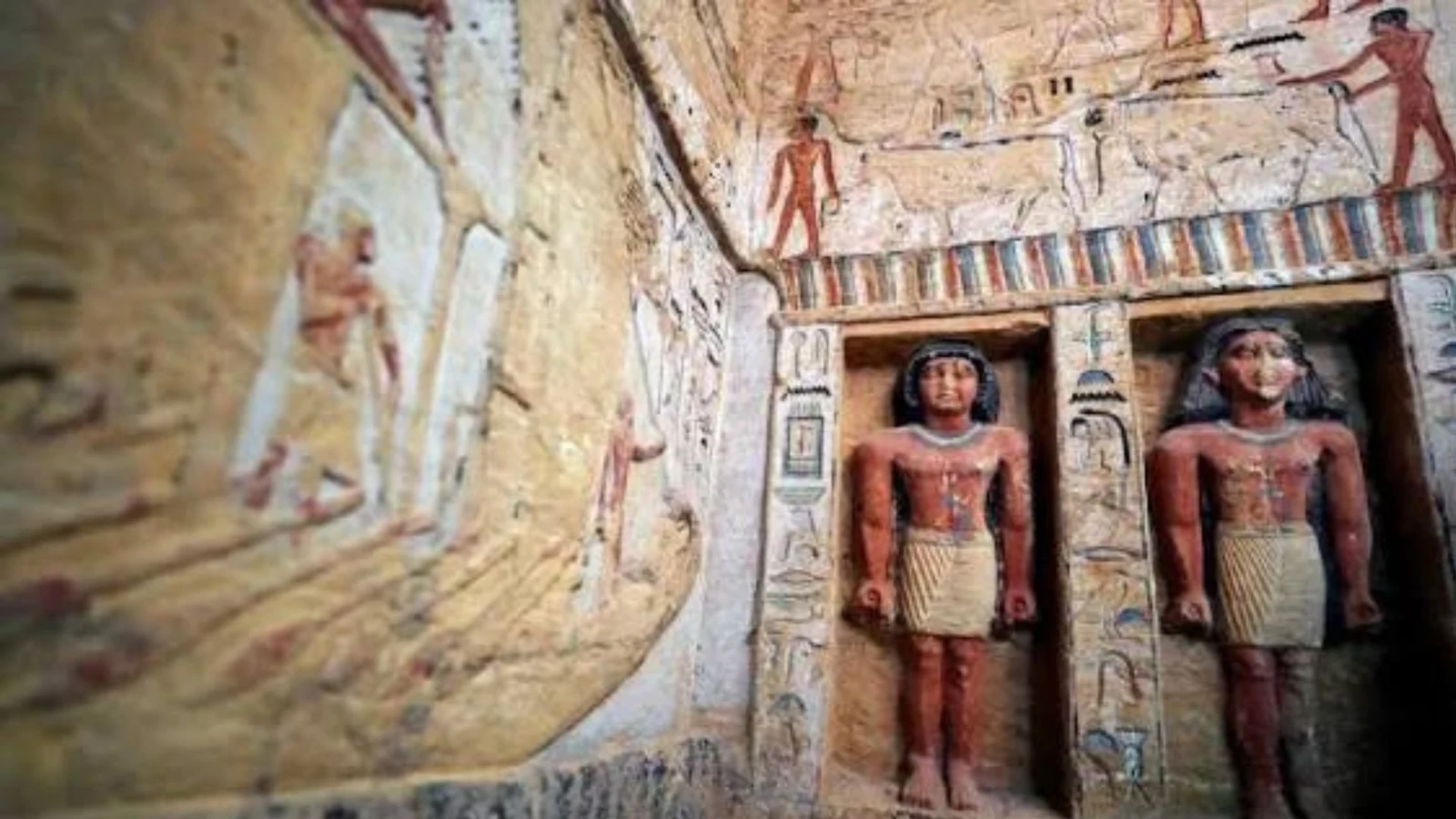
The tomb of Wahtye was discovered in 2018 and surprised from the very first moment due to its preservation. The walls still retained much of their original pigments despite having been buried for over four millennia.

The structure measures approximately 10 meters long and three meters wide. Inside, 55 statues carved into the walls were found, as well as representations of the priest, his wife, his children, and his mother.

Many of the young relatives died in strange ways

The scenes provide a glimpse into various aspects of daily life in Ancient Egypt. The reliefs depict activities related to food and drink production, navigation, music, and other tasks that also had a symbolic function related to the afterlife.

The inscriptions also revealed the high position Wahtye held. The priest was associated with administration and royal cults during the reign of Neferirkare Kakai, one of the pharaohs of the Fifth Dynasty.

But while the visible part of the tomb offered information about the prestige Wahtye wanted to project, what was found below began to tell a much darker story.