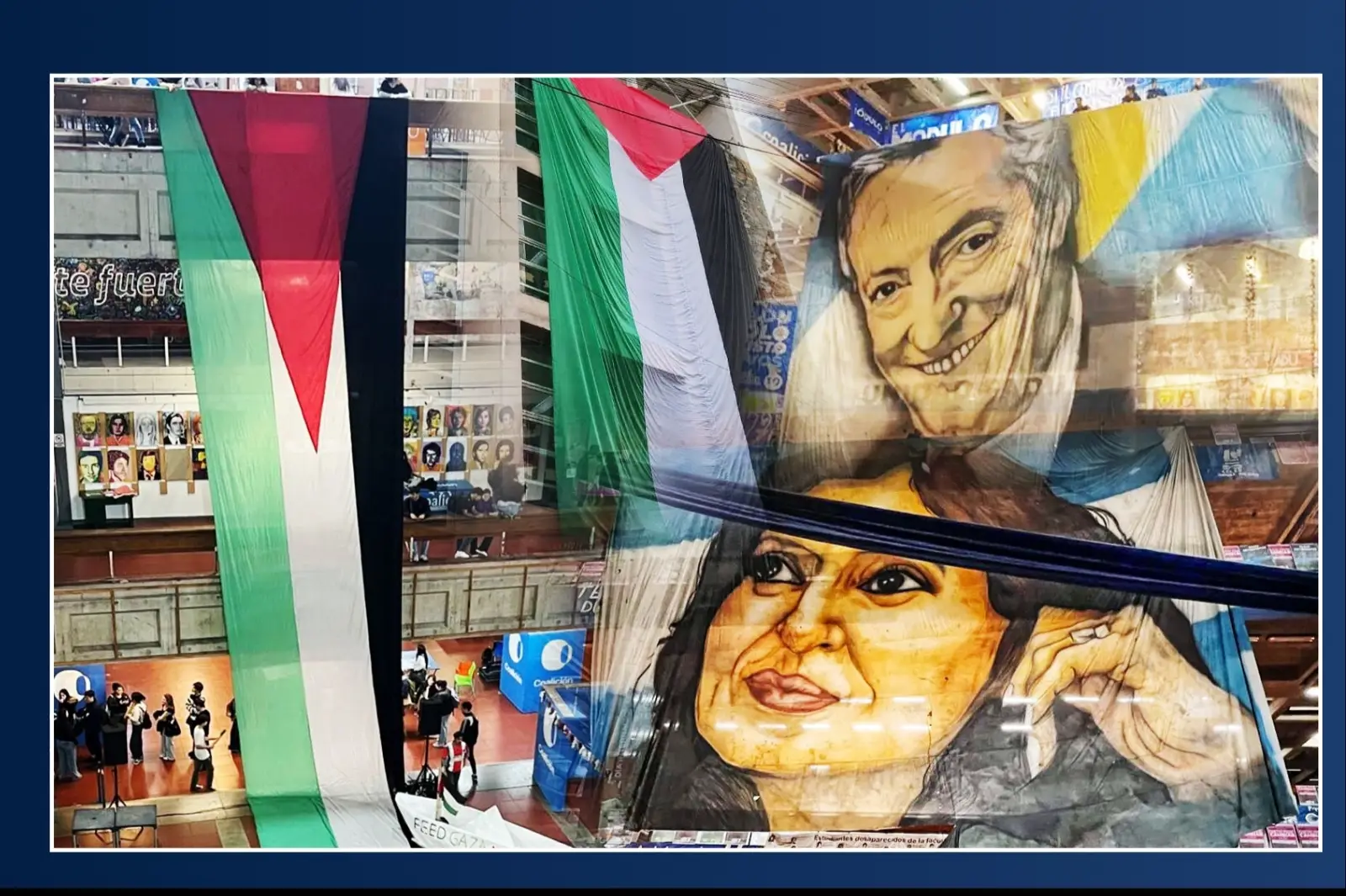

Recently, I read carefully the interview with Eric Kaufmann regarding his book “The Third Awokening” (Bombardier Books, 2024). I found it particularly useful and very interesting because it puts into historical perspective something that many of us continue to experience firsthand within institutions, particularly in universities: the capture of public spaces that should be for deliberation and respect for science, by a set of ideas that are presented as moral and inevitable, but function as a secular theology. In fact, it is practically forbidden to question them. Students fear the sanction of their progressive “teachers/priest” and the few dissenting teachers hide to survive censorship and cancellation.
Kaufmann calls this phenomenon “cultural socialism.” It is not a new trend, although its acceleration and deepening have notably increased in recent years. It is the third wave of the same impulse that has been present since the late sixties. Back then, there were already “affirmative action,” building occupations (Okupas), demands for racial quotas, the first cancellations, and the idea that certain canonical works were intrinsically racist, always according to the twisted taste of progressivism.
The Moynihan Report was censored. Second-wave feminism was already talking about patriarchy as a total structure. The sanctification of certain groups and the conversion of “emotional offense” into political sin were already operating, albeit still in a localized manner. Its radicalization and violence were already present.
The Moynihan Report, officially titled “The Negro Family: The Case For National Action,” was published in March 1965 by sociologist and U.S. Deputy Secretary of Labor, Daniel Patrick Moynihan. The document argued that the disintegration of the nuclear family in the African American community—marked by the lack of male employment and the increase of female-headed single-parent households—perpetuated a cycle of poverty, beyond the legal achievements in civil rights.
From political correctness to woke culture
What changed in the following decades was the scale. In the eighties and nineties, “political correctness” emerged, the attack on Western civilization became popular (“Western Civ has got to go,” “Hey, hey, ho, ho, Western civilization has to die!”) and race, gender, and sexual orientation consolidated as the three untouchable pillars.
“Woke,” at its core, is that: the transformation of the oppression myths of certain groups into sacred myths that aim to become the official identity of institutions and, in some cases, entire nations. And the heretics must disappear or live on the margins.
Two distinct currents behind the same cultural transformation
What interests me most about Kaufmann's reading is the distinction he makes between two currents that are often confused. On one hand, there are critical theorists or cultural Marxists, who speak of hidden structures—patriarchy, white supremacy—that must be overthrown in a revolutionary manner. On the other hand, there is the dominant left liberalism of the 20th century, which does not propose revolution but rather permanent incremental change: always more diversity, always less of what they consider privileged, always more equality of outcomes.
This second liberalism has twisted classical concepts. Freedom of expression is no longer enough; “equality of opportunity to speak” is demanded, which justifies silencing some to empower others. That is not liberalism. It is a distortion, it is the easiest path to fascism.
When activist minorities dominate institutions
The result is a profound democratic problem. Large majorities reject racial quotas (in the case of the U.S.), gender prerogatives, and mandatory diversity statements, but these ideas dominate broad sectors of institutional elites.