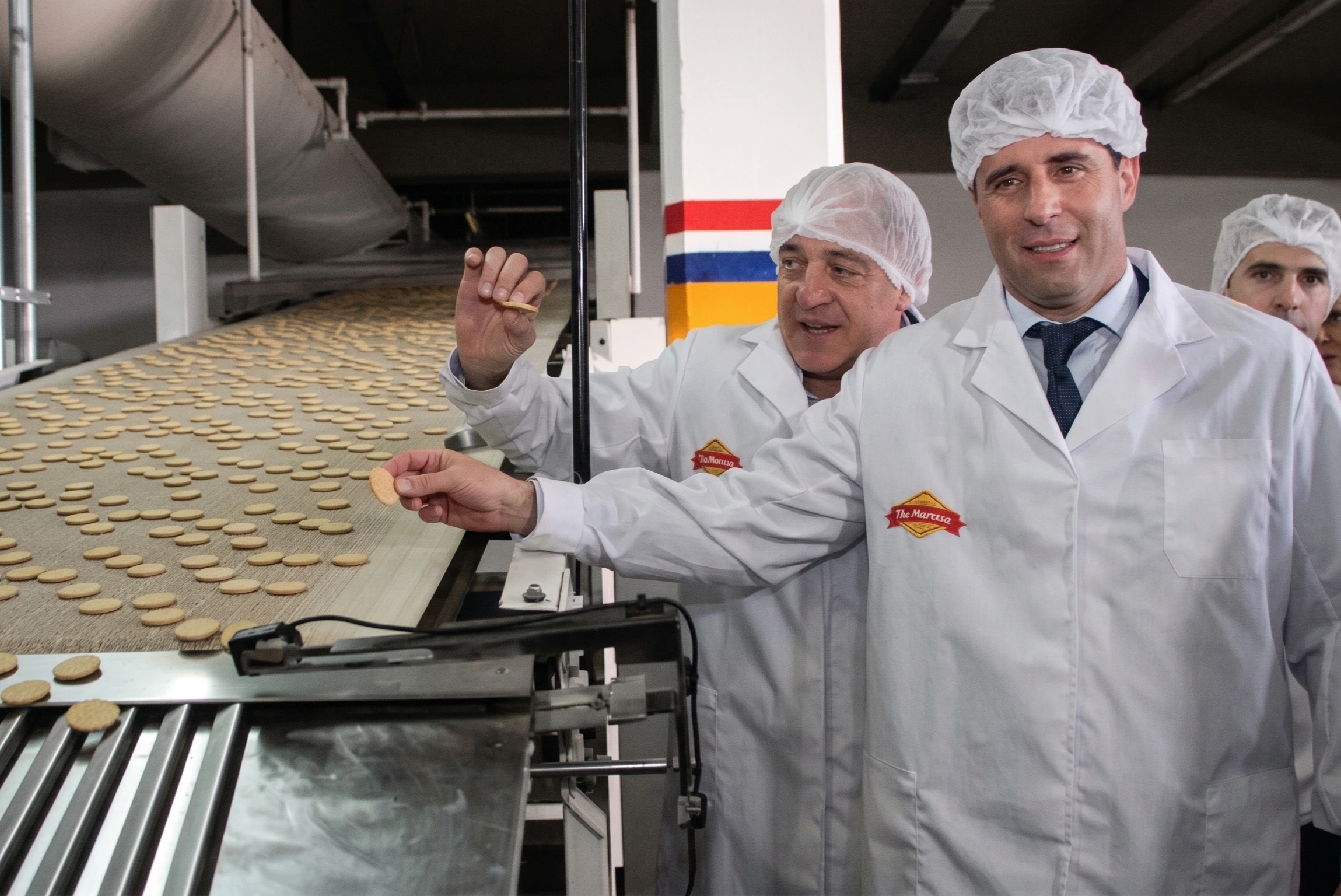
The manager clarified that there is no closure and that the firm became more competitive with Milei.
Nuevo
Agregar La Derecha Diario en
Compartir:
In recent days, different sectors of Kirchnerism and the media have tried to install an alleged closure of the Tía Maruca firm, attributing it to an alleged economic crisis. However, the company itself came out to categorically deny that version and presented a completely different scenario: growth, expansion and
improvement in its competitiveness.
The general manager of the firm assured that the reality goes in the opposite direction to the installed narrative and maintained that the company managed to adapt to the new economic context. In this context, he said: "The reality is that it doesn't close and with the change of government we reinvent ourselves to be more competitive, we are growing at 20% year-on-year
.”
Far from a shutdown, what happened was a strategic restructuring. Tía Maruca sold her industrial plant in San Juan, a decision that allowed her to concentrate her resources at her headquarters in Luján and optimize her business model. This operation did not involve the cessation of activities, but rather the transfer of an asset that continues to operate under new management
. Pablo Tamburo, CEO.
As explained by its CEO, Pablo Tamburo, the company is growing close to 25% year-on-year and produces between 400 and 500 tons of cookies per month. In addition, he highlighted that the brand has been gaining market share compared to other competitors, driven by its price-quality ratio
.
The San Juan plant, meanwhile, not only did not close, but it maintains its normal operation under its new owner, who is even moving forward with an investment and modernization plan.
The background of Lumilagro
The Matera firm was also involved in a media operetta.
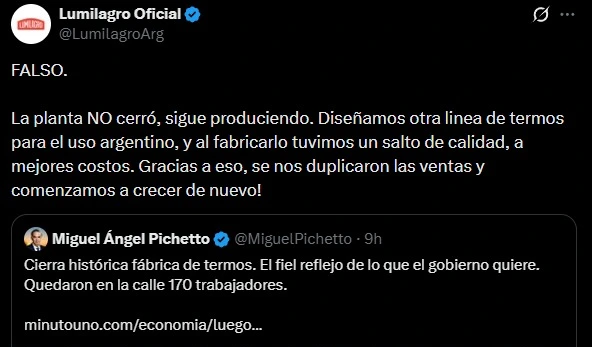
The case is reminiscent of what happened with Lumilagro, when the Peronist leader Miguel Ángel Pichetto and aligned journalists announced that the historic firm had closed its plant, something that was later quickly denied by the company, which clarified that it was still operating normally
.
On that occasion, Lumilagro not only denied the closure, but also reported that it had managed to double its sales after a phase of productive conversion. The parallel with the situation of Tía Maruca exposes a pattern that is repeated: the Kirchnerist quest to install a scenario of economic collapse, but which shocks reality: companies that adapt, compete and expand in the