
The recent announcement by Mayor Zohran Mamdani and Governor Kathy Hochul about the implementation of a new tax on second homes in New York, known as “pied-à-terre”, has sparked a strong negative reaction in real estate, business and political sectors. The measure, presented as a tool to alleviate the $5.4 billion budget deficit, is seen by its detractors as a new advance in fiscal pressure that could erode the city's competitiveness. The proposal establishes an additional tax for secondary homes of one to three families valued at $5 million or more, in an attempt to increase revenue. However, even sectors that are not directly opposed to the initiative recognize limitations: the estimated collection of $500 million is clearly insufficient compared to
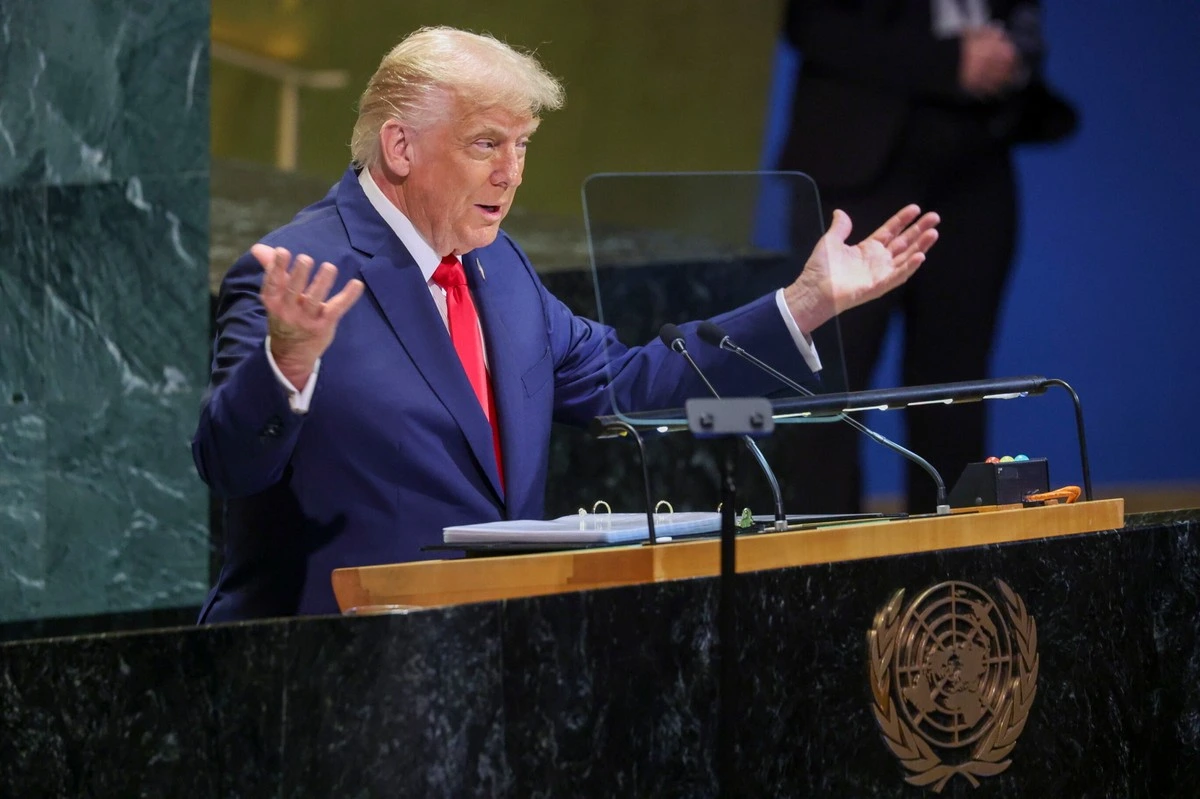
the existing fiscal red.Among the strongest voices was President Donald Trump, who harshly questioned the initiative from his account on Truth Social: “Unfortunately, Mayor Mamdani is DESTROYING New York. You don't have a chance! The United States should not contribute to its failure. It will only get worse. TAXES, TAXES, TAXES policies are a TOTAL MISTAKE.”
The criticism wasn't limited to Trump. Conservative executive Bruce Blakeman ironized that Hochul's promise not to raise taxes “expired faster than families fleeing the affordability crisis.” Along the same lines, Republican representative Nicole Malliotakis accused the governor of “saying one thing and doing another,” while Vito Fossella argued that “pursuing and punishing wealth does not solve the problem,” calling the measure a “maneuver” that replicates policies responsible for the loss of population,
companies and investments.Rejection of the private sector and economic warnings
From a business perspective, investor Kevin O'Leary was categorical in defining the initiative as “the stupidest policy I have seen in real estate”, stressing that these landlords already pay taxes without making intensive use of public services. In addition, he warned that a higher tax burden encourages migration to states with lower fiscal pressure
.For his part, James Whelan stated that the measure “ignores the real economic damage it would cause” and that “it cannot be adopted without causing significant harm to everyday residents”. Along the same lines, different industry leaders warned that the tax could discourage investment, impact employment and harm key activities such as commerce and entertainment. According to USA Today, Andrew Rein also expressed objections, noting that the tax “will be difficult to implement” and is not a substitute for comprehensive tax reform
.The rejection also moved to the digital realm. On the social network
X, user Frank J. Fleming wrote:“Anyone who is excited that others pay more taxes is a pathetic, greedy and bad American”, a message that accumulated 2,000 likes, reflecting a climate of growing discomfort among taxpayers.
How the “pied-à-terre” tax works The tax
applies to homes of one to three families, condominiums and cooperatives that are not used as a main home, but as second homes.Its structure is