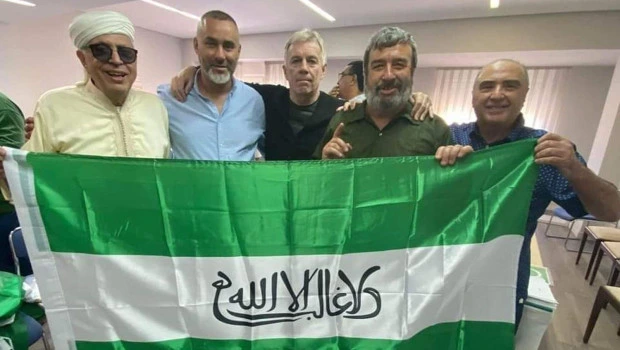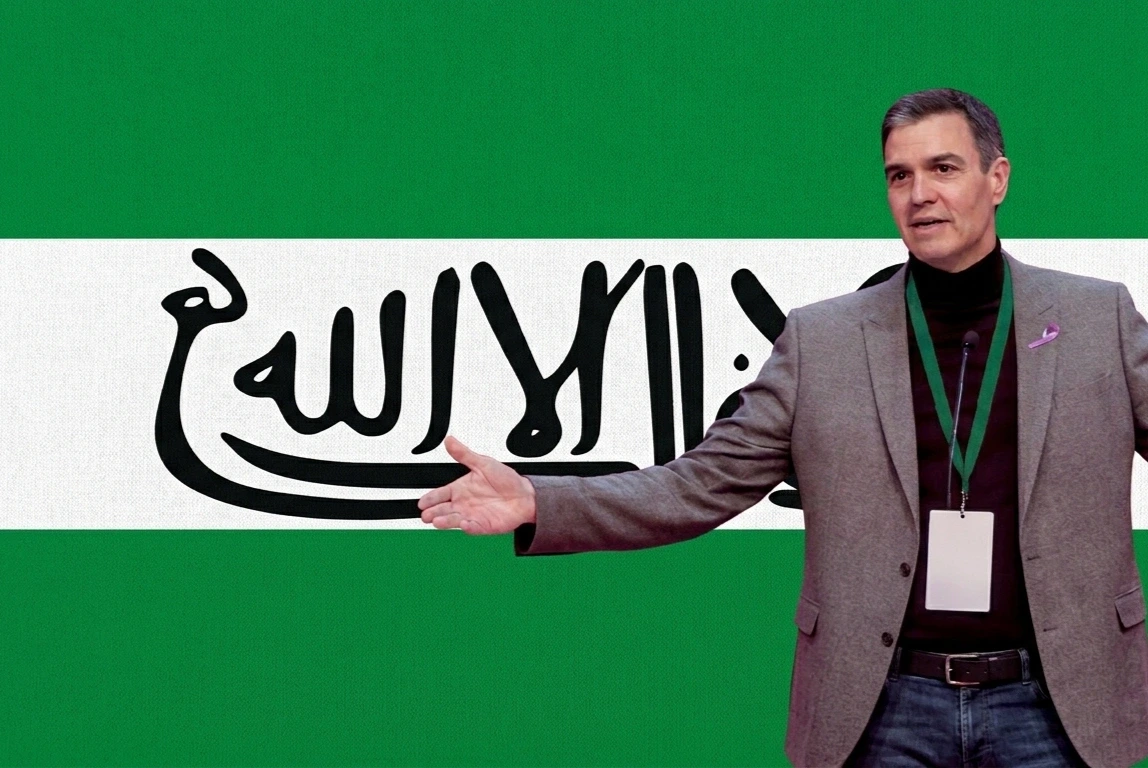

In a political context marked by growing debates about identity, integration and the State model, the emergence of a new political force in Andalusia introduces an additional element of controversy. This is the Andalusian Party, a group that is running for the first time in regional elections with a proposal based on so-called “Islamic humanism” and that, in a few days, managed to attract media attention. The party, founded in 2023 in Campo de Gibraltar under the leadership of Alejandro Delmás —grandson of Blas Infante, considered the “Father of the Andalusian Fatherland” —, has decided to take a step forward with its 17M candidacy.
In this instance, its main reference is the candidate Dris Mohamed Amar, who in dialogue with Infobae set out the central guidelines of the training, which aspires to be consolidated “in the long term”.As Amar explained, the concept of “Islamic humanism” constitutes the ideological basis of space and aims, in his words, to build “a more equitable society”. The proposal is structured around three pillars: local economic justice, education based on values and empathy, and a “humane” administration.
However, the emphasis on Islam as a political guide - although the candidate himself clarifies that it does not arise “from the imposition” - raises questions about the relationship between religion and the public sphere in a secular State.
Among its most striking proposals are the inclusion of Arabic as an official language and the incorporation of Ceuta and Melilla into Andalusia. Both initiatives, with a strong symbolic burden, open debates on cultural identity, territorial organization and national cohesion.
Regarding his identity, Amar maintains: “We are Andalusian nationalists, not exclusive. We are not separatists. We are not looking for a separation of Andalusia from Spain. The other way around. We are the only parties since democracy was created that we request and demand that Ceuta and Melilla return to being part of Andalusia”. Along these lines, he points out that the party recognizes “Spanish sovereignty over the territory” and also “the monarchy”, differentiating itself from other spaces
.The leader insists that his project does not respond to “elites or lobbies” and stresses: “No one supports us economically. We do everything with our money.” It also claims the social role of space during the pandemic: “We have given an example of coexistence and solidarity in the worst conditions, such as with COVID