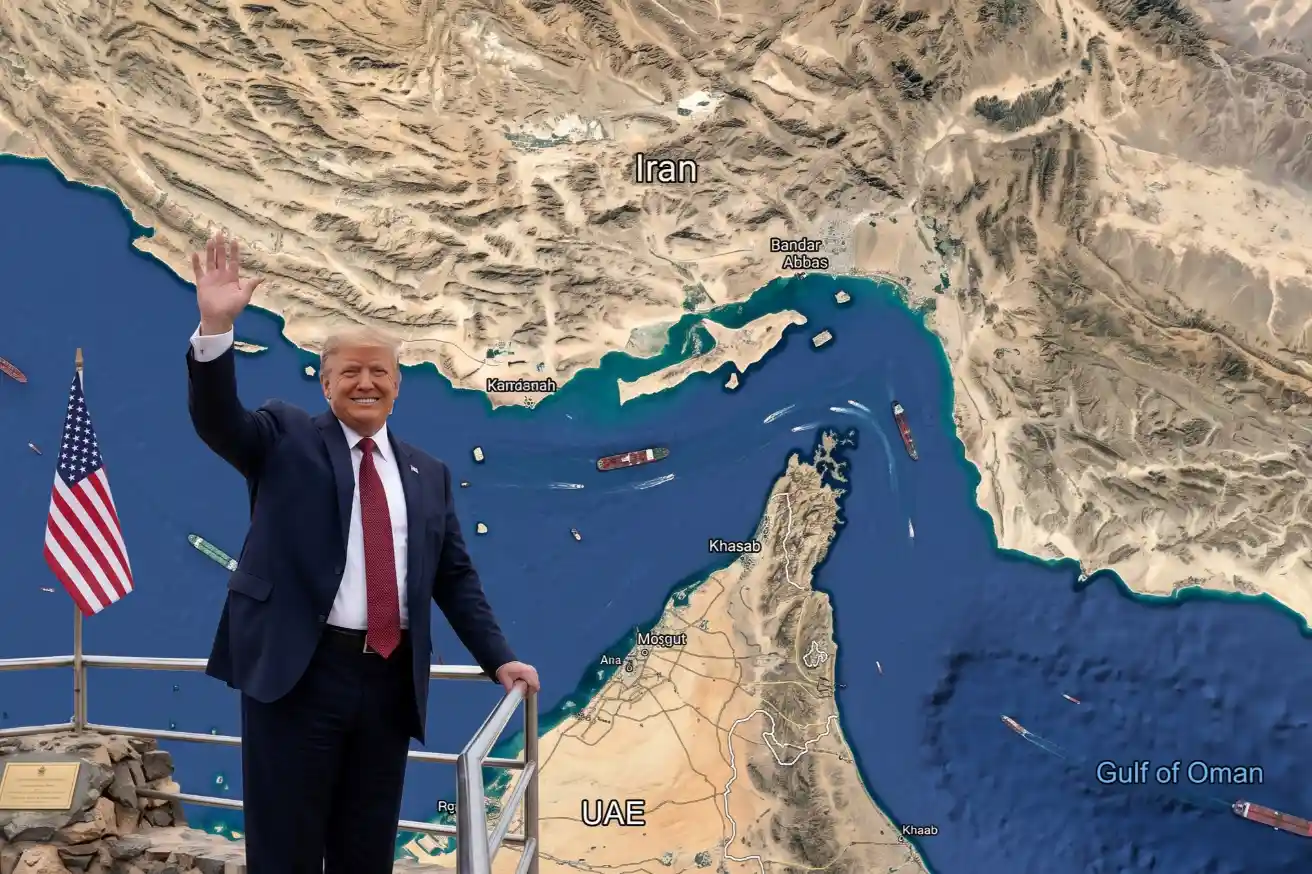
The United States Army rejected on Thursday the claims of the Iranian regime regarding alleged control over the Strait of Hormuz, one of the most strategic maritime routes for global energy trade. In an official statement, U.S. Central Command (CENTCOM) asserted that Tehran has no authority to decide which vessels can transit through that maritime corridor.
The pronouncement came amid a new military escalation between the two countries and after Iranian state media claimed that navigation through the strait could only occur via routes established by the regime until a definitive agreement is reached.
"Iran does not control the Strait of Hormuz", CENTCOM stated through its social media, while highlighting that U.S. forces continue to ensure the safety of commercial navigation in the region.
More than 800 commercial vessels navigated under U.S. protection
According to the U.S. military command, since early May, its operations have allowed the safe transit of more than 800 merchant vessels and the transport of approximately 380 million barrels of crude oil.
The agency also denied the versions circulated from Tehran that aimed to present the Iranian regime as the authority responsible for enabling passage through the strait.
Furthermore, CENTCOM maintained that U.S. military operations seek to preserve freedom of navigation and protect one of the most important trade routes on the planet, used daily for the transport of hydrocarbons to major international markets.
Washington blamed the Iranian regime for attacks on civilian vessels
The statements from CENTCOM coincided with new messages from the Iranian Revolutionary Guard, whose Navy claimed that recent U.S. bombings affected the gradual reopening process of the Strait of Hormuz.
In response to those claims, Washington directly blamed the Iranian regime for the recorded aggressions against commercial vessels and civilian crews operating in the area.
The military command explained that the actions taken by the United States aimed to "further degrade" the Iranian military's ability to threaten international maritime traffic, following several incidents recorded in that strategic corridor.
Donald Trump warned he will respond with greater force to new attacks
President Donald Trump publicly supported the Pentagon's stance and warned that the United States will respond with greater intensity if Iran attacks commercial vessels again.
The president stated that Washington holds the Iranian regime responsible for the recent escalation of violence against international maritime transport and reaffirmed the U.S. commitment to protecting free navigation.
The U.S. bombings were met with Iranian attacks against Kuwait and Bahrain, two countries that host important U.S. military bases. Kuwaiti authorities reported the interception of missiles and drones, while Qatar proactively activated a security alert that was later lifted.
The Strait of Hormuz remains a key point for the energy market
Alongside the increase in military tension, negotiations between Washington and Tehran remain virtually stalled. Before the NATO summit held in Turkey, Trump stated that the temporary ceasefire between both parties was no longer in effect and expressed skepticism about resuming talks with the Iranian regime.
However, the U.S. president later considered that he does not expect a large-scale war and estimated that any new confrontation would be of short duration.
The Strait of Hormuz historically concentrates a substantial part of global oil trade, so any threat to free navigation raises concerns in international markets and among countries that rely on this route to ensure energy supply.