The figure represents a decrease of 0.3 percentage points compared to the previous quarter
Compartir:
Unemployment in Argentina recorded a decrease during the second quarter of 2025, reaching 7.6%, according to the National Institute of Statistics and Censuses (Indec) on Thursday. The figure represents a decrease of 0.3 percentage points compared to the previous quarter, reflecting a positive trend in the labor market.
According to Indec, between last April and June, 1,091,000 people seeking employment in the country were unemployed, 45,000 fewer than in the first three months of the year. This decrease demonstrates a recovery in employment, driven both by the dynamism of certain productive sectors and by the economic policies implemented by the Government of Javier Milei.
Javier Milei y Luis Caputo.
GDP grows
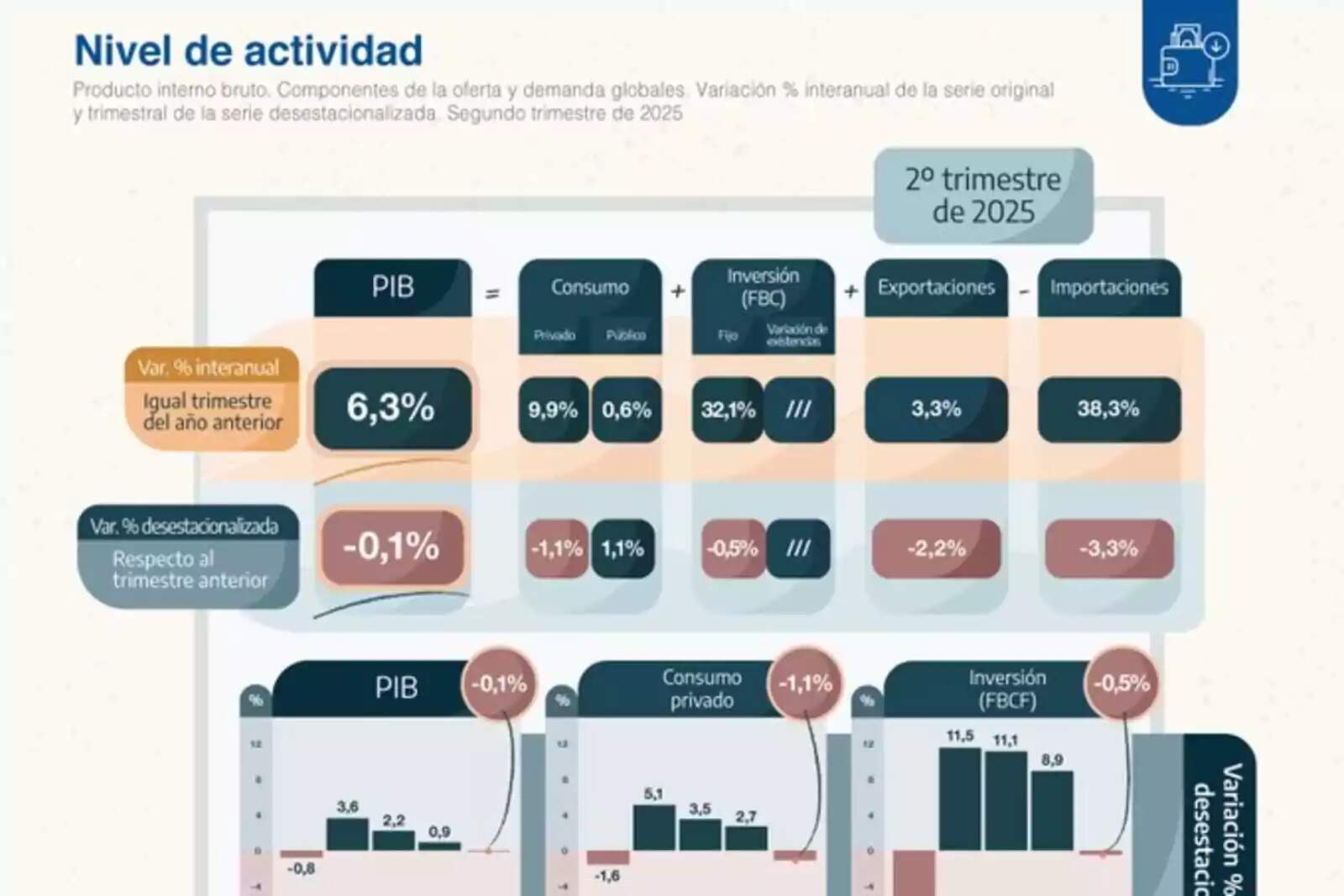
The agency also published in recent days the data for the Gross Domestic Product (GDP), which showed a year-on-year increase of 6.3% in the second quarter of 2025. This growth reinforces the sustained trend recorded during recent periods and reflects the effectiveness of the economic measures adopted by the libertarian administration, which seek to stimulate investment and consolidate economic stability.
Among the components of demand, Gross Fixed Capital Formation stood out with a year-on-year increase of 32.1%, a key indicator that demonstrates the confidence of companies and investors in the country's productive development. This growth in fixed capital not only strengthens productive capacity but also generates new jobs, directly contributing to the reduction of unemployment and the strengthening of the labor market.
Crece el PBI.
Inflation decreases
Meanwhile, inflation continues to show signs of deceleration. According to the latest data published by Indec, monthly inflation for August stood at 1.9%, remaining below 2% for four consecutive months, a phenomenon not seen since November 2017. The cumulative figure for the first eight months of the year reached 19.5%, the lowest figure for this period since 2020.
Disaggregated indicators show stability in different sectors: core inflation stood at 2%, while seasonal goods and services recorded a decrease of 0.8%. In addition, the six-month moving average of general inflation reached 2.2%, the lowest level since September 2020.