According to the military statement released by the United States, two fast boats and an Iranian Mohajer drone approached the tanker at high speed. During the maneuver, Iranian forces allegedly threatened to board the vessel and take control of it, which triggered alarms in a key region for the world's energy supply.
The spokesperson for Central Command, Navy Captain Tim Hawkins, explained that the downing of the Shahed-139 drone was a strictly defensive action. According to his account, the measure sought to safeguard both the aircraft carrier and its crew, and he stressed that no U.S. service member was affected during the operation.
A United States fighter jet shot down an Iranian drone that was approaching dangerously close to the aircraft carrier USS Abraham Lincoln while it was sailing in the Arabian Sea, in a new episode of military tension in the Middle East. The incident was confirmed by United States Central Command (CentCom), which described the action as a self-defense measure in response to a dangerous maneuver.
The incident occurred about 800 kilometers (497 miles) off Iran's southern coast, when a Shahed-139 drone headed directly toward the U.S. aircraft carrier. According to the report, the unmanned aircraft adopted an "aggressive" posture with "unclear intentions," even though U.S. forces deployed in the area had implemented de-escalation measures while operating in international waters.
In response to that situation, an F-35C fighter belonging to USS Abraham Lincoln's own air wing proceeded to neutralize the Iranian drone. The operation was carried out without complications, and no injuries or material damage were reported on the aircraft carrier or among its crew. CentCom emphasized that the response was proportional and preventive, with the objective of ensuring the safety of the vessel and the embarked personnel.
Drones iraníes.
Hours after this episode, a new incident was reported involving forces of Iran's Islamic Revolutionary Guard Corps, which harassed a merchant vessel with a U.S. flag and crew. The vessel was the Stena Imperative, which was sailing through the Strait of Hormuz, one of the most strategic maritime passages for global hydrocarbon trade.
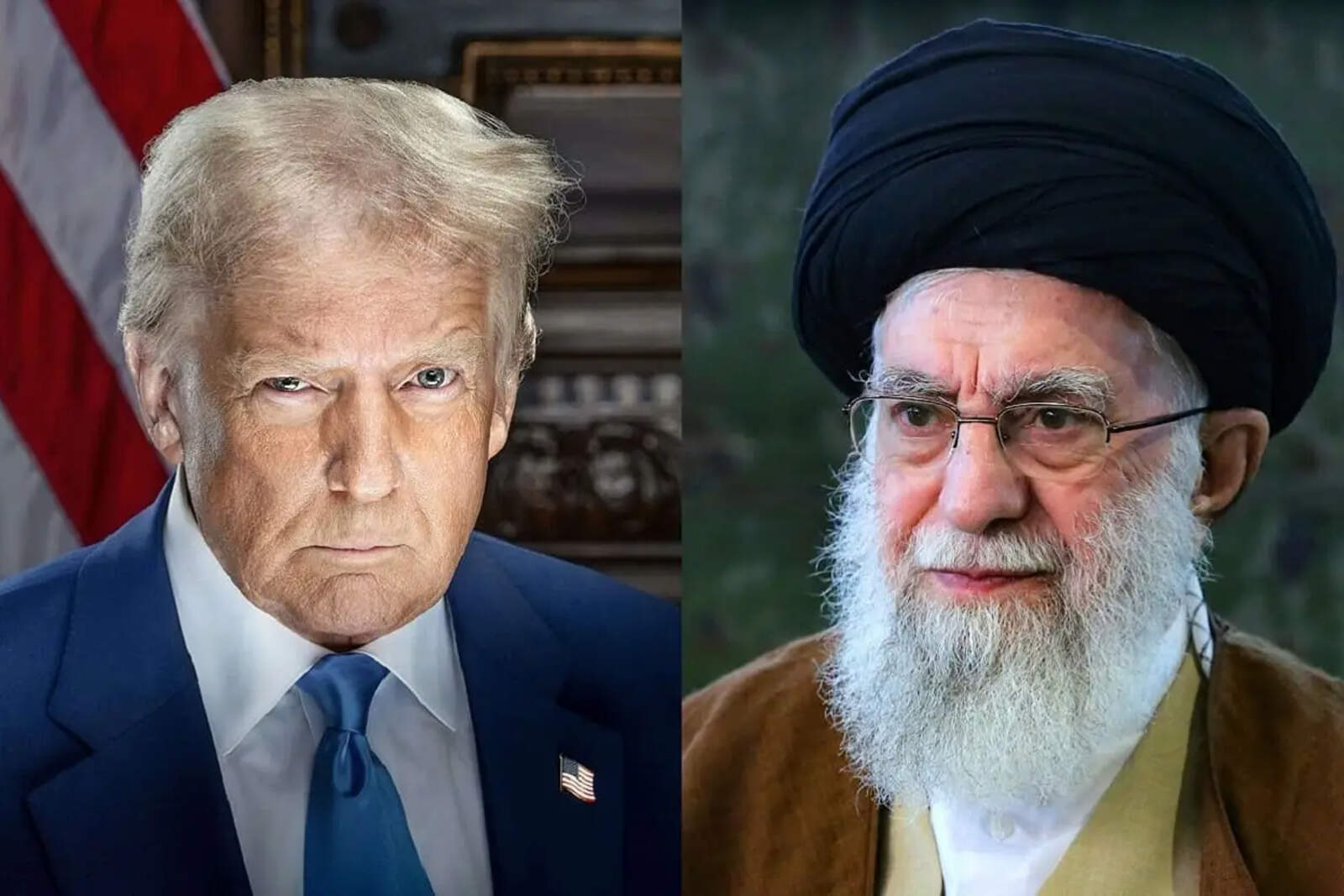
Donald Trump y Alí Jamenei
Recently, the president of the United States, Donald Trump, warned that the presence of U.S. warships near the Iranian coast means that "bad things will probably happen" if an agreement with the Islamic regime is not reached.
Trump stated days ago that Iran "was being serious" regarding the possibility of a new understanding, while the secretary of Iran's Supreme National Security Council, Ali Larijani, confirmed that efforts were underway to open a dialogue channel between both parties.
The incidents also come after the violent repression of anti-government protests in Iran, considered the most serious since the 1979 revolution, with more than 30,000 dead in just a few days.