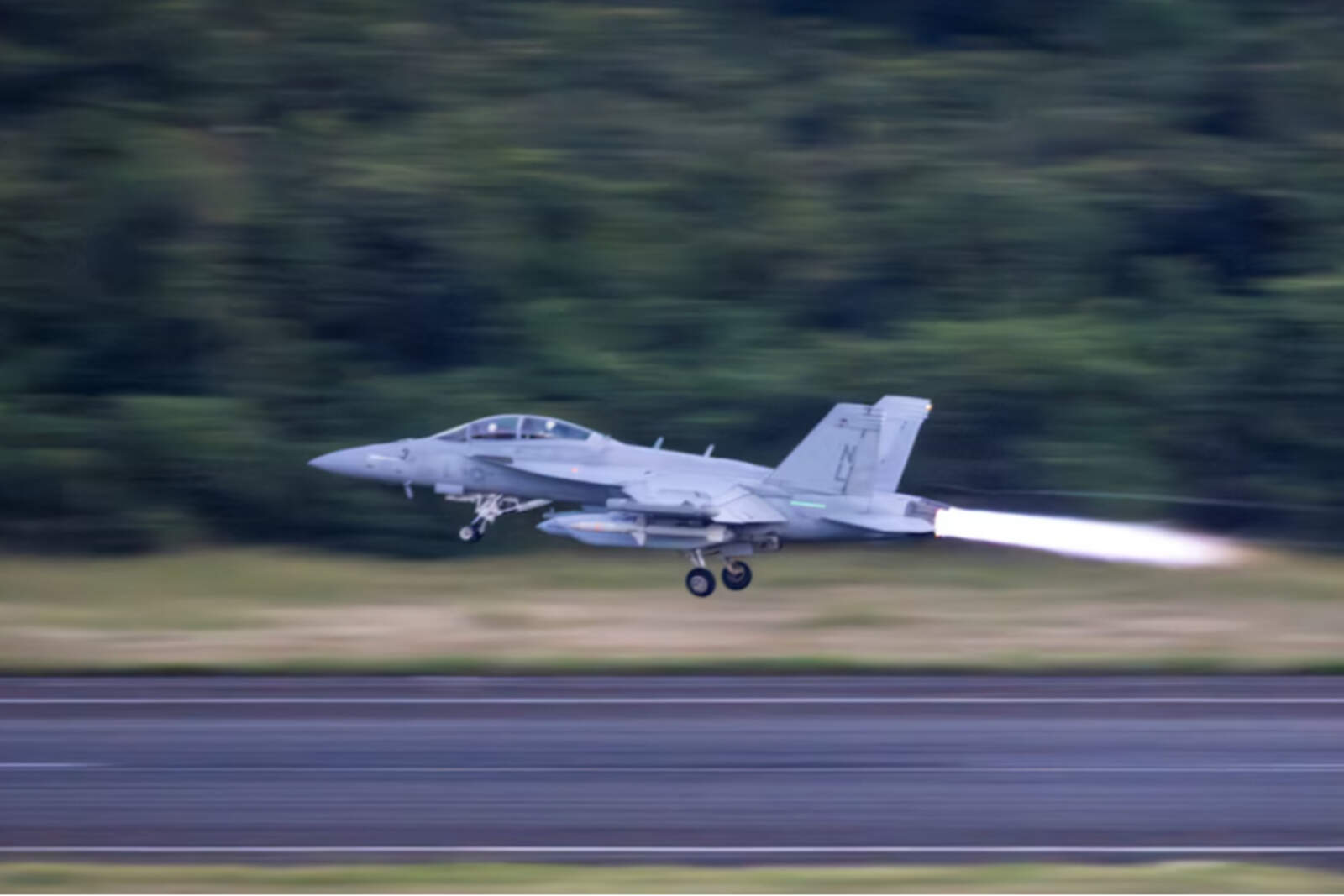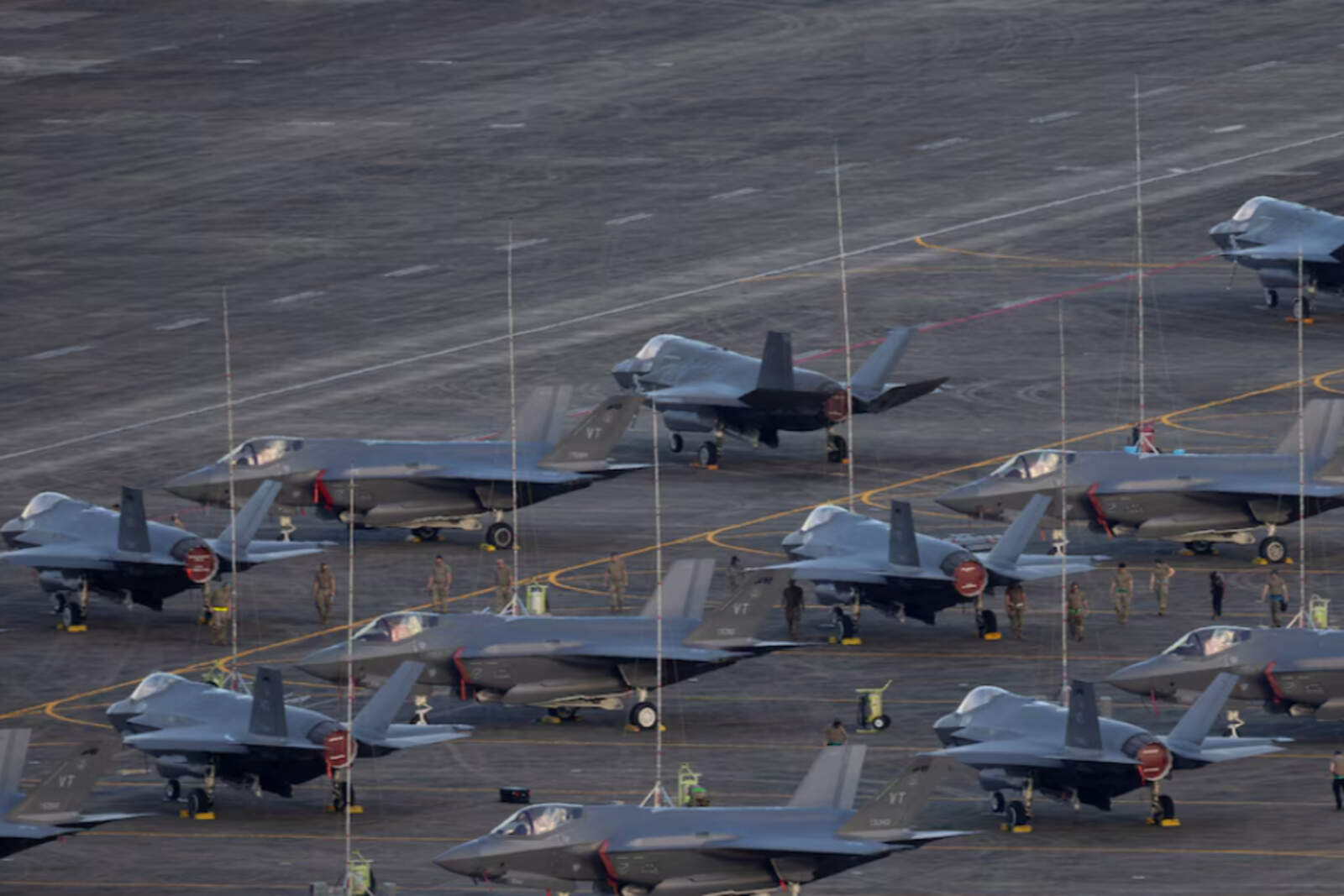

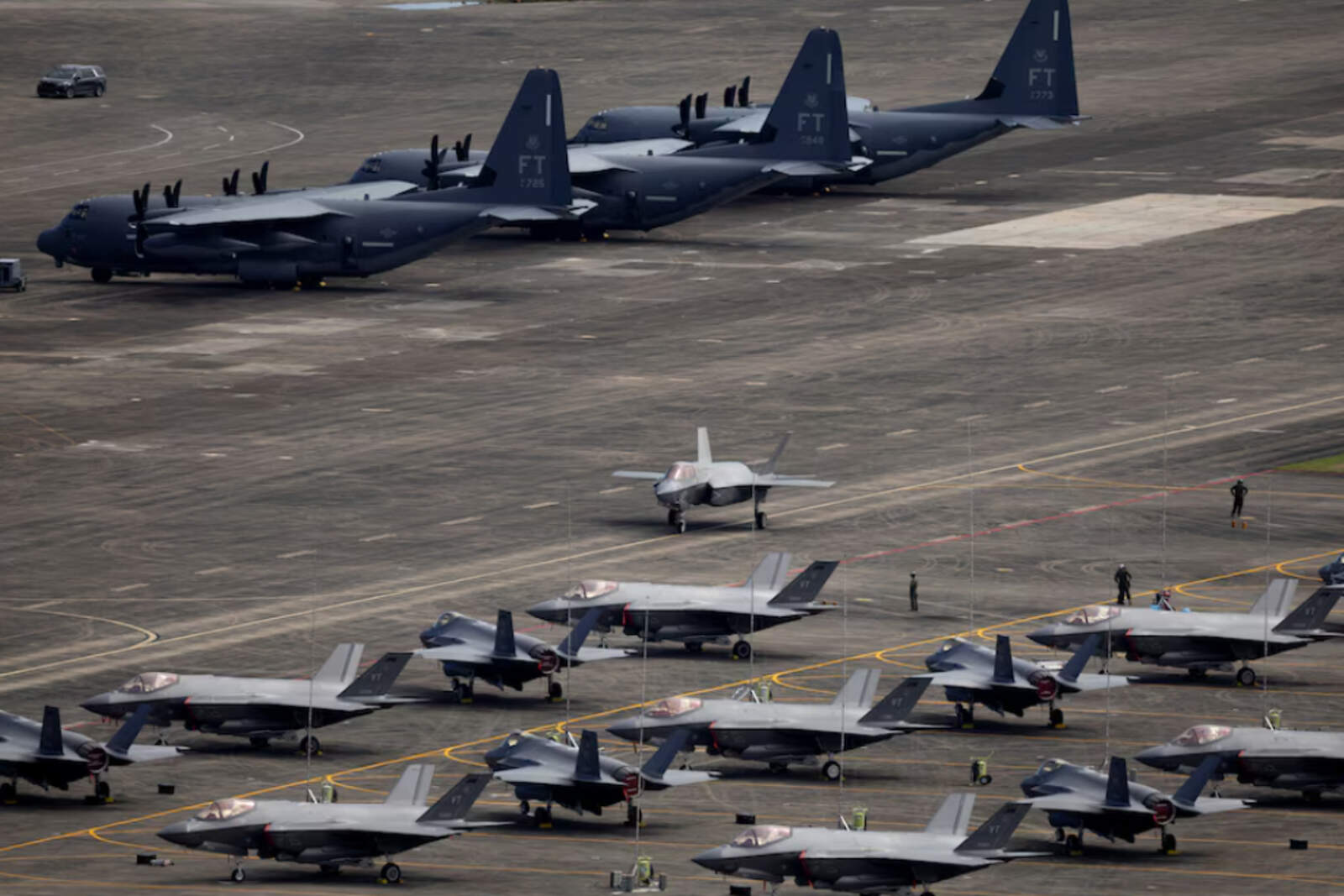
The former Roosevelt Roads Naval Station, located in Ceiba, Puerto Rico, once again became the scene of intense United States military activity. On the runway, F-35 and F-18 fighter jets, C-130 Hercules transport aircraft, and Black Hawk, Huey, and AH-1 Cobra helicopters were deployed, marking a clear demonstration of operational capability in a key region for hemispheric security.
The maneuvers, recorded on Monday, December 22, took place in a regional context marked by the escalation of tensions between Washington and the narco-dictatorial regime of Nicolás Maduro, which the United States accuses of being directly linked to international drug trafficking and organized crime networks.
High-intensity military exercises and coordinated deployment
During the day, successive takeoffs of F-18 fighter jets were observed, helicopters executed tactical maneuvers of approach and troop descent by rappel, and low-altitude flights of attack aircraft took place. A Black Hawk helicopter flew over the base at low altitude, while an AH-1 Cobra completed landings after simulated combat operations.
The sequence also included:
- Towing of helicopters on the runway
- Military trucks transporting heavy equipment
- Aircraft lined up for consecutive operations
- Military personnel coordinating logistical and technical tasks
This level of activity had not been recorded at Roosevelt Roads for years, which confirms its reactivation as a strategic point for the control of the Caribbean.
Trump's strategy: pressure, security, and the fight against drug trafficking
President Donald Trump's administration has reinforced its military presence in the region in recent months as part of a clear strategy: to dismantle drug trafficking routes and exert direct pressure on the Venezuelan regime. Washington keeps that Nicolás Maduro leads a criminal structure that uses the Caribbean as a corridor for drug trafficking.