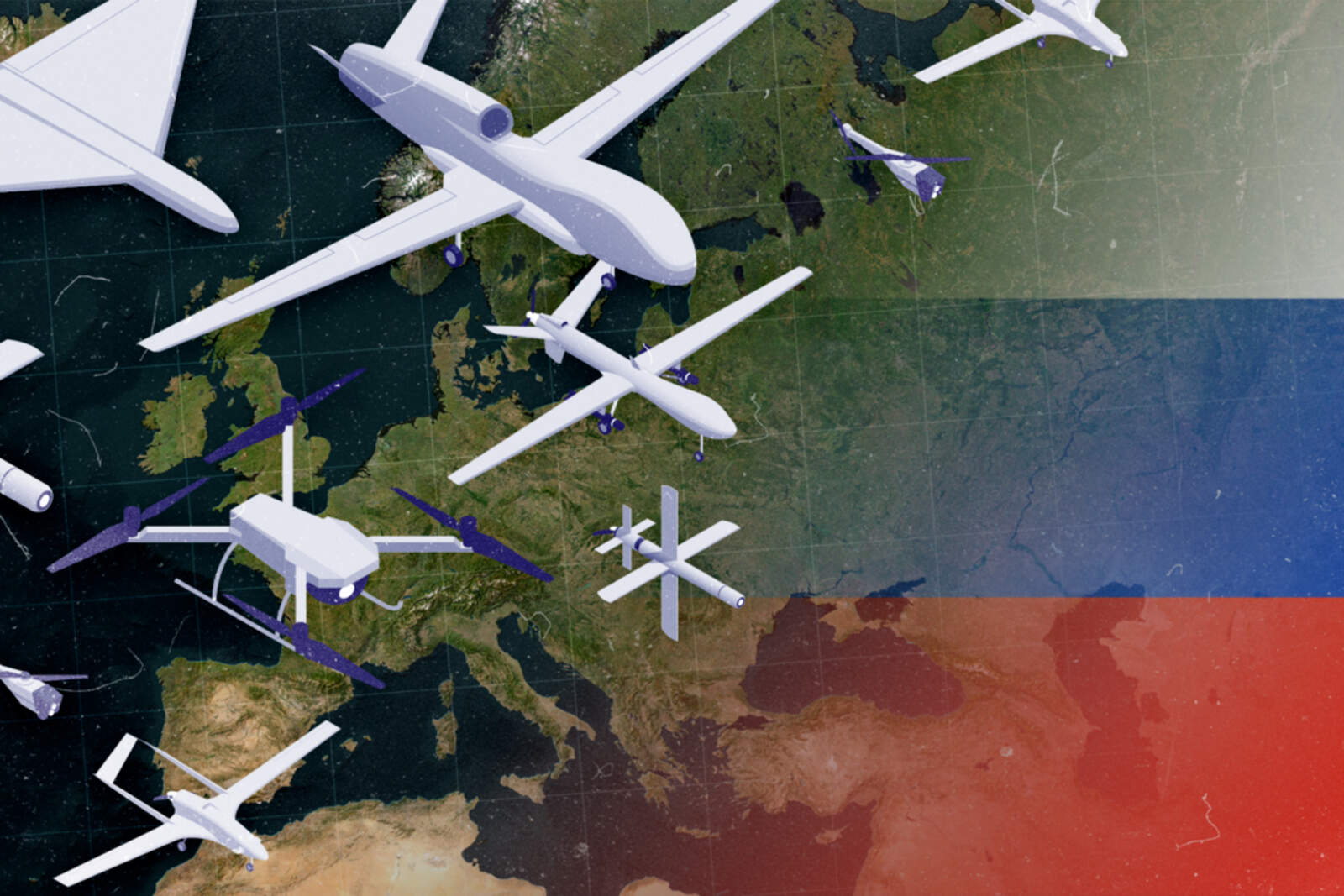
The increase in drone incursions attributed to Russia in European airspace has put the continent's leaders on high alert. Poland, Estonia, Romania, and the Nordic countries have reported constant violations by unidentified aircraft, and the creation of a "drone wall" has been proposed as the main defense tool.
The proposal is not a physical barrier, but rather an integrated system of sensors, radars, and electronic warfare equipment capable of detecting and intercepting unmanned devices. The objective is clear: to strengthen collective security and stop provocations from Moscow. According to experts, these incursions are part of the logic of the "hybrid war" deployed by Vladimir Putin to test NATO's response.
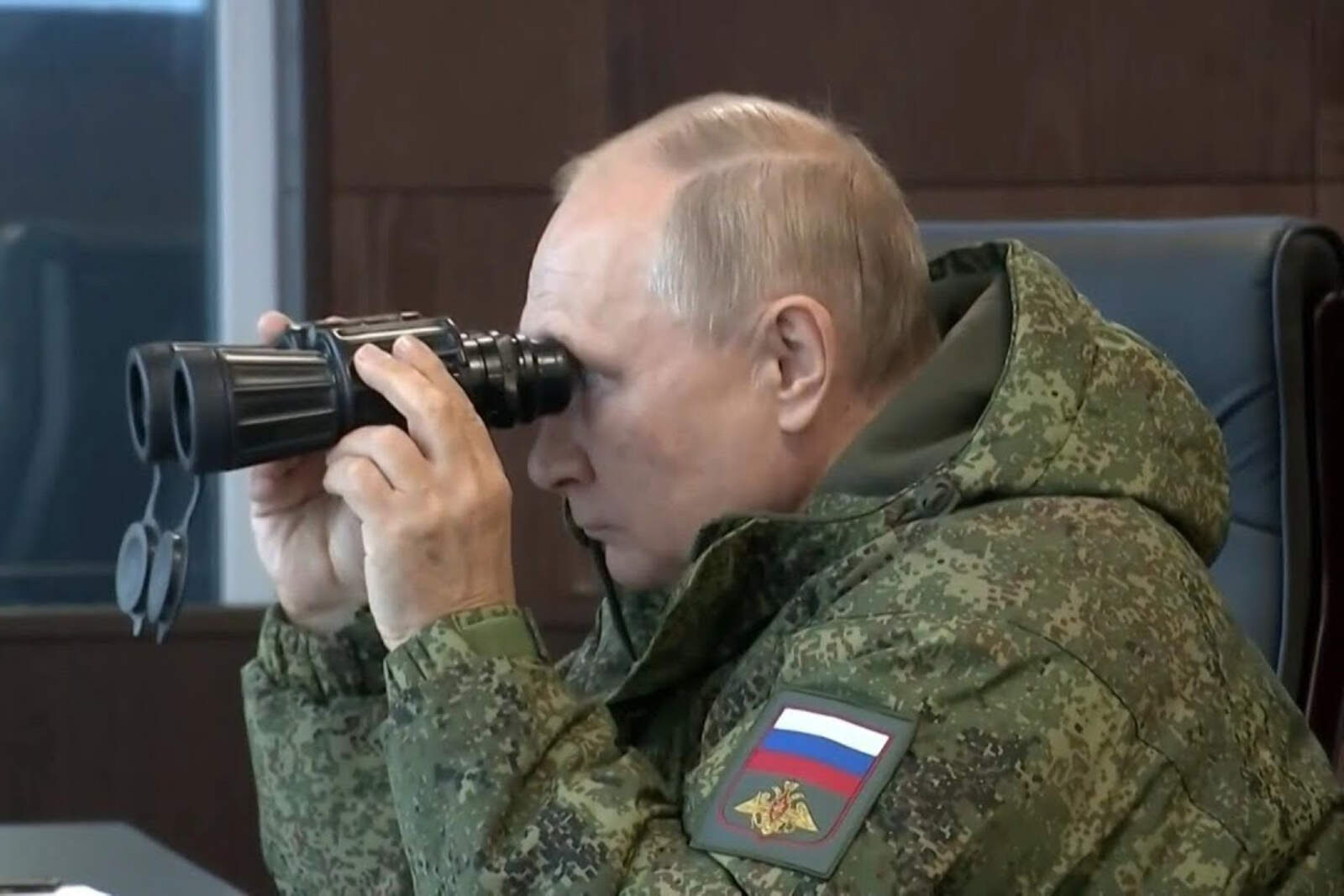
Vladimir Putin, presidente ruso.
In recent days, Danish airports have had to suspend operations after drones appeared in their vicinity. Similar situations have also occurred near military installations and in countries such as Germany and Norway. Concern is growing among European Union members and the issue has been raised with NATO.
Baltic and Eastern countries are the main promoters of the wall, considering themselves on the front line of threat. NATO Secretary General Mark Rutte supported the initiative and described it as "necessary and timely." In contrast, German Defense Minister Boris Pistorius called for moderated expectations and pointed out that this is not a plan that can be implemented in the short term.
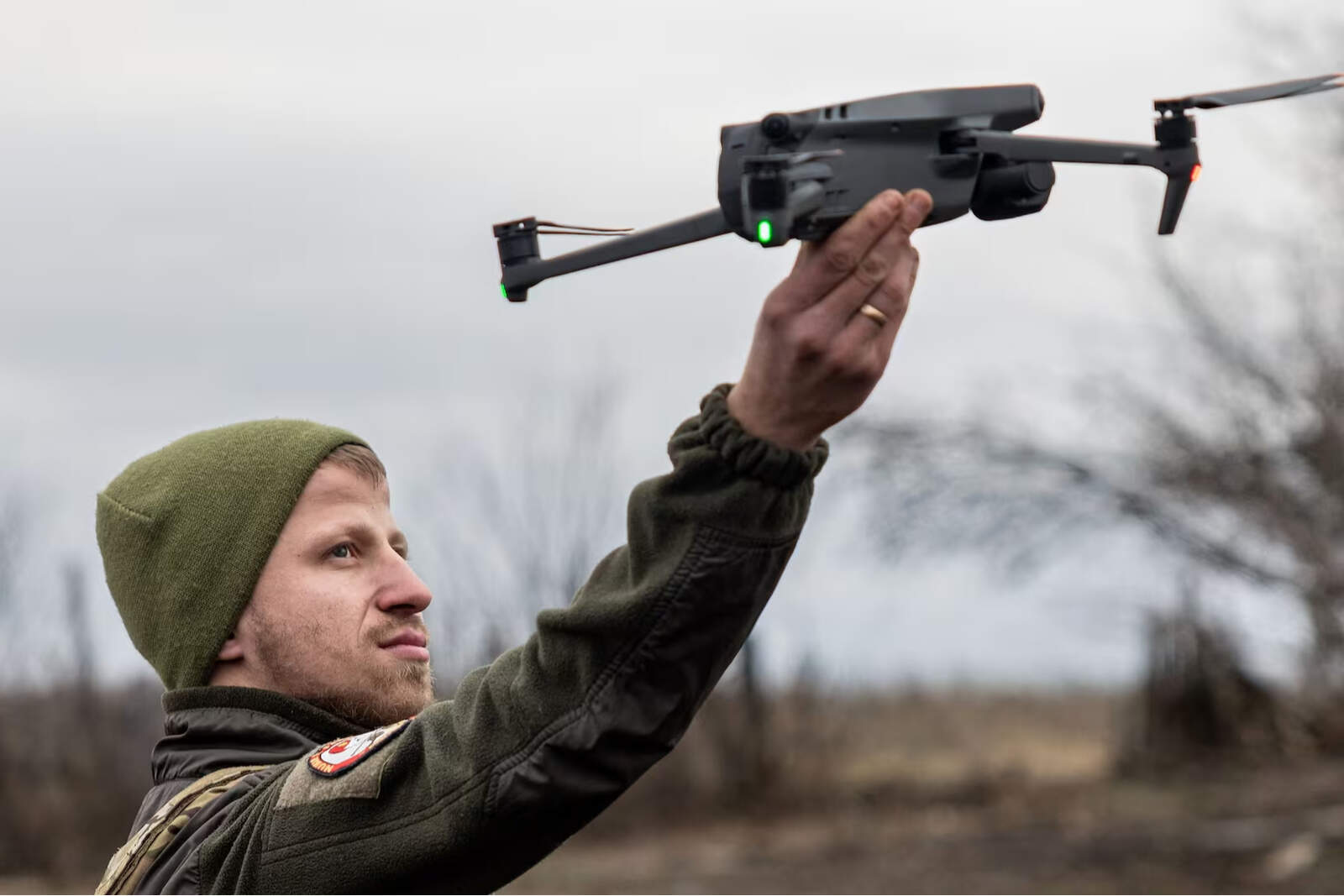
Un militar ucranio sostiene un dron de reconocimiento en el frente de Bajmut.
Denmark temporarily banned all civilian drone flights in its capital and received support from several countries with anti-drone equipment and specialists. Ukraine shared techniques and knowledge accumulated in the war against Russia with its European allies.
The European Council warned that recent incidents demonstrate the urgency of accelerating the construction of a common defense that operates autonomously and effectively. Meanwhile, NATO has already agreed to increase defense spending from 2% to 5% of GDP by 2035, in an effort to curb threats initiated from Moscow.
According to Michael Butler, professor of Political Science at Clark University, the air incursions aim to test Europe's response capacity. The drone wall is emerging as the strategic tool. European leaders seek to close the technological gap in defense and send a clear message to the Kremlin: Europe will not remain defenseless in the face of Russian military provocations.