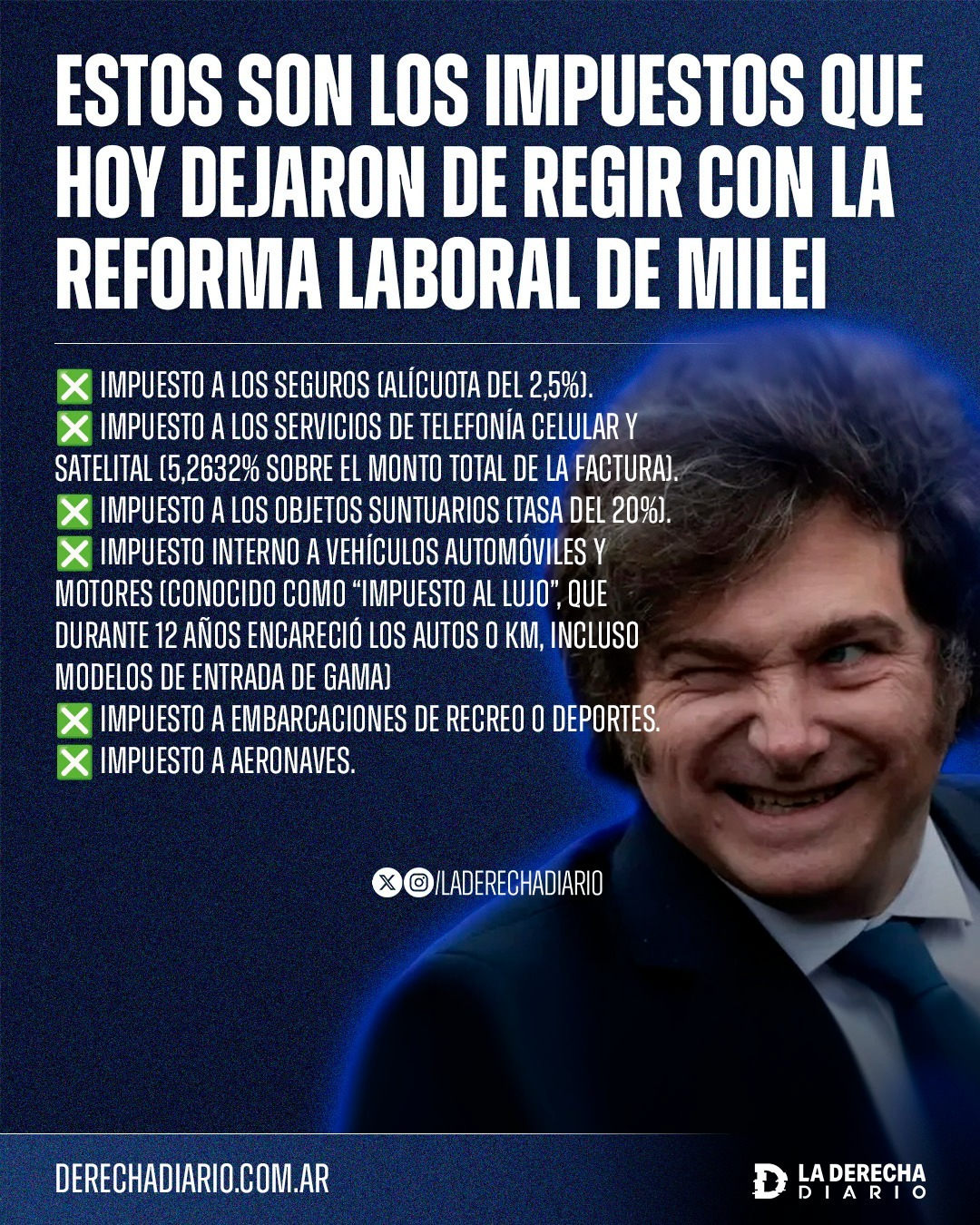
As of April 1, concrete changes began to take effect in the Argentine tax scheme with the elimination of a series of consumer taxes, within the framework of the Labor Modernization Act promoted by the Government of Javier Milei. The measure is contemplated in article 195 of the regulations and covers different goods and services that for years were taxed at significant rates.
The decision involves the elimination of the insurance tax, which had a rate of 2.5%, as well as the tax applied to cellular and satellite telephone services, which represented 5.2632% of the total bill. Added to this is the repeal of the tax on luxury objects, whose rate reached 20%, in addition to internal taxes on motor vehicles, recreational boats and aircraft.
One of the most important changes is the definitive elimination of the so-called “luxury tax” for 0 km cars, a tax that for more than a decade artificially increased the value of vehicles, even in entry-level segments. This tax, which reached rates of up to 35%, had been progressively reduced in recent months until its
total elimination.
The Government maintains that these measures are aimed at reducing distortions in the economy, improving competitiveness and alleviating the burden on consumers. In the case of telephony, for example, the elimination of the tax could result in a drop in bills, although the final impact will depend on how companies transfer the tax reduction
to prices.
Labor judge Raúl Ojeda ordered the provisional suspension of 83 articles of the law following a request from the CGT, which argued possible effects on labor rights. However, the elimination of these taxes was not achieved by the Kirchner judge's measure, so it isnow
fully in force. Javier Milei continues to reduce taxes.
The court ruling was welcomed by union sectors that seek to curb central aspects of the reform, in line with historic resistance to structural changes in the labor market. However, the fiscal chapter of the law is progressing without obstacles, marking a first tangible impact on the daily economy
.
With this decision, the Government seeks to consolidate its agenda of deregulation and tax reduction, in line with its objective of reducing the State's weight and boosting consumption. The elimination of these taxes represents a concrete step on that path and could have visible effects on different sectors in the coming months