Among his main measures are the prohibition of exports to prioritize "internal consumption", the renegotiation of free trade agreements, and the nationalization of sectors such as mining, energy, and agribusiness. These policies put at risk more than USD 68 billion in exports and millions of jobs linked to foreign trade.
Indigenous Socialist Dictatorship for Peru
His economic proposal is framed within a model of “Andean Amazon socialism,” which advocates for absolute state control over the economy, the elimination of free trade, and the centralization of production in the hands of the State.
Roberto Sánchez, presidential candidate of Peru who advanced to the runoff against the right-wing Keiko Fujimori, not only represents a danger to his own country but also to the entire region.
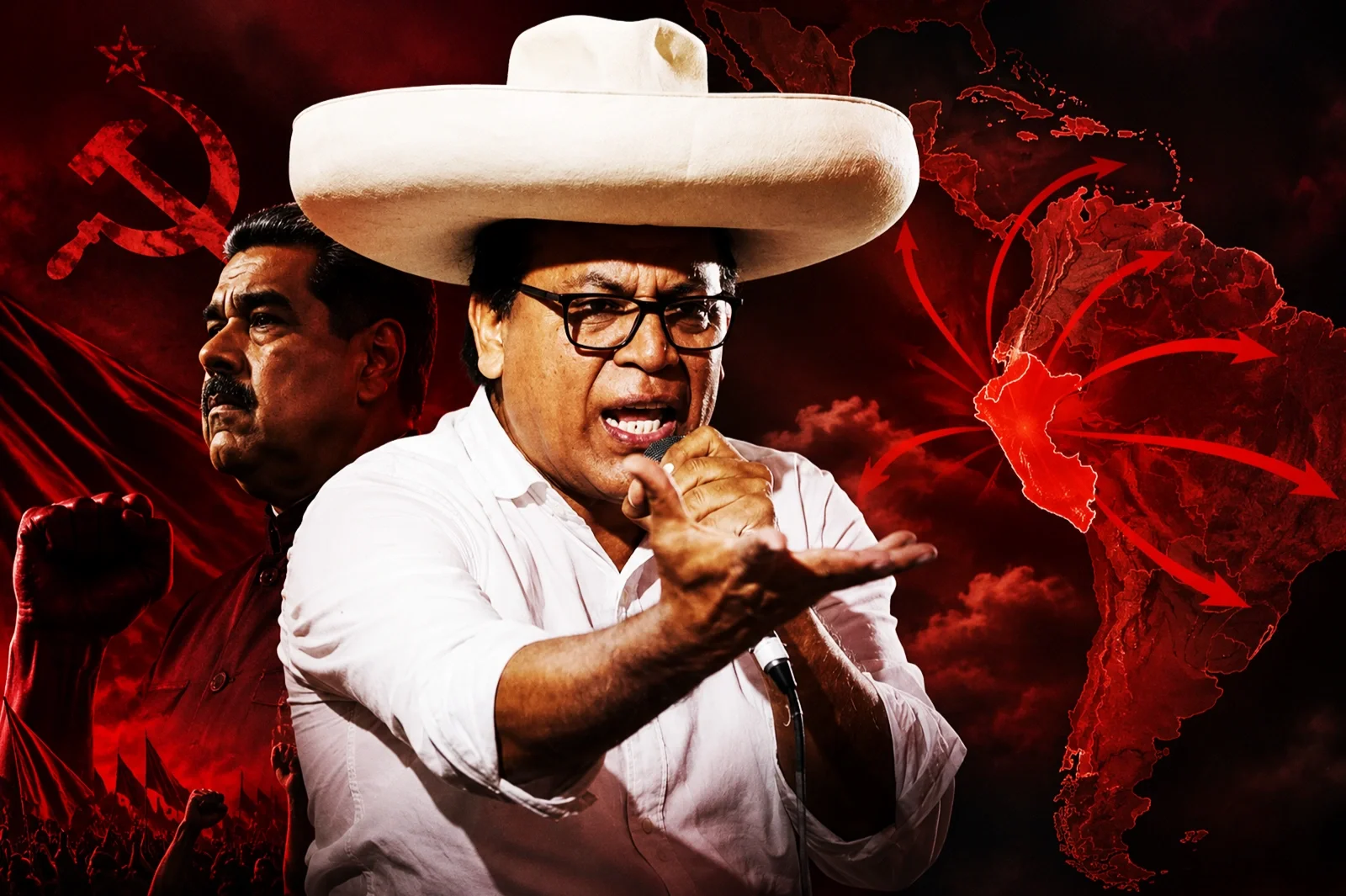
His project seeks to turn Peru into a new funding center for the left in Latin America, taking advantage of strategic resources such as copper, gold, gas, and lithium, in a context where Venezuela has lost its capacity for influence following the capture of dictator Nicolás Maduro by the United States.
The proposal of the Peruvian communist candidate involves using the country's economic weight as a tool for regional influence.
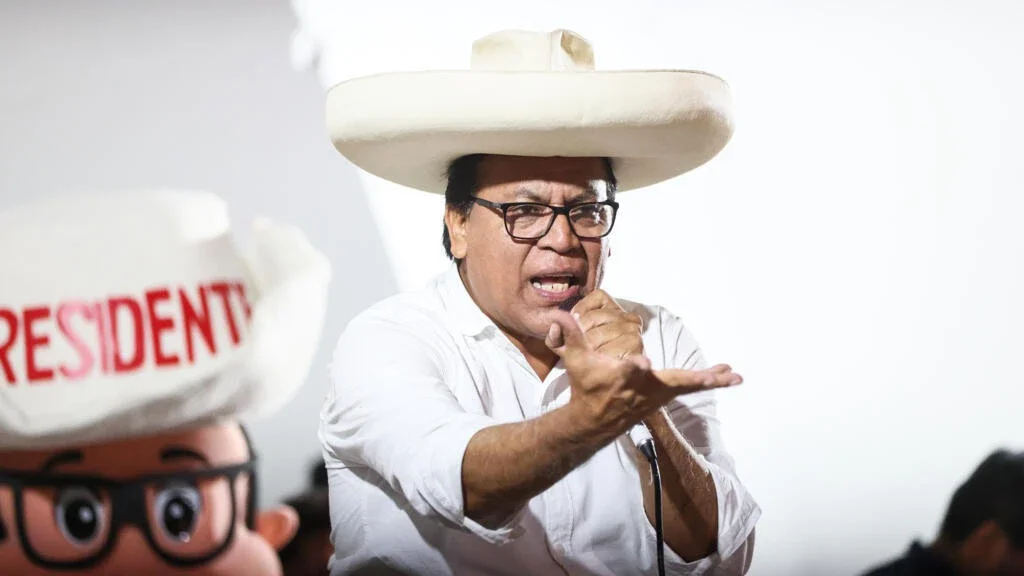
Roberto Sánchez.
Links with Chavismo and Terrorism
In this context, he maintains a direct relationship with Chavismo. In 2021, he sent a letter to Nicolás Maduro in which he paid tribute to Hugo Chávez and recognized him as “constitutional president.” Additionally, he publicly stated that Venezuela “is not a dictatorship,” supporting the Venezuelan regime on the international stage.
His political space has also been questioned for links to terrorism. From his structure, the arrival in Congress of people linked to Sendero Luminoso, a leftist terrorist organization that killed more than 31,000 people in Peru, was promoted.
At the same time, Sánchez was a key figure during the government of former dictator Pedro Castillo. He remained the only minister present throughout the administration and was part of the attempted coup d'état on December 7, 2022, an episode that led to an unprecedented institutional crisis.
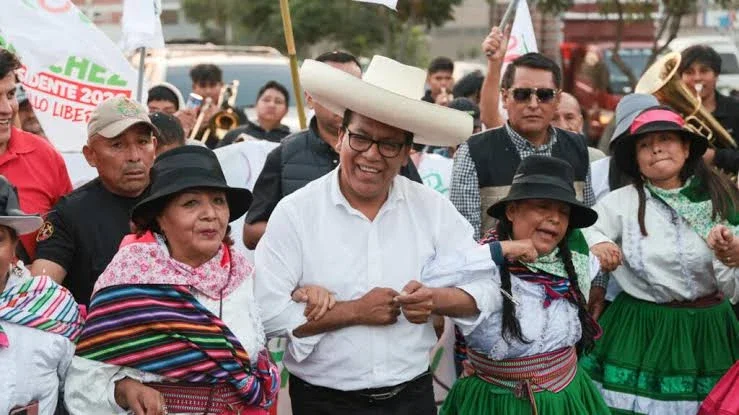
Roberto Sánchez.
On the economic front, the dangerous presidential candidate promotes a program that proposes a radical change to the Peruvian model.
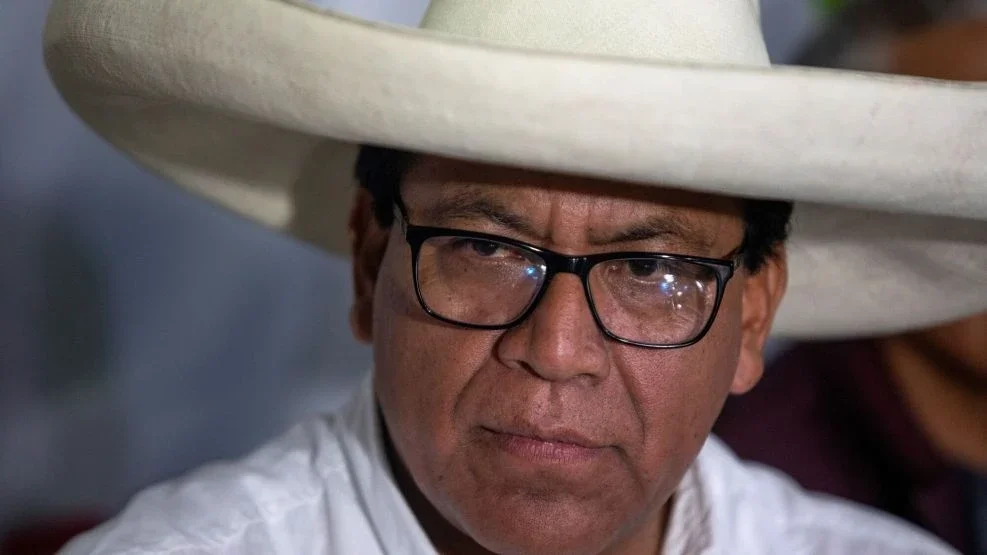
Roberto Sánchez.
On the institutional level, he promotes a constitutional reform through a Constituent Assembly, along with the creation of parallel power structures. Among them, a council of indigenous communities that would have decision-making power above the existing democratic institutions, destroying the republican system.
His Main Partner
One of the most critical aspects of his political setup is his alliance with Antauro Humala, whom he proposed as Minister of the Interior.
Humala was sentenced to 19 years in prison for leading the Andahuaylazo in 2005, a violent armed uprising that left six dead among police. Sánchez hailed that episode as a “political action” and presented him as a “leader of the people.”
Within his space, measures with a strong institutional impact are also promoted, such as the application of the death penalty against former presidents, the expropriation of media outlets, the release of prisoners for terrorism, and the consolidation of a scheme of state control over the main areas of political and economic life.
Additionally, he proposes replacing Christianity with a “Tahuantinsuyana Church” and wants an armed war with Chile to recover Arica and Tarapacá by force.
The communist candidate Roberto Sánchez represents a danger to the entire region, both for his alignment with authoritarian regimes and for his anti-democratic program, his links with terrorist groups, and a strategy aimed at turning Peru into a hub of funding and influence for the left in Latin America.