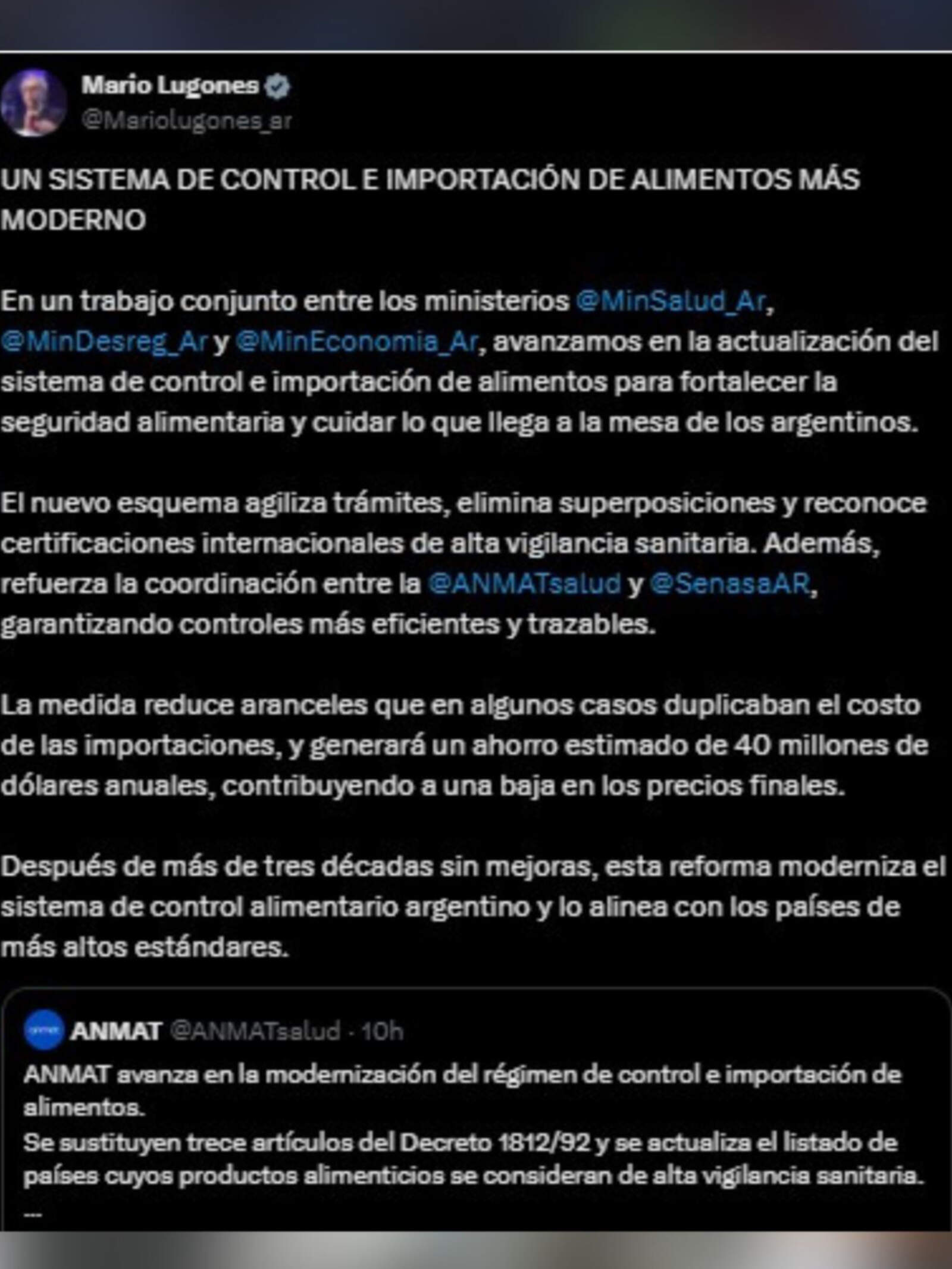

The national government has taken another step in modernizing the food control and import system, fulfilling objectives set by the administration of Health Minister Mario Lugones. With Decree 790/2025, a regulation in force since 1992 is updated and a more agile, efficient, and internationally aligned framework is consolidated.
The measure is part of the state's modernization and debureaucratization policy. According to official sources, the new regime will allow for an estimated annual saving of 40 million dollars by reducing tariffs and eliminating overlaps. Minister Lugones emphasized that the reform "strengthens food safety and guarantees more traceable and efficient controls."
The decree replaces thirteen articles of the former Decree 1812/92 and expands the list of countries under high sanitary surveillance. Among them are the United States, Canada, the European Union, Japan, and Australia, as well as nations linked by economic integration treaties.
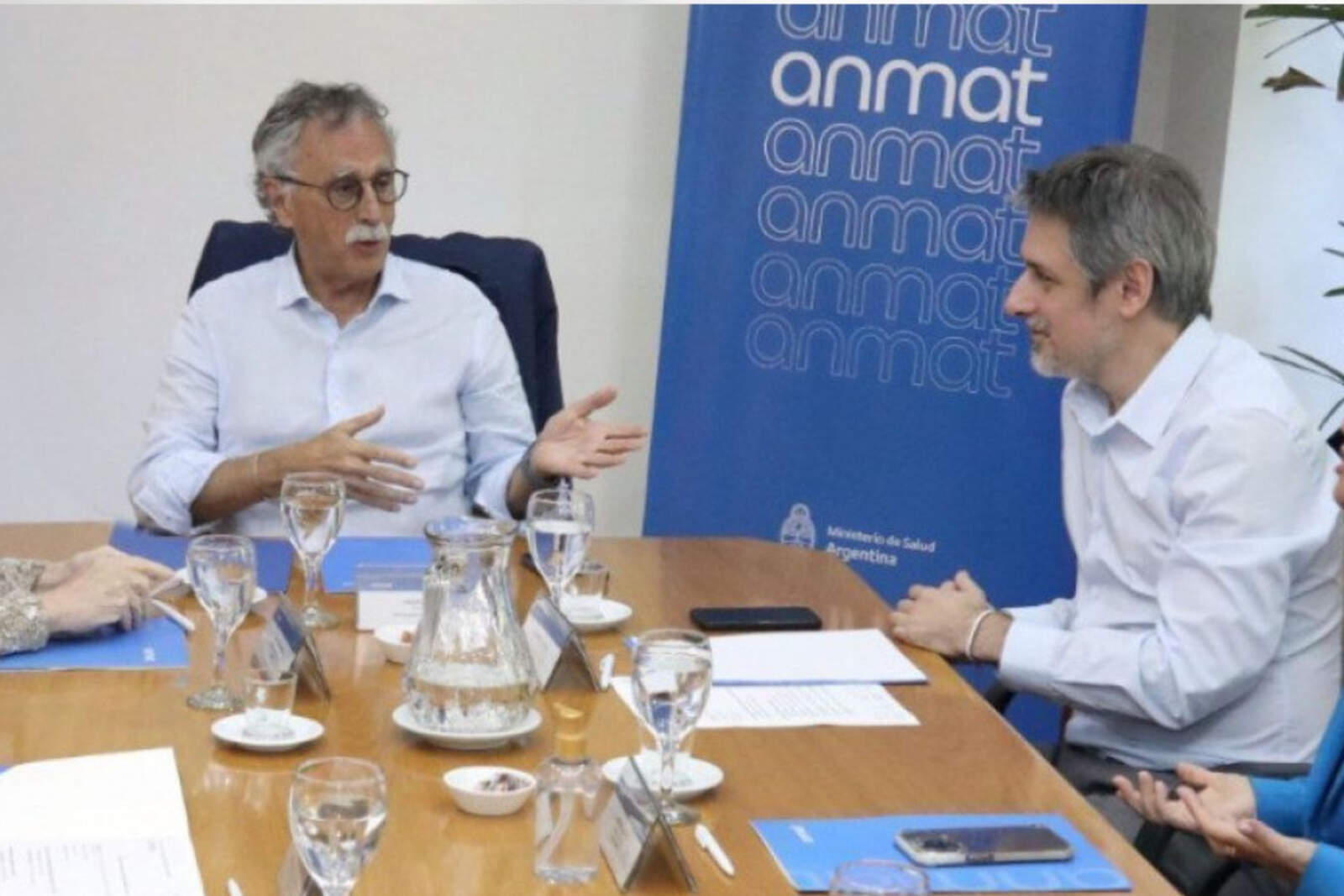
More modern state, more effective controls
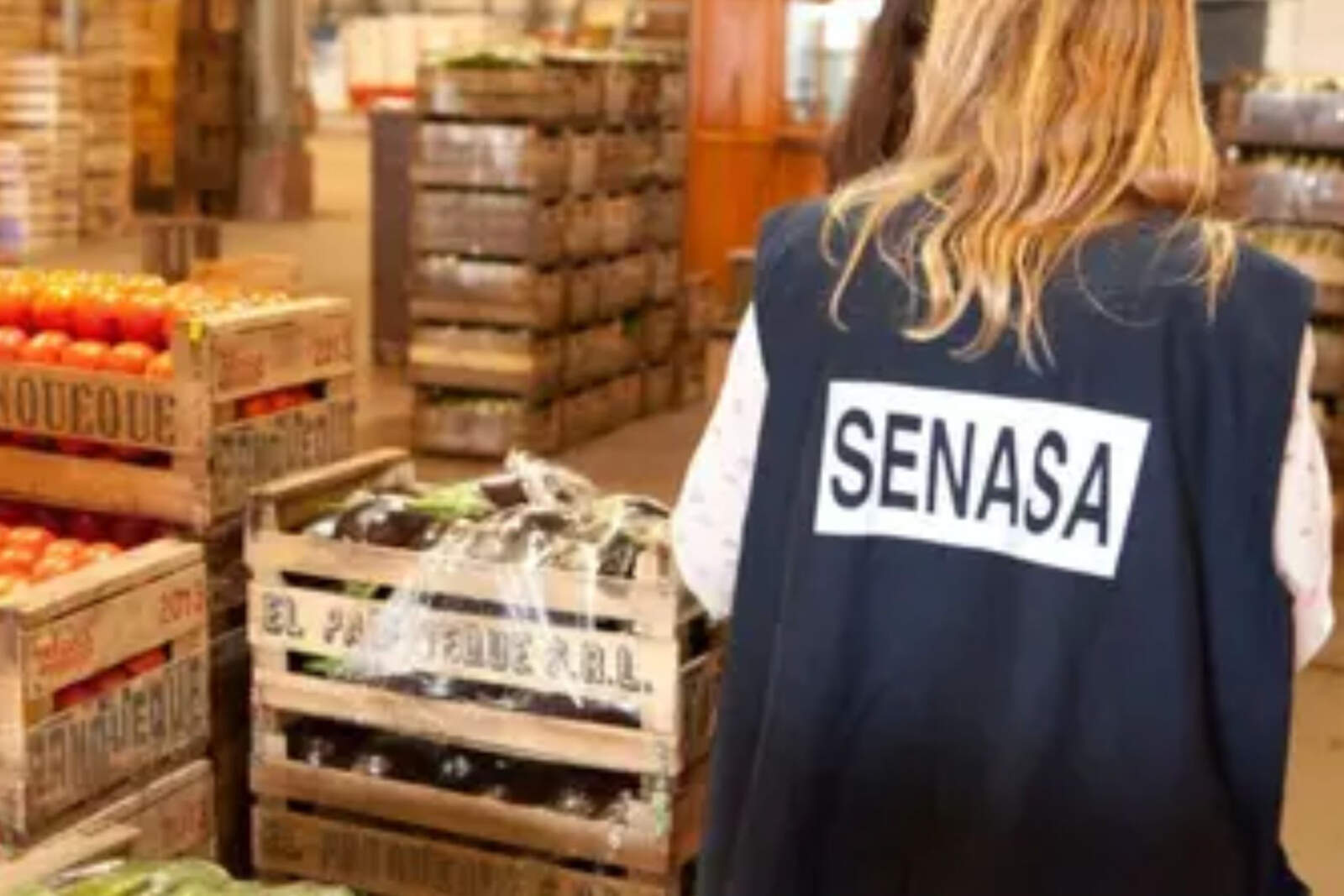
The update also repeals obsolete provisions that hindered administrative management and created redundancies. ANMAT, through the National Food Institute (INAL), assumes a central role in the registration and authorization of imported foods. SENASA, meanwhile, keeps its responsibilities in the agri-food sector.
Interoperability with the Single Window for Foreign Trade (VUCE) will reduce inspection and release times for goods. This progress optimizes the relationship between the private sector and the state, ensuring greater predictability and a lower regulatory burden.