The Department of Energy maintains that the reforms do not imply a reduction in standards, but rather a necessary update. Many of the current rules, they say, were designed for technologies of the last century and do not reflect current advances in sensors, monitoring and reactor design
.
One of the most relevant debates revolves around the limits of exposure to radiation. The government is evaluating adjustments that would make it possible to optimize construction costs, especially with regard to shielding systems. According to official sources, these changes are based on scientific evidence and seek to maintain safe levels for the population, avoiding demands considered disproportionate
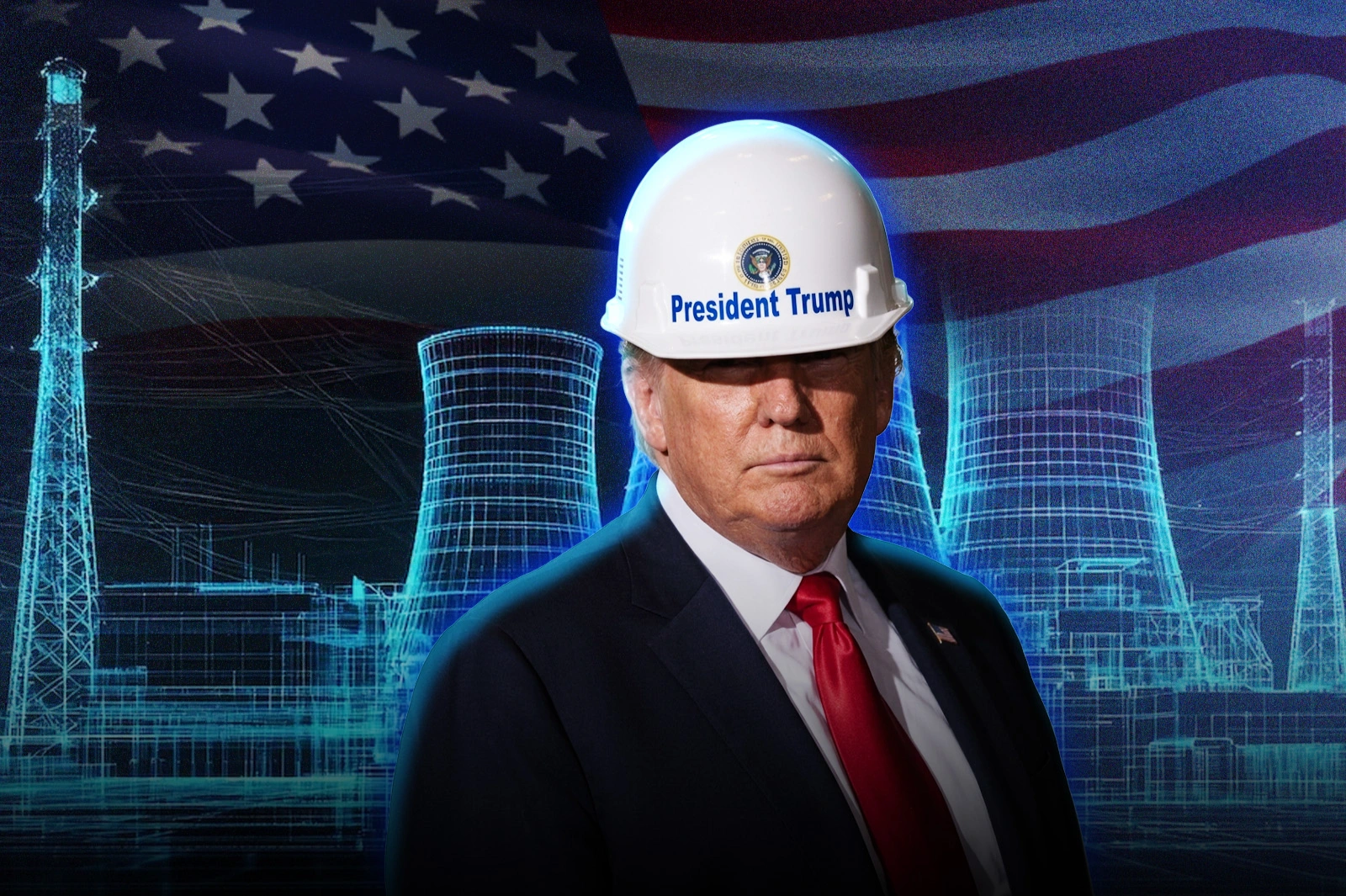
The administration of President Donald Trump is carrying out an ambitious reform of the nuclear sector in the United States, with the objective of modernizing the energy system and responding to the accelerated growth in electricity demand driven by artificial intelligence.
In an increasingly competitive global context, the White House has decided to bet on nuclear energy as a strategic pillar to guarantee a stable, clean and abundant supply. To this end, the government has implemented a series of regulatory changes aimed at reducing time, simplifying processes and facilitating the construction of new
reactors.
For years, the Nuclear Regulatory Commission (NRC) was considered the international standard in safety, but it also accumulated criticism for its slowness and rigidity. From industrial and technological sectors, it was pointed out that the regulatory framework was designed for traditional reactors and was not adapted to new emerging technologies. The Trump administration took these criticisms as a starting point to push for structural transformation.
The Trump administration's project to modernize the energy system includes the modification of regulatory frameworks
One of the central axes of this new phase is the incorporation of more dynamic profiles in public management. Officials like Seth Cohen, from the Department of Energy, represent a generation that seeks to apply efficiency and speed criteria specific to the private sector. This approach aims to unlock projects that, according to the government, were paralyzed by
excessive bureaucratic processes.
The plan includes accelerating the approval of nuclear reactors, especially so-called small modular reactors, a technology that promises to reduce costs, improve safety and allow for more flexible energy production. These innovations are driven by a new wave of companies backed by Silicon Valley capital
.
Among the main supporters of this change are investors such as Peter Thiel and Marc Andreessen, who believe that nuclear energy will be key to sustaining the growth of the digital economy. The expansion of data centers and artificial intelligence systems requires enormous amounts of energy, and the government seeks to anticipate that demand
. Peter Thiel, president of Palantir Technologies, would be one of the investors who strongly support the project
Within this framework, the administration has promoted executive orders that reduce regulatory deadlines, review technical standards and create new ways to test innovative designs. The objective is clear: to accelerate the development of energy infrastructure without compromising security
.
Along the same lines, the “ALARA” principle, which for decades guided nuclear policy towards the extreme minimization of radiation exposure, is being revised. Officials argue that, while this approach was useful in the past, today it can generate unnecessary cost overruns without clear benefits in terms of
public health. The Department of Energy assured that these reforms are part of a necessary system upgrade
The strategy also contemplates strengthening collaboration with the private sector. Emerging companies in the nuclear field have gained prominence, actively participating in the development of new technologies and in the definition of regulatory needs. This synergy seeks to accelerate innovation and position the United States as a leader in the sector
.
In addition, the administration has emphasized the geopolitical importance of this transformation. In a scenario where other powers are advancing their own nuclear programs, the government considers it essential to recover competitiveness and ensure the country's energy independence