
The United States Department of the Treasury carried out a historic operation by allocating 15 billion dollars to buy back part of its own debt, marking the highest amount in a single transaction of this type. The figure exceeds the previous record of 14.7 billion reached the previous week, consolidating a growing trend in the use of these tools within the US government's financial strategy
.The agency clarified that this measure does not respond to an attempt to issue money or to finance public spending indirectly, but is part of a regular debt management policy. The main objective is to optimize the structure of indebtedness, improve the liquidity of the bond market and reduce potential risks associated with maturity concentrations in certain periods
.The transaction took place on Tuesday and focused on the repurchase of medium and short-term bonds. In particular, the Treasury pointed to securities with maturities of between 7 and 10 years, as well as instruments that expire in a range that ranges from a few months to two years. This selection makes it possible to reorganize the government's payment profile, preventing large volumes of debt from having to be canceled simultaneously, which could generate
financial tensions.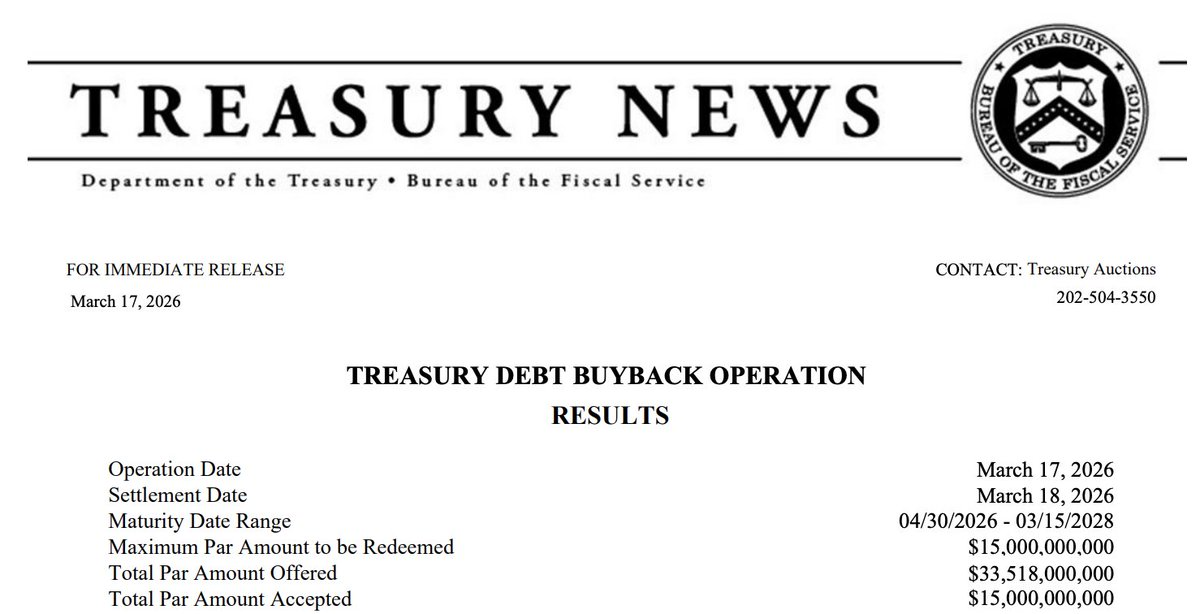
One of the problems this policy seeks to solve is the lack of liquidity in certain segments of the bond market. Many Treasury securities, especially older ones, are no longer traded frequently, making it difficult for investors to sell them quickly without affecting their price. In this context, government intervention as a direct buyer acts as a key backstop, providing liquidity and facilitating the efficient functioning of the