Along with five countries in the region, they warned that China is exerting economic pressure on Panama and supported its sovereignty in the face of maneuvers that affect global maritime trade.
Nuevo
Agregar La Derecha Diario en
Compartir:
Marco Rubio's Secretary of State issued a strong warning against China for its recent actions on ships flying the Panamanian flag, in a context of growing tension in international maritime trade. As he argued, the measures adopted by the Communist Party not only affect a sovereign country, but also have a direct impact on global supply chains
.
Washington's statement came within the framework of a joint statement signed with Bolivia, Costa Rica, Guyana, Paraguay and Trinidad and Tobago, where governments expressed concern about what they described as “selective economic pressure” on the part of China. In particular, they pointed against actions aimed at Panamanian vessels, considered an attempt to “politicize maritime trade” and condition sovereign
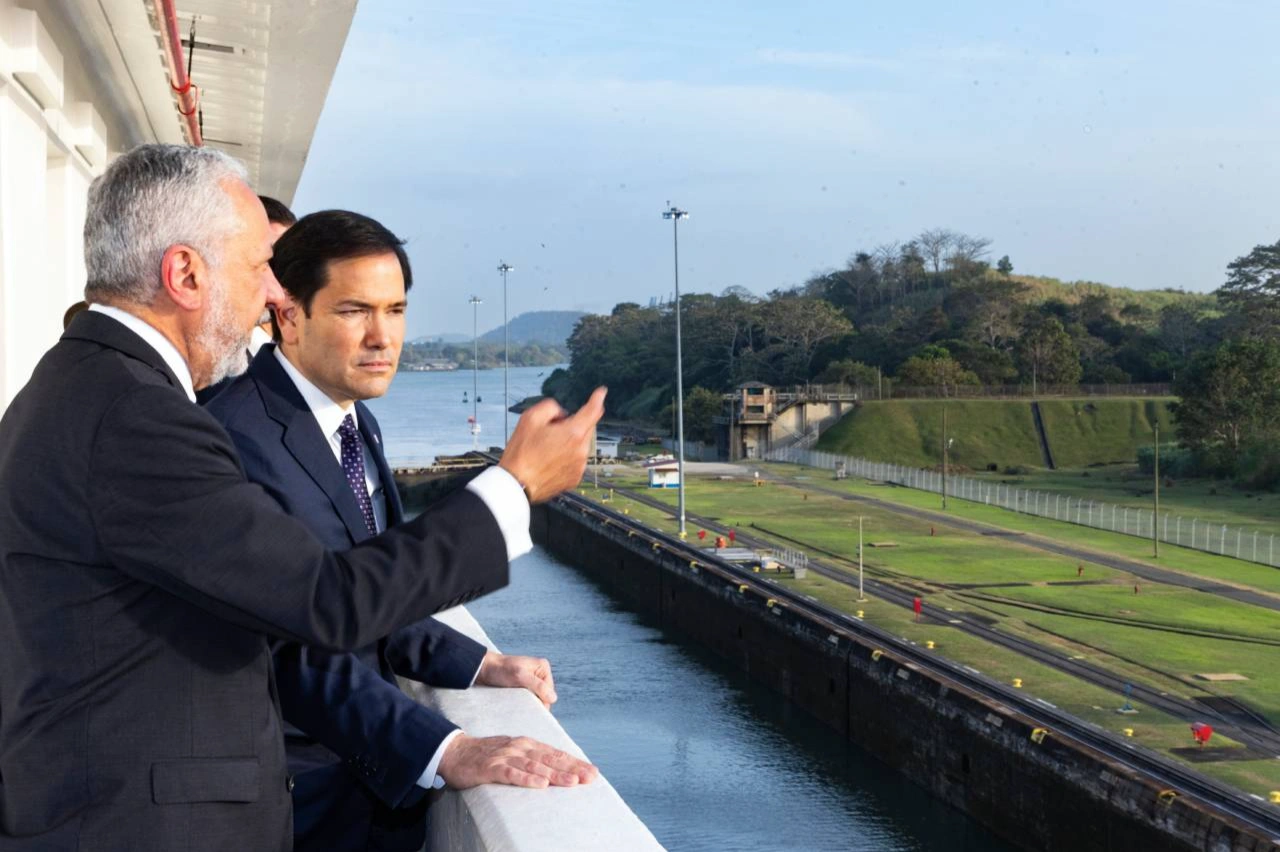
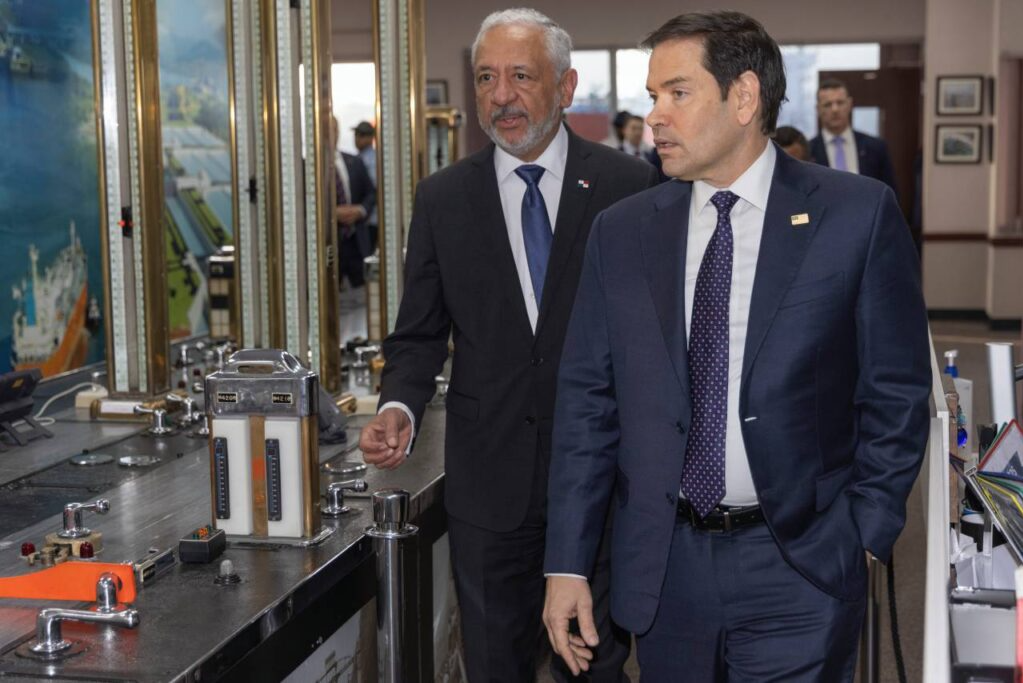
decisions. Marco Rubio with the administrator of the Panama Canal.
Rubio reinforced that position by warning that sovereignty in the hemisphere “is non-negotiable” and stressed that any attempt to undermine Panama's position represents a broader threat to the region. Along these lines, he stressed that the United States stands firm with its strategic ally and anticipated that it will continue to deepen economic and security cooperation
.
The governments emphasized that Panama is a fundamental pillar of the global maritime trade system, so its stability and autonomy are essential to guarantee the flow of goods at the international level. Along these lines, they stressed that the country must remain free from any type of undue external pressure
.
The conflict comes after a ruling by the Panamanian Supreme Court that declared a key contract with Panama Ports Company unconstitutional, a decision that was interpreted by the signatory countries as an act of institutional strengthening and respect for the rule of law. According to Washington, China's reaction to this decision constitutes a direct attempt to interfere in internal affairs and condition sovereign decisions through economic tools
In addition, governments highlighted Panama's central role as an axis of international trade, considering it a fundamental pillar for global maritime circulation. In that regard, they insisted that it must be kept free from external pressures that could distort the operation of the system
.
The scenario becomes even more complicated after recent episodes on other strategic routes, such as the seizure of a Panamanian vessel in the Strait of Hormuz, a fact that was condemned by the international community for violating basic principles of maritime law. Taken together, these situations reinforce a growing concern: the rise of geopolitical tensions over key global trade routes