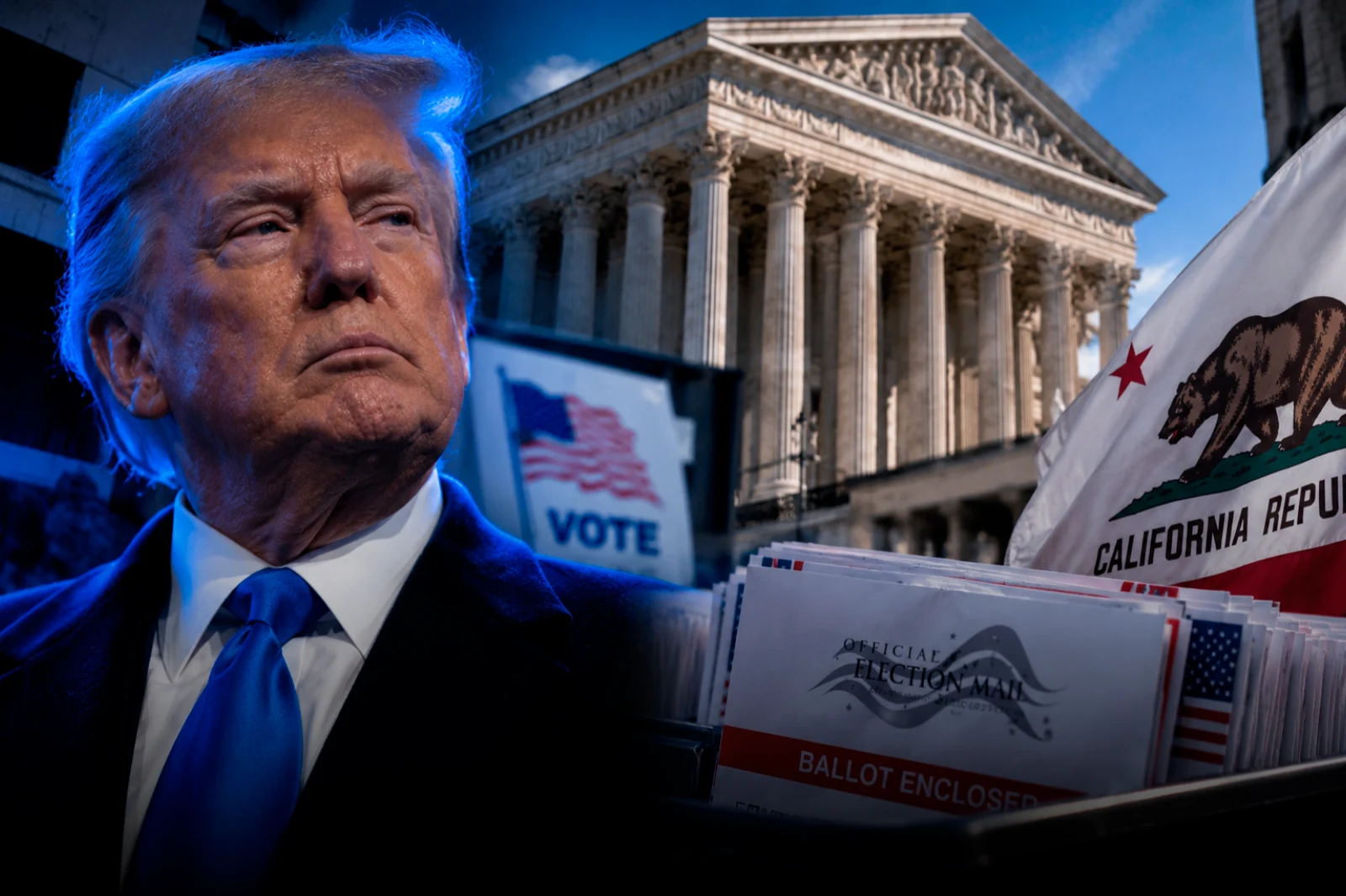











A federal appeals court rejected the request from the administration of President Donald Trump to prevent California from counting approximately 20,000 votes corresponding to individuals whose U.S. citizenship is under suspicion, in a decision that represents a setback for federal efforts to tighten electoral controls ahead of the November 3 congressional elections.
The Ninth Circuit Court of Appeals ruled, by a two-to-one vote, to dismiss the emergency petition filed by the Department of Justice (DOJ), which sought to suspend the counting of those ballots until verifying whether their holders meet the legal requirements to participate in the elections.
In its 39-page ruling, the majority of the court stated that accepting the request would involve interfering with the electoral powers established by the U.S. Constitution.
''If the United States believes that different procedures are needed for mail-in ballots, we believe it should present that proposal to Congress, not to the courts,'' the judges noted.
The government warns about the risk of illegal votes
The Trump administration argued that thousands of individuals identified as potential non-citizens may have already received mail-in ballots for the upcoming congressional elections.
According to the Department of Justice, if California authorities receive those ballots, mix them with legitimate votes, and subsequently process them, it would be impossible to distinguish which were cast by individuals who do not have the right to vote.
The government warned that this situation could allow the counting of illegal votes and affect the weight of the votes cast by U.S. citizens.

''As the defendants continue processing ballots that cannot subsequently be separated or verified to determine their eligibility, the dilution of legal votes accelerates in real time,'' the DOJ stated in an emergency filing made on October 21.
The federal lawsuit also noted that state and county officials had acknowledged limitations in their mechanisms and powers to prevent non-U.S. citizens from participating in the elections.
However, California authorities questioned the reliability of the list used by the federal government and stated that it likely includes numerous U.S. citizens eligible to vote.
The judges reject separating the ballots
The appeals court's decision upheld a previous ruling by a federal district judge, who had rejected the Department of Justice's request on the grounds that the proposed measures could disenfranchise legitimately registered citizens.
The judges agreed that there is no viable procedure to identify and separate the questioned ballots without causing serious consequences for the electoral system.