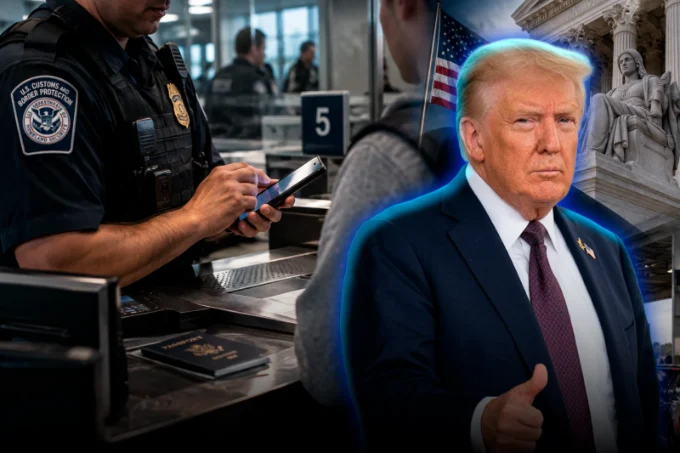
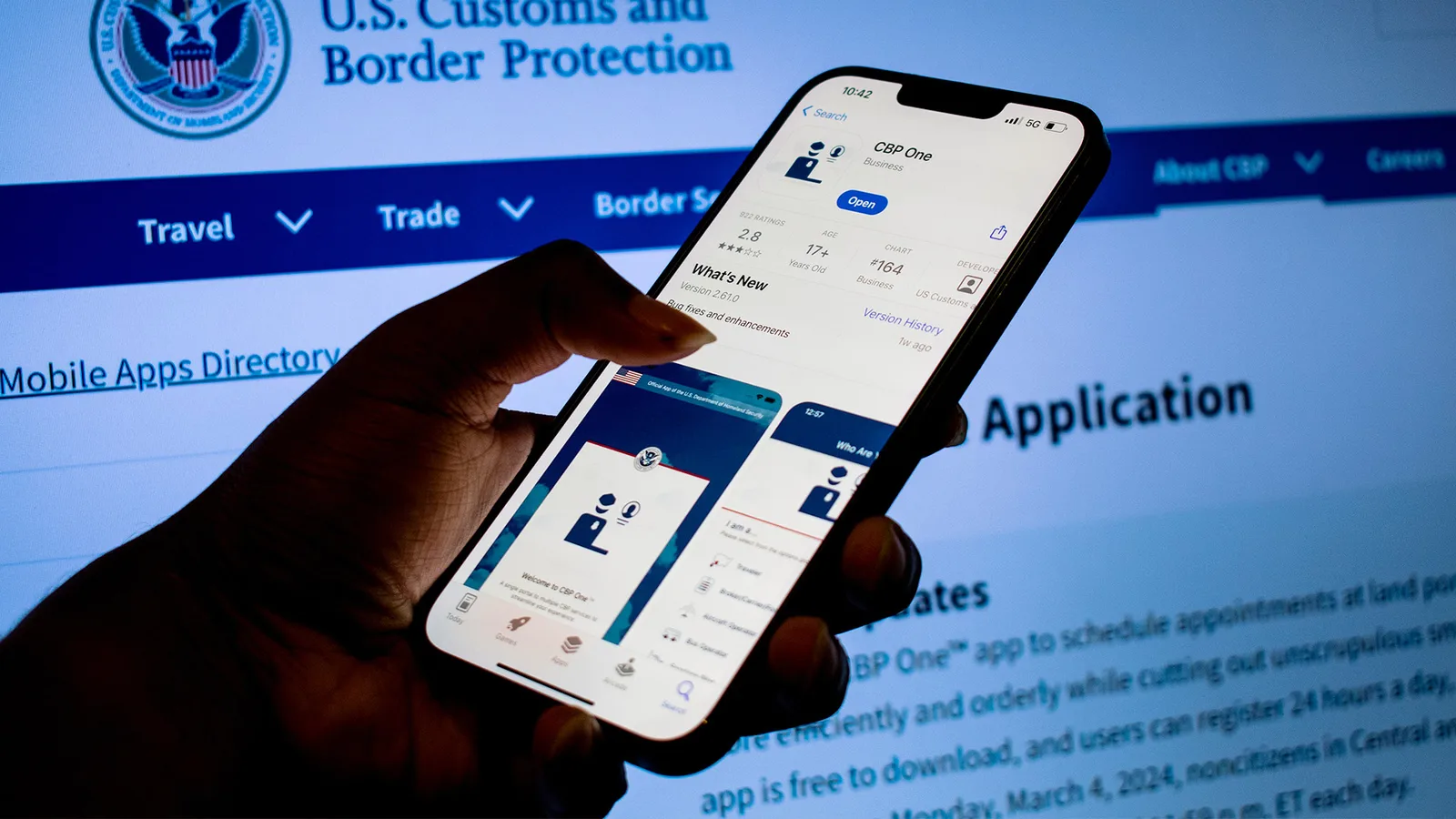
A federal appeals court in the United States determined that government agents can search the cell phones of individuals entering the country without a warrant, probable cause, or reasonable suspicion, considering that these devices are subject to the broad inspection powers that exist at borders.
The decision was issued last Thursday by the Second Circuit Court of Appeals and arose from the appeal of Chinwendu Alisigwe, a legal permanent resident whose phone was searched after he landed at a New York airport in 2019. The information obtained during the inspection was subsequently used as evidence in a fraud case that resulted in his conviction.
Alisigwe's lawyers had questioned the legality of the search and relied on a 2014 Supreme Court ruling that established that, in general, police need a warrant to search the contents of a cell phone. However, the appeals court concluded that this precedent does not eliminate the constitutional exception that allows searches without a warrant at points of entry into the country.
U.S. justice determined that border authorities will be able to search cell phones without a warrant or probable cause
Judge Steven J. Menashi, who wrote the majority opinion, stated that Second Circuit precedents allow the government to inspect travelers' belongings at the border without the need for suspicion. Since a cell phone is considered property, that same rule applies to electronic devices.
''According to our precedents, no suspicion is required before the Government searches a traveler's property at the border,'' Menashi wrote.
The magistrate also noted that border authorities have broad authority to determine which individuals and goods may enter the United States. For that reason, he argued that agents can search devices for evidence of criminal activities and are not limited exclusively to detecting smuggling or violations directly related to entry into the country.
Judge Steven Menashi, nominated by Donald Trump, wrote the majority opinion
The majority opinion also rejected the argument that the First Amendment limits these inspections. According to the court, protections related to freedom of speech and association do not prevent the government from reviewing cell phones during border checks.
The Customs and Border Protection (CBP) defended the authority of its agents. A spokesperson for the agency noted that U.S. legislation allows for the inspection of electronic devices of individuals entering or leaving the country, regardless of their citizenship.
The CBP explained that these inspections can be used to enforce laws related to terrorism, child exploitation, drug trafficking, human trafficking, immigration fraud, and threats to national security. The agency also indicated that the examination is limited to the information present on the device at the time it is submitted for inspection.
According to figures provided by the CBP, during fiscal year 2025 less than 0.01% of travelers arriving in the United States were subjected to an inspection of their electronic devices.
Kicillof sees frustrated by the increase in service costs for the people of Buenos Aires
The decision was not completely unanimous. Democratic Judge Eunice Lee agreed with the majority that a warrant or probable cause should not be required for this type of search, but argued that agents should have reasonable suspicion.
Lee warned that a power without any suspicion requirement could allow officials to access large amounts of personal information stored on phones. Among the data that could be exposed, she mentioned medical records, financial information, private messages, photographs, internet searches, browsing habits, and location data.