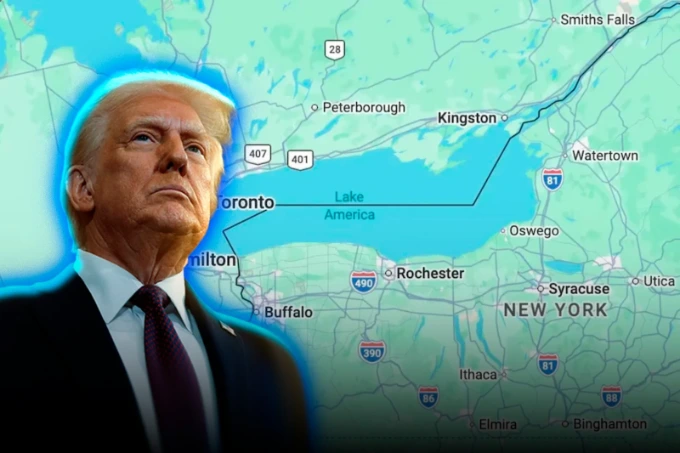
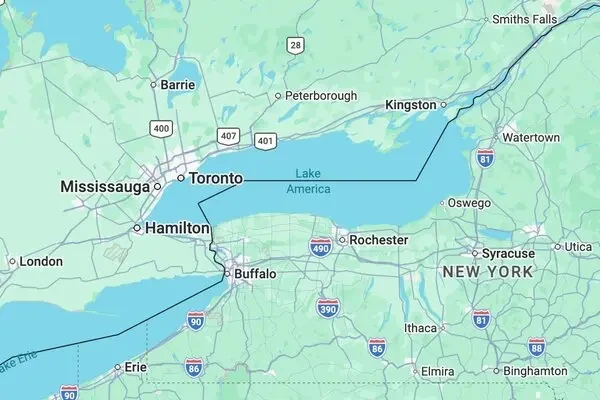
Google Maps began displaying the name “Lake America” instead of “Lake Ontario” for users in the United States, in a modification that responds to the executive order signed by President Donald Trump to rename Lake Ontario.
The change was implemented by Google following the update of the Geographic Names Information System (GNIS), the official registry used to establish federally recognized geographic names in the United States.
The modification does not apply in the same way in all countries. Google explained that it will maintain the designation “Lake Ontario” for users in Canada, while those consulting Google Maps from other countries will be able to see both names. In those cases, “Lake America” will appear in parentheses.
Google Maps in the US
In this way, the company applies a criterion it already uses when there are different names for the same place depending on the jurisdiction. The change exclusively affects how the name is displayed according to the country from which the service is accessed and does not alter the official designation outside the United States.
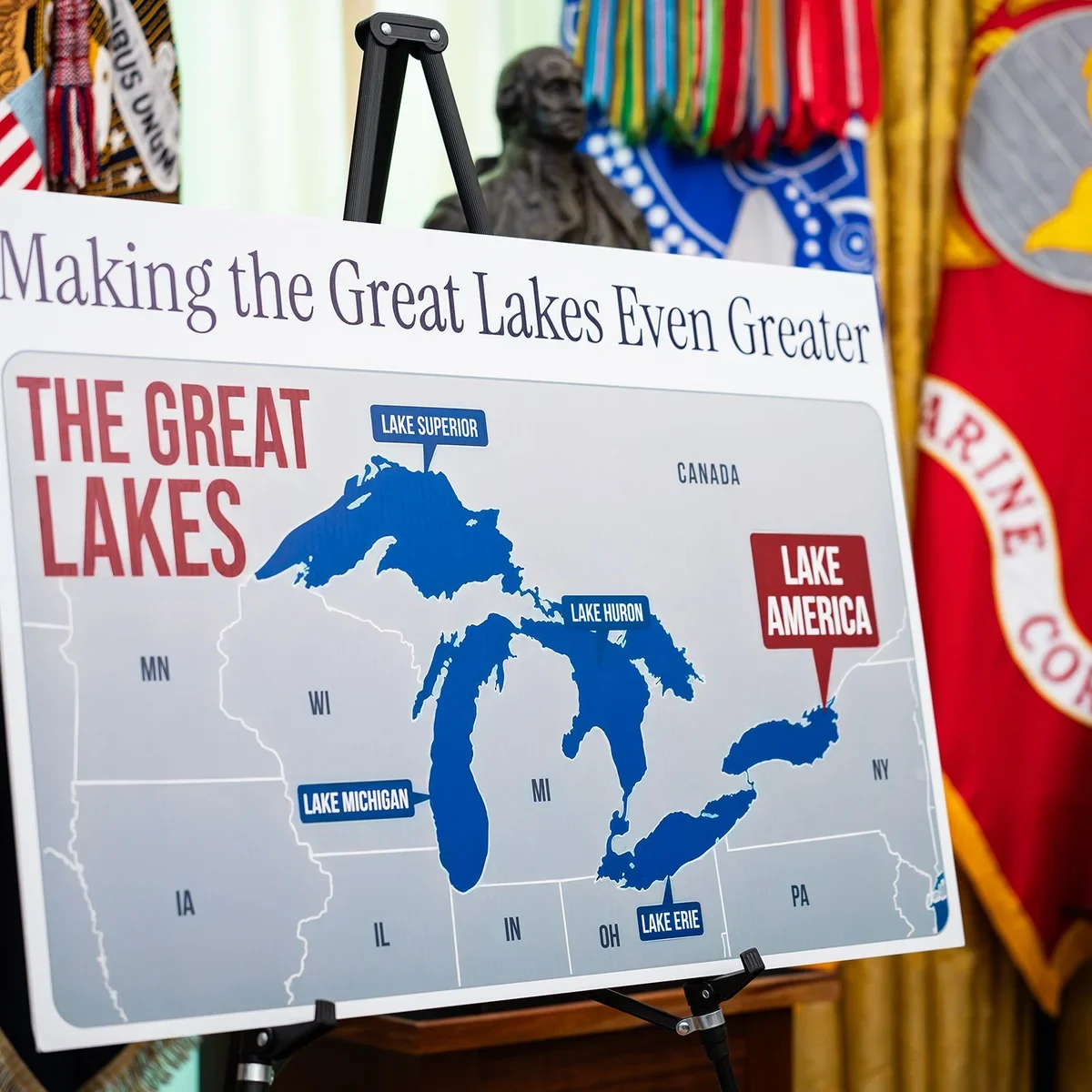
The update to Google Maps occurred after Trump signed an order last week to change the name of Lake Ontario, the smallest of the five Great Lakes.
The decree established that the Secretary of the Interior, Doug Burgum, was to update the GNIS, in coordination with the United States Board on Geographic Names, the body responsible for standardizing the references used by the federal government.
A sign of the Great Lakes
The Gulf of America
The decision does not constitute the first change of this type made by Google during the Trump administration. The company had previously adopted a similar procedure with the Gulf of Mexico, which began to be listed as “Gulf of America” for U.S. users after another decree signed by the president at the beginning of his term.
The new change in Google Maps also occurs in a context of strong tension between the United States and Canada due to the trade dispute between the two countries.
Bilateral relations became complicated after negotiations failed to reach an agreement and Washington moved forward with tariffs of 50% on hundreds of Canadian products. In response, Ottawa announced reciprocal tariffs of up to 50% on U.S. products.
Trump had anticipated the name change during that conflict and linked the measure to arguments of sovereignty and historical development of the United States.
The president also presented the lake as a relevant economic resource for the country and stated that the new name represented a recognition of its importance to the U.S. economy.