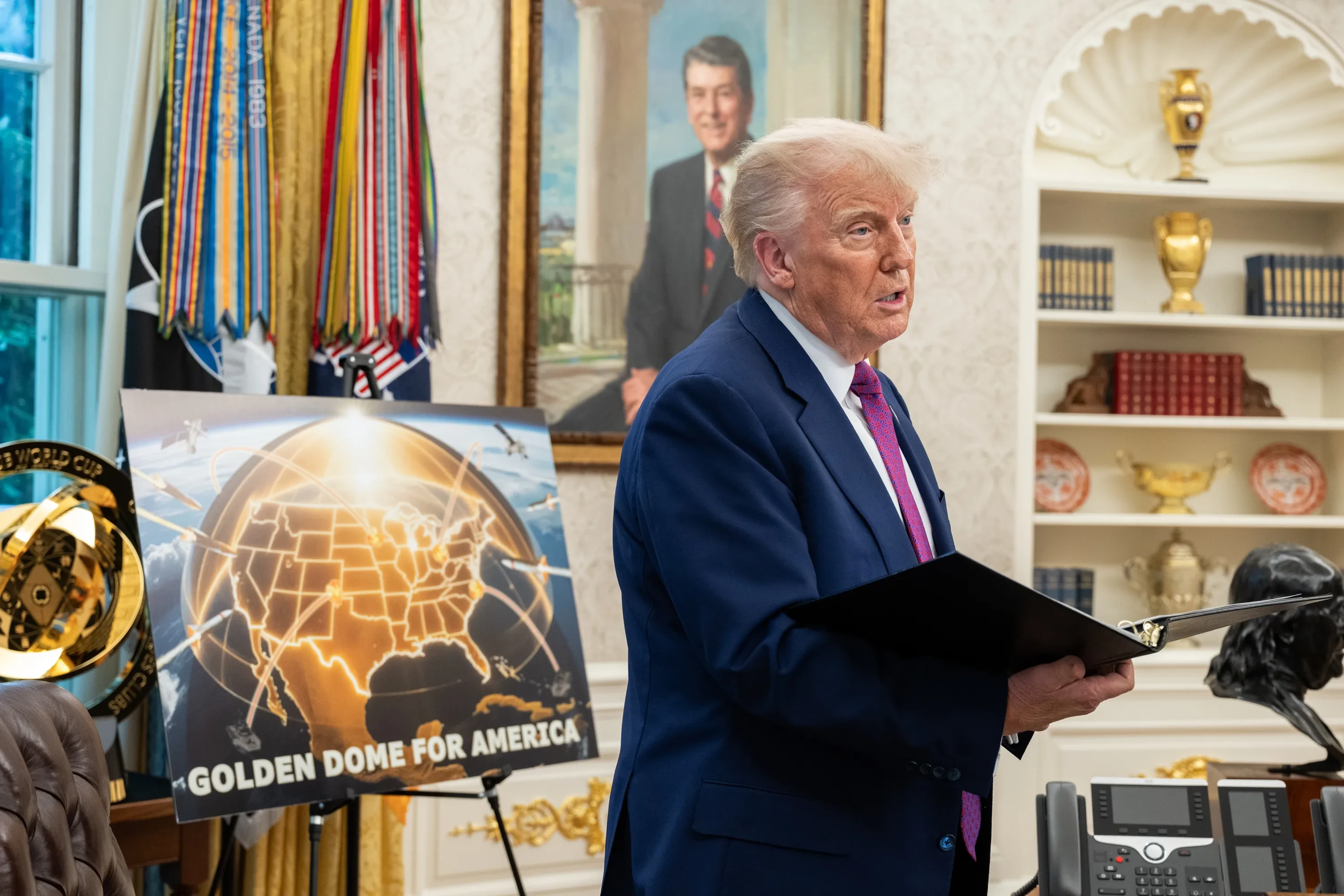
The President of the United States announced the award of contracts to several companies in the aerospace sector for the construction of the anti-missile system.
Nuevo
Agregar La Derecha Diario en
Compartir:
The United States is making progress in the development of an ambitious space-based anti-missile defense system, within the framework of the “Golden Dome” program, promoted by President Donald Trump. The United States Space Force announced the award of contracts worth a potential value of up to 3.2 billion dollars to 12 companies to design and build orbital interceptors, considered a key part of this new
security architecture.
The Golden Dome program, estimated at about 185 billion dollars, seeks to integrate existing ground-based capabilities, such as radars, sensors and interceptor missiles, with an advanced network of satellites and space systems capable of detecting, tracking and neutralizing threats early in their trajectory. The initiative responds to the increasing sophistication of the arsenals of potential adversaries, including hypersonic missiles and systems with
high maneuverability.
In this context, the development of space-based interceptors (SBI) marks a significant change compared to traditional defense models. Unlike terrestrial systems, which usually operate in the middle or late phases of a missile's flight, SBIs are designed to intervene at early stages, even during the boost after launch. This approach increases the likelihood of interception and reduces risks for U.S. territory and allies
. The Donald Trump administration presented the new phase of the “Golden Dome” project in which it announced the award of contracts to companies in the sector
The Space Systems Command, the agency responsible for the acquisition of space capabilities, explained that since 2025, 20 agreements have been granted to companies in the sector, combining large contractors with emerging firms. Among them are SpaceX, Lockheed Martin, Northrop Grumman, Raytheon and Anduril Industries, along with other technology companies that provide innovation in areas such as artificial intelligence,
autonomous systems and data analysis.
According to the command, the objective is to demonstrate an initial operational capability integrated into the Golden Dome architecture by 2028. To this end, it is planned to deploy a constellation of interceptors in low Earth orbit, capable of operating in multiple phases of a missile's flight: impulse, average trajectory and glide. This “layered” approach seeks to ensure redundancy and effectiveness in the face of complex threats
.
Pentagon officials have stressed that the incorporation of artificial intelligence will be key to managing the enormous amount of data generated by space and terrestrial sensors, allowing for faster and more accurate responses. In an environment where decision speed can make a difference, this technological integration is considered essential to maintain strategic superiority
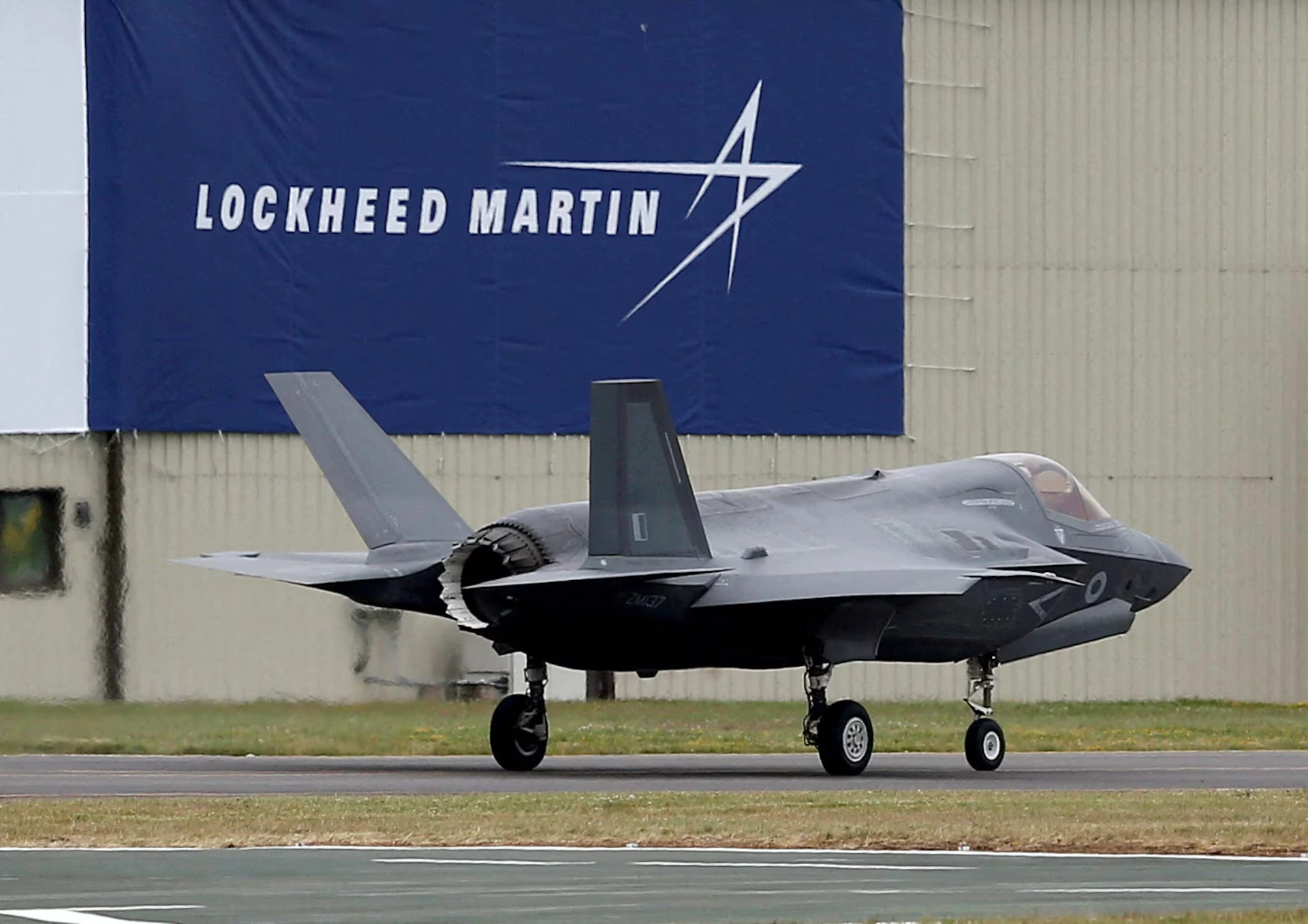
. The Trump administration commissioned major companies such as Lockheed Martin, Space X and Northrop Grumman to obtain space capabilities
The program has also been designed with a competitive approach to its acquisition process. Through the use of flexible agreements, the United States Space Force seeks to attract both traditional suppliers and new players, encouraging innovation and avoiding dependence on a single contractor. This strategy, according to the authorities, will make it possible to select the most efficient solutions and reduce costs in the long term.
Although some external estimates have warned that the total cost of the program could increase significantly in the coming decades, the government insists that each component will be evaluated based on its technical and economic viability. In fact, project managers have indicated that, if certain capabilities, such as impulse interception from space, are not scalable or affordable, alternatives will be considered within
the same system.
On the political front, the Golden Dome has begun to consolidate support in Congress, with budgetary allocations that include hundreds of millions of dollars in early stages and larger funding proposals under discussion. This support reflects a growing bipartisan concern about the evolution of global threats and the need to modernize national defenses
. The missile defense project has begun to garner significant support within the United States Congress
Analysts agree that the program represents a long-term strategic commitment for the United States. Beyond its cost, its advocates argue that it is a necessary investment to anticipate future risks and avoid scenarios of greater vulnerability. In an international context marked by technological and military competence, initiatives such as the Golden Dome seek to ensure that the country maintains its capacity for deterrence and protection
.
With the objective of demonstrating concrete results in the coming years, the development of space interceptors is emerging as one of the most demanding, and at the same time most promising, technological challenges in contemporary American defense.