The administration of President Donald Trump is intensifying its efforts to strengthen the economic and strategic presence of the United States in Africa, in an attempt to counteract China's growing influence on the continent. Washington claims to have contributed to the closure of 37 trade agreements valued at USD 25.670 billion, while seeking to offer African countries an alternative to the economic model driven by Beijing.
The Under Secretary of State for African Affairs, Frank Garcia, stated that China continues to flood African markets with state-subsidized products, a practice that, according to U.S. officials, can weaken local manufacturers and increase the economic dependency of countries on the continent.
The difference in trade volume between the two powers highlights the challenge. By 2025, bilateral trade in goods between China and Africa reached approximately USD 348.100 billion. Chinese exports accounted for about USD 225.000 billion, while imports from Africa amounted to nearly USD 123.000 billion. In contrast, trade in goods between the United States and Africa was approximately USD 83.350 billion.
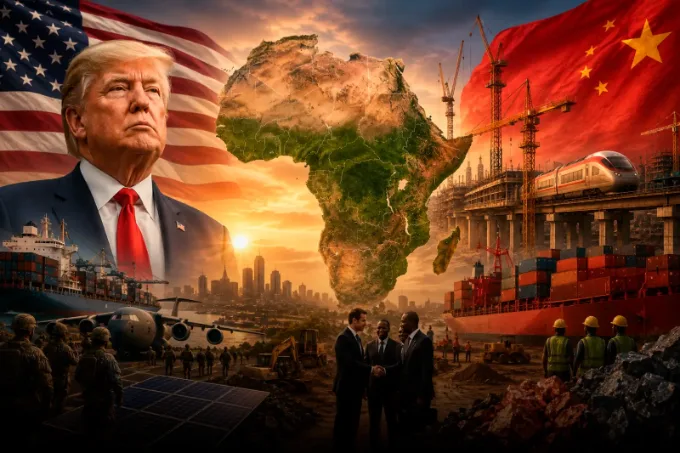
The administration of Donald Trump seeks to strengthen its presence in Africa in the face of China's advance in the region
Washington maintains that this gap represents not only a trade competition but also a strategic problem. Recent research has indicated that competition from Chinese products can reduce the productivity of African manufacturers, especially small and medium-sized enterprises facing financial difficulties and access to electricity issues.
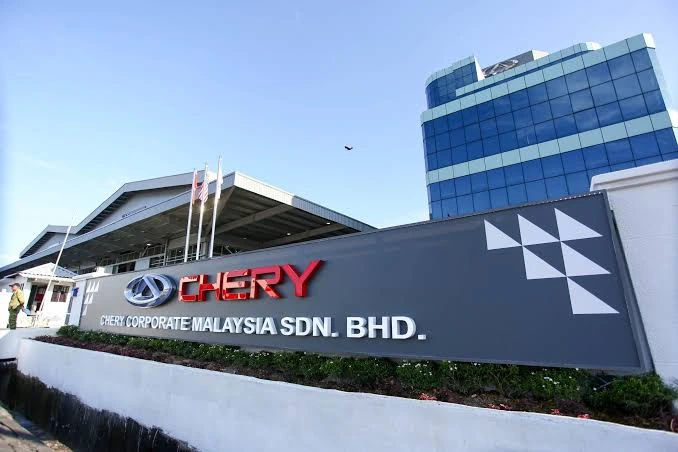
At the same time, numerous Chinese companies have increased their production directly in Africa. In Ghana, more than 400 Chinese-owned manufacturers registered operations between 2004 and 2024. In South Africa, the automotive manufacturer Chery acquired an old Nissan plant and plans to begin production there in 2027.
Although Chinese investment has generated jobs and economic activity, it has also provoked conflicts with local communities. In some African countries, there have been complaints against Chinese companies for pollution, environmental damage, and impacts on agricultural land. In Guinea, for example, a protest against a Chinese mining company in 2024 ended with two people dead after the intervention of security forces.
For the Trump administration, these episodes reinforce the need for the United States to present a transparent trade agreement-based alternative that offers mutual benefits, rather than allowing China to consolidate a dominant position in strategic sectors.
Multiple Chinese companies have increased their presence in Africa, which has generated several conflicts with local communities
Critical minerals in Africa, a priority for Washington
One of the main arenas of this competition is access to critical minerals. The United States considers that China's dominance over certain supply chains represents a direct vulnerability to its national security and industrial capacity.
The United States Africa Command (AFRICOM) has warned that Beijing uses investments in mining, infrastructure, and transportation to secure access to strategic minerals. Graphite is one of the most important examples: China dominates approximately 90% of its battery-grade processing.
Other minerals also show a strong Chinese concentration. Data from the U.S. Geological Survey indicate that China accounts for about 79% of the world's natural graphite production, 98% of primary refined gallium, 83% of extracted tungsten, and around 68% of rare earth elements.
In light of this dependency, Washington is promoting alternative trade routes. The most prominent project is the Lobito Corridor, backed by the United States, which aims to connect the copper mining regions of the Democratic Republic of the Congo and Zambia with the Atlantic port of Lobito in Angola.
The initiative may allow African minerals to reach international markets through a route independent of networks controlled or financed by China. It also offers African countries a greater variety of economic partners.
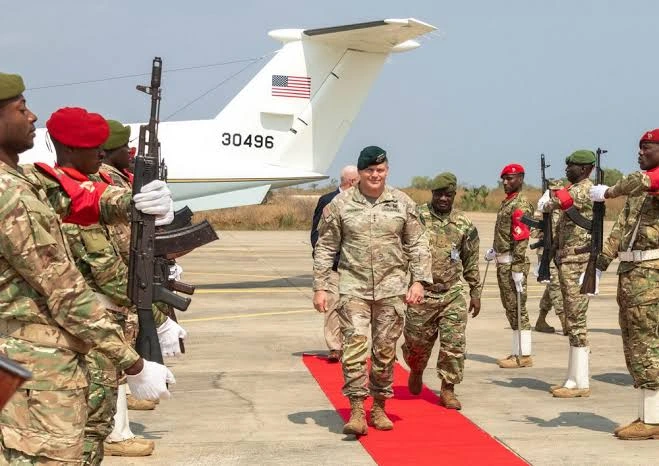
The United States Africa Command has warned about China's intentions to acquire Africa's strategic minerals
Security and military presence
The competition is not limited to the economy. Washington is also concerned about the relationship between certain Chinese companies, mining operations, and armed groups in some African regions.
International reports have documented cases where companies linked to mining projects were accused of interacting with armed groups or conducting activities without the necessary authorizations. These precedents have heightened U.S. concerns about how China protects its investments and expands its influence in politically unstable areas.
China has also expanded the use of private security contractors to protect projects abroad. Some Chinese security companies have hired hundreds of armed guards in countries where Beijing operates businesses and investments.
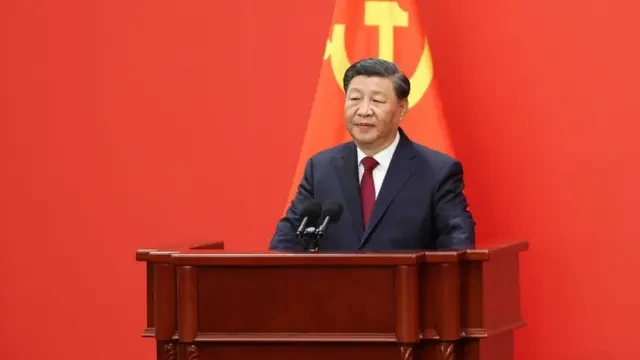
The communist government of Xi Jinping even uses private security contractors to protect its projects on the African continent
At the same time, China is expanding its military cooperation with African governments. Under the action plan of the China-Africa Cooperation Forum for 2025-2027, Beijing promised military aid of 1 billion yuan, equivalent to about USD 140 million, in addition to training for thousands of African military, police, and security officials.
U.S. experts warn that these programs not only provide technical training. They can also expose African officials to the political model of the Chinese Communist Party, in which the armed forces remain under the direct control of the ruling party.
Ports and strategic access
Port infrastructure is another key piece of the Chinese strategy. Beijing already maintains a military base in Djibouti, near one of the most important maritime routes in the world.
AFRICOM believes that Chinese investments in ports and transportation could facilitate a permanent military presence beyond Djibouti. U.S. officials have particularly noted China's interest in establishing dual-use facilities or a permanent naval presence on the African Atlantic coast, particularly in the Gulf of Guinea.
For Washington, preventing China from monopolizing minerals, critical infrastructure, and African maritime routes has become a matter of national security.
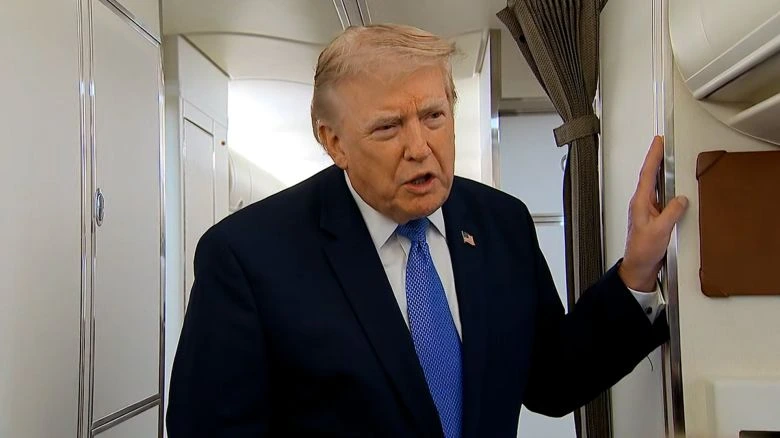
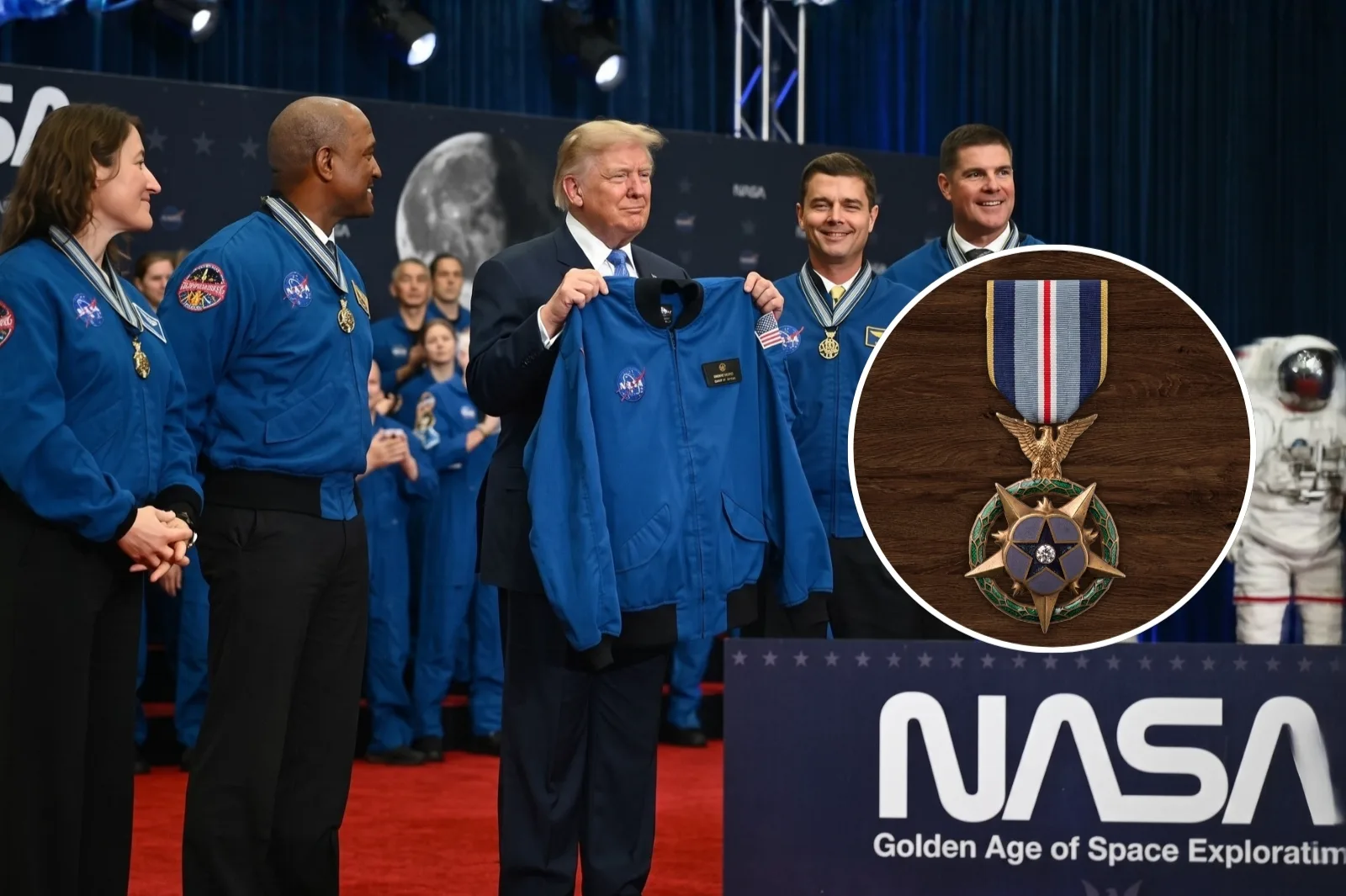
The Trump administration seeks to provide the African continent with investment alternatives that do not grant all concessions to the Chinese regime
The U.S. strategy aims to leverage that concern by offering African countries an alternative. The USD 25.67 billion in trade agreements announced by the Trump administration represents a step in that direction, although there is still a huge gap compared to the volume of Chinese trade.
The competition will be prolonged, but the United States has a significant advantage: it can offer access to private capital, advanced technology, Western markets, and security cooperation without requiring African countries to adopt Beijing's authoritarian political model.
In this context, Washington's economic offensive represents more than just a trade dispute. It is an attempt to ensure that Africa can choose among multiple partners and avoid excessive dependence on China. For the Trump administration, strengthening trade and strategic ties with the continent is also a way to protect U.S. supply chains, secure critical minerals, and limit Beijing's military and political expansion.