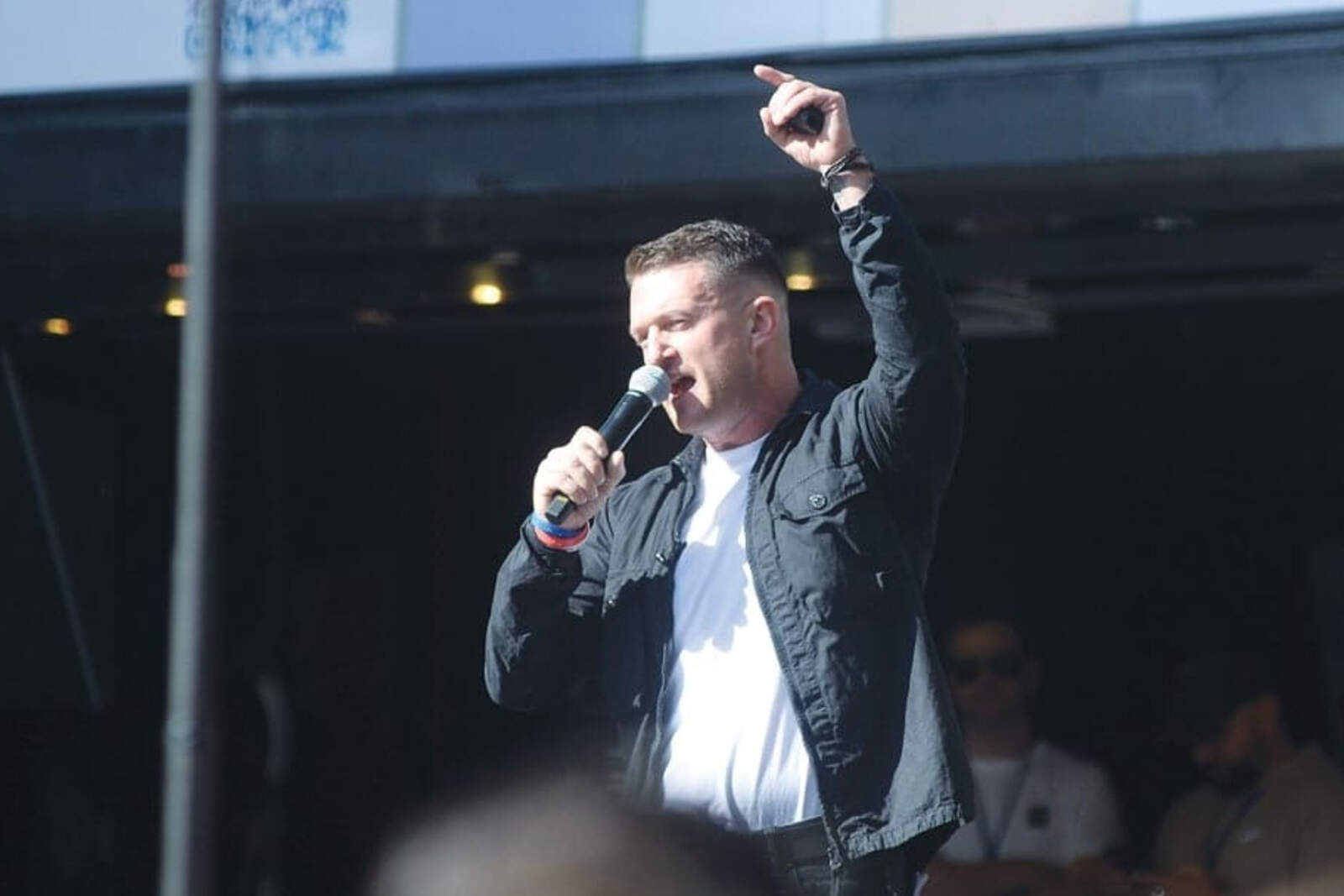
A heated controversy is shaking Jewish communities and political circles following the announcement that Tommy Robinson, British activist and well-known opponent of Islamic extremism, will visit Israel by official invitation of the Minister of Diaspora Affairs and the Fight Against Antisemitism, Amichai Chikli.
Chikli made the invitation public on October 3, just days after the antisemitic attack outside a Manchester synagogue on Yom Kippur, and described Robinson as "a brave leader on the front line against radical Islamism".
According to the minister, strengthening cooperation with allies who understand the danger of extremism "is an essential part of Israel's defense and of the free world".
Robinson, who is facing legal proceedings in the United Kingdom for alleged intimidation of journalists — charges to which he pleads not guilty — confirmed that he will travel to Israel after the October 13 hearing.
His itinerary includes visits to Jerusalem, Judea and Samaria, the site of the Nova festival, the Jabotinsky Institute, and Yad Vashem.
On social media, the activist wrote: "The attack in Manchester reaffirmed my conviction that the United Kingdom and Israel are fighting the same battle against Islamic jihadism. Your struggle is ours. I'm coming as a friend and ally, because Israel's strength is the strength of the West."
Not everyone shares that view. The Board of Deputies of British Jews and the Jewish Leadership Council issued a joint statement calling Robinson a "bully" and strongly criticizing Chikli, whom they accused of "ignoring the British Jewish community".
The minister replied by pointing out that these institutions "openly align themselves with the pro-Palestinian left" and that, instead of demanding protection after the attack, "they preferred the photo with the British prime minister".
Despite the criticism, other Israeli voices supported the visit. Niva Von Weisel, director of the Jabotinsky Institute, stated: "We welcome Tommy Robinson to a place that preserves the legacy of someone who understood that freedom must be defended."
The Knesset's president, Amir Ohana, also expressed his support: "You're doing a great service to your country. See you in Jerusalem."
With his visit, Robinson seeks to strengthen an ideological alliance with Israel in the face of the advance of Islamist extremism, in a gesture that, beyond the controversy, reinforces the message that the security of the Jewish state is inseparable from the defense of Western values.