Uruguay has just received, once again, the numerical confirmation of what many of us have sensed for decades: the country pays dearly for decades of state interventionism, disguised as the “Uruguayan model” and sold as the only possible way to do politics.
According to the latest edition of the Index of Economic Freedom from the Fraser Institute —one of the most rigorous and respected gauges in the world—, Uruguay ranks 53rd out of 165 countries, with a score of 7.16 out of 10.
It is not a cataclysm, but it is the confirmation of a relative stagnation. While other nations advance by reducing the size of the State, easing regulations, and respecting private property, we remain anchored in a statist consensus that crosses colorados, frenteamplistas, and blancos alike.
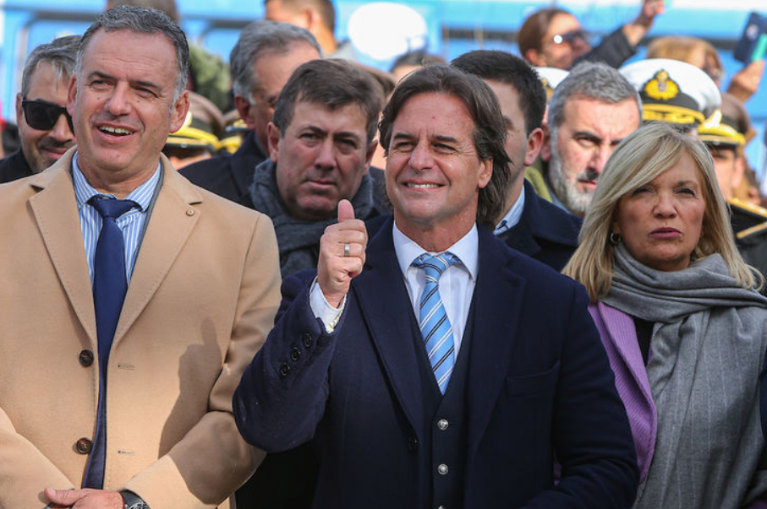
Julio María Sanguinetti, José Mujica, Tabaré Vázquez, Luis Lacalle Pou, and now Yamandú Orsi form, in this sense, an unbroken chain. Each, with their rhetorical nuances and different eras, has contributed to fattening the state apparatus, increasing the tax burden, multiplying regulations, and consolidating a model where public spending and transfers end up being the main engine of “stability.”
The result is predictable for anyone who has read Henry Hazlitt attentively: what is visible is the social work, the subsidy, public employment, and the “protection” of the local producer; what is not visible are the investments that do not arrive, the ventures that never take off, the talented young people who emigrate, and the growth that is halted.
The Fraser Institute measures five major areas: size of government, legal system and property rights, monetary stability, freedom of international trade, and credit, labor, and business regulation. Uruguay does not fail in all, but it drags serious burdens in those that matter most for the long term: the excessive size of the State and the stifling regulation.
This is the shared legacy. The governments of the Frente Amplio deepened it with ideological enthusiasm; the colorados and blancos managed it with pragmatic resignation. None had the courage —or the conviction— to challenge the dogma that “Uruguay is a country of rights and not of opportunities.” The result is a State that consumes more than 30% of GDP in spending and a tax pressure that suffocates the middle class and the productive sector.
Anyone who thinks this is just an ideological debate is mistaken. The empirical evidence is overwhelming: the countries that consistently appear at the top of the index —Hong Kong, Singapore, Switzerland, New Zealand, even Chile in the region— do not do so by chance or due to natural resources.
They do so because they understand something elementary that here seems heretical: economic freedom is not a luxury of radical right-wingers, but the indispensable condition to generate wealth that can then be distributed. When the State becomes too large, too intrusive, and too unpredictable, it destroys incentives. And without incentives, there is no investment; without investment, there is no genuine employment; and without genuine employment, there is no real progress.
Defenders of the current model will say that Uruguay “is stable” and that “it is not Venezuela.” They are right about the latter; they are utterly wrong about the former. The stability of a cemetery is also enviable, but no one wants to live in it.
Our stability is, increasingly, the stability of mediocrity: we grow little, we borrow moderately, we distribute what we do not create enough of, and we celebrate as a moral victory not having fallen into the abyss. Meanwhile, Costa Rica, Chile, and even nations that were recently behind us are passing us on the right in the economic freedom ranking.
There are no magic shortcuts or easy solutions. But there is a clear direction: reduce the weight of the State on the economy, simplify the tax system, deregulate the labor market, genuinely protect private property, and open trade without complexes.
This requires breaking the statist consensus that has governed Uruguay for almost half a century, regardless of the party in power. It ultimately requires stopping the belief that every social problem can be solved with more law, more spending, and more bureaucracy.
Hazlitt explained it decades ago with a clarity that remains uncomfortable: “The art of economics consists in looking not merely at the immediate effects of a policy, but also at its longer-term consequences; not merely at the effects on a particular group, but on all groups.” Uruguay has been looking only at the immediate and protecting only the organized groups that shout the loudest for too long. The 53rd position is the price we pay for that collective myopia.
The question is whether we are finally willing to open our eyes.