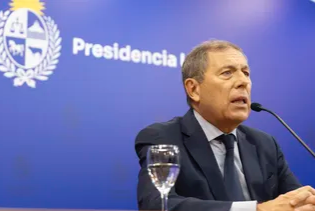
The Minister of Economy, Gabriel Oddone, stated quite naturally that “there are almost no poor elderly people in Uruguay.” A phrase that sounds good in an academic talk or at a working breakfast, but crumbles as soon as one looks at the cold, hard numbers published by the state itself. Because reality does not lie: thousands of Uruguayans who have completed their working cycle live on the edge or directly below the poverty line. And the system that “protects” them is the same one that condemns them to a life of hardship. Let’s take the official data from the Social Security Bank and the National Institute of Statistics, without filters or makeup.
A single-person household in Montevideo needs 20,057 pesos per month to not be classified as poor. Exactly: 20,057 pesos. Not a peso less. Now look at who earns that or less: 140,000 retirees and pensioners in the lowest bracket —those whose only income is from the BPS plus military or police pensions— receive up to 20,057 pesos. Right on the line. A single increase in the price of meat, gas, or public transport pushes them below. About 227,000 survivors’ pensioners receive, on average, 19,442 pesos. That is, 615 pesos below the poverty line for a single person in Montevideo. It’s not “almost no poor.” There are tens of thousands who already are. And the 492,000 regular retirees, who are supposedly better off, average 32,640 pesos.
It sounds better, until one subtracts rent, medications, transportation, and the basic basket. Because the basic food basket for a single adult hovers around 17,700 pesos in Montevideo, and the total (food plus housing, electricity, health) exceeds 20,000. The average is just above, but with such a narrow margin that any shock —a price increase, an illness— leaves them exposed. Let’s add it up: more than 859,000 people depend on pensions from the BPS and other funds. That represents almost 80% of the elderly population in the country. And of them, almost 367,000 (those in the lower bracket plus survivors’ pensioners) live with incomes that do not reach or barely touch the official poverty line. It is not a minority. It is a third of the group.
The minister may argue that the official poverty rate among those over 65 is low (around 6% according to the INE). But that figure is built with a poverty line that, in practice, ignores the daily reality of those who no longer generate extra income. When 95% of the elderly depend exclusively on the state for survival, and when more than 140,000 receive the minimum that coincides with the poverty line, talking about “almost no poor” is an exercise in rhetoric, not statistics. And here comes the crux of the problem. A system that concentrates the retirement savings of a lifetime in the state generates dependency, not security. When the state decides how much can be saved, how much can be invested, and how much can be collected at the end, it eliminates the possibility for each person to build their own cushion with free decisions. The result is predictable: amounts that are adjusted by salary indices (5.97% in 2026, for example), but that never manage to take off from subsistence because the state apparatus spends more than it collects and ends up financing with taxes and debt. Meanwhile, the population is aging at full speed. Those over 65 are already more than 550,000 and in a few decades will be almost a million.
The country that today celebrates “low child poverty” (although it remains high) is charging the generation that built everything. And it does so with a system that promises dignity but delivers survival. Look at the numbers again and draw your own conclusions. 140,000 people earning up to the poverty line. 227,000 pensioners below it. Hundreds of thousands more living with a cushion so thin that any unforeseen event sinks them. That is not “almost no poor.” That is a system that, after decades of state promises, continues to leave thousands of Uruguayans with just enough pension to make ends meet. Oddone can keep repeating the phrase in forums and conferences. The data, relentless, continue to say otherwise. And the retirees who open their wallets every first of the month know it better than anyone.