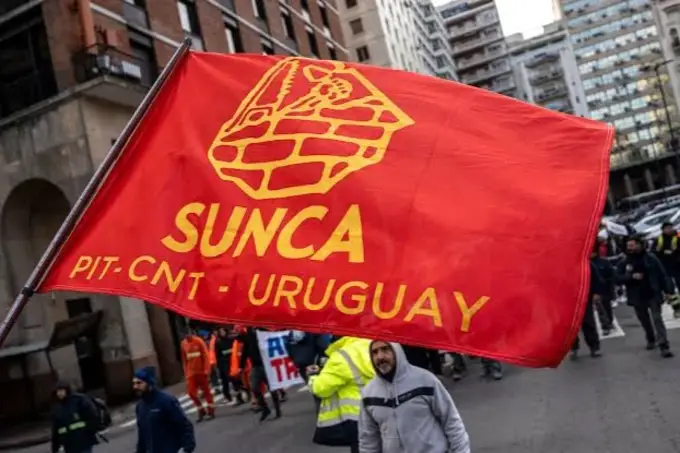
In a construction site in Maldonado, the workers themselves made the decision: they expelled the delegates and union activists who were paralyzing the work with ideological claims, constant mobilizations, and demands that had nothing to do with productivity or real working conditions. They can’t take it anymore.
The construction workers —people who want to work, get paid, and go home— set a limit to the delusions of unions like SUNCA, dominated by an extreme left logic that prioritizes political confrontation over genuine employment.
Maldonado, one of the departments with the highest dynamism in construction due to tourism, real estate investment, and private works, has become a focal point for these conflicts.
Assemblies that end in shouting and pushing, recurrent stoppages, and pressure on companies trying to meet deadlines.
The grassroots workers are starting to rebel: they prefer to work and progress rather than serve as cannon fodder for leaders who thrive on permanent conflict.
The real cost of union ideology
When a union imposes strikes, endless assemblies, and conditions that artificially raise labor costs, the result is predictable: projects that are delayed, costs that rise, and companies that choose to mechanize, subcontract less, or directly reduce investment.
In a sector like construction, sensitive to deadlines and prices, every lost day is destroyed employment, wages that are not generated, and opportunities that go to other departments or abroad.
The data from the sector is clear. Maldonado heavily depends on private activity in housing, hotels, and tourist services.
Every ideological mobilization that paralyzes a project not only affects that company: it reduces the supply chain, discourages new projects, and ultimately harms the very worker that the union claims to defend.
While union leaders collect their allowances and maintain the revolutionary discourse, the workers lose wages or see how job sources dry up.
Advertising announcement
This is not a defense of labor rights. It is economic sabotage disguised as struggle. The extreme left unions impose a logic where conflict is an end in itself: more power for the union, more control over workers, and less freedom for those who simply want to fulfill their contract and progress. The result is lower productivity, lower competitiveness, and, in the end, less formal employment.
The workers are fed up
What happened in Maldonado is a symptom of change. More and more workers see that ideological delusions —radical anti-business discourse, strikes in solidarity with distant political causes, demands that ignore economic reality— prevent them from putting bread on the table.
They prefer to work. They prefer that the projects move forward. They prefer wages and stability over eternal assemblies and confrontations.
This is not “anti-union.” It is anti-parasitic. Unions that operate as ideological monopolies end up destroying the very sources of employment they should protect.
When workers expel them from the site, they are defending their most basic right: the right to work without anyone imposing a political agenda that impoverishes them.
Uruguay needs more people willing to work and fewer ideologues who live off strikes and confrontation. What happened in Maldonado should be a clear signal for the entire sector: workers are no longer willing to be hostages to delusions that destroy jobs. They want projects, they want wages, and they want a future. The rest is ideological noise that they are increasingly less willing to tolerate.