This Thursday the Senate is debating the Glacier Law and activists carried out a 'protest' by violating Congress' security regulations
Compartir:
This Thursday, the reform of Law 26.639—known as the Glacier Law—is being promoted in the Senate, and it seeks to bring investment and federal development. In that context, a group of 12 Greenpeace protesters jumped the perimeter fences of Congress and broke into the esplanade of the Legislative Palace. After the infraction, they were detained by the Security Forces.
The intervention was carried out by officers of the Argentine Federal Police (PFA) and the City Police, who arrested the protesters for disturbances in public space. According to reports, 9 of the 12 detainees are women.
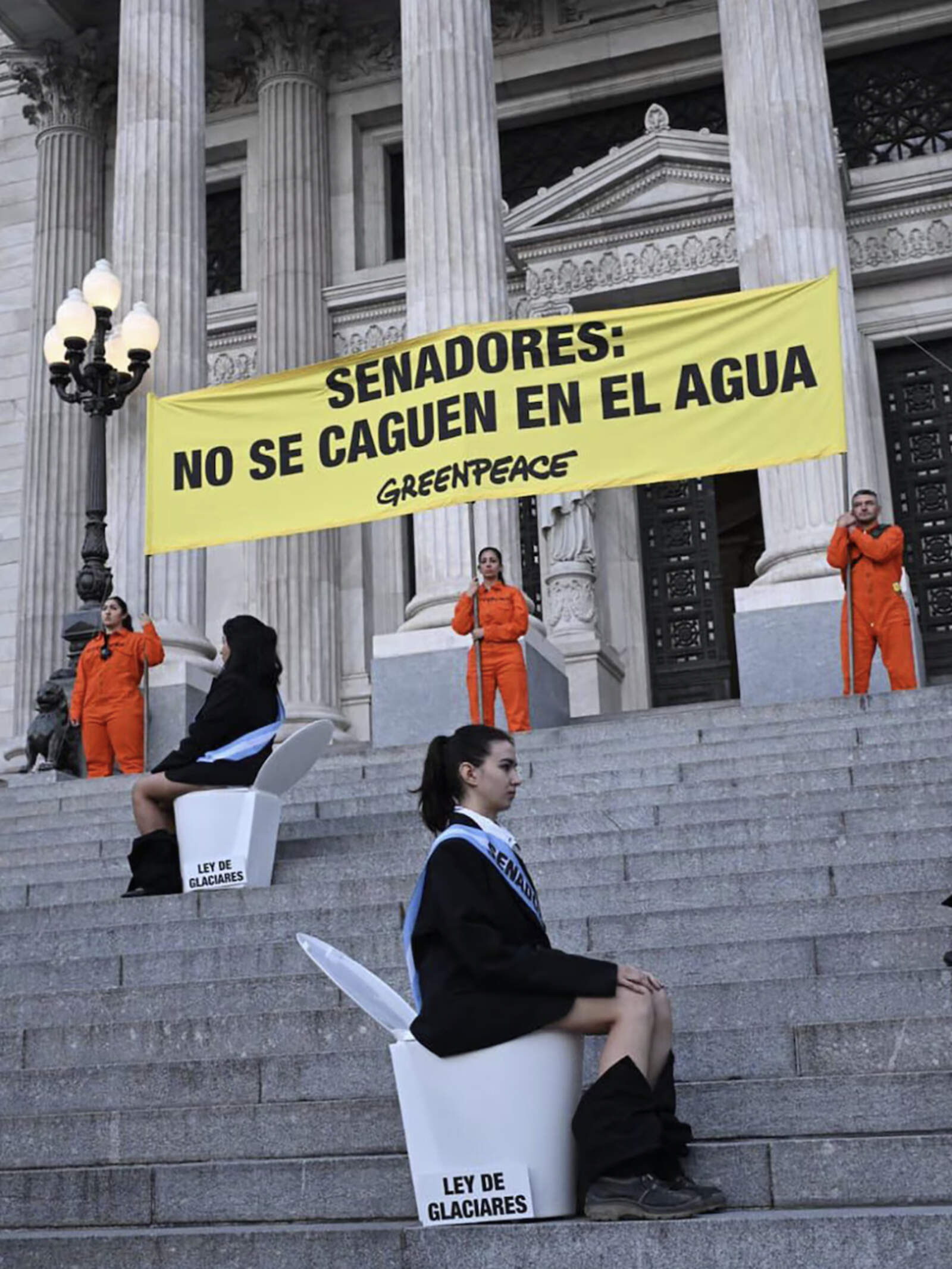
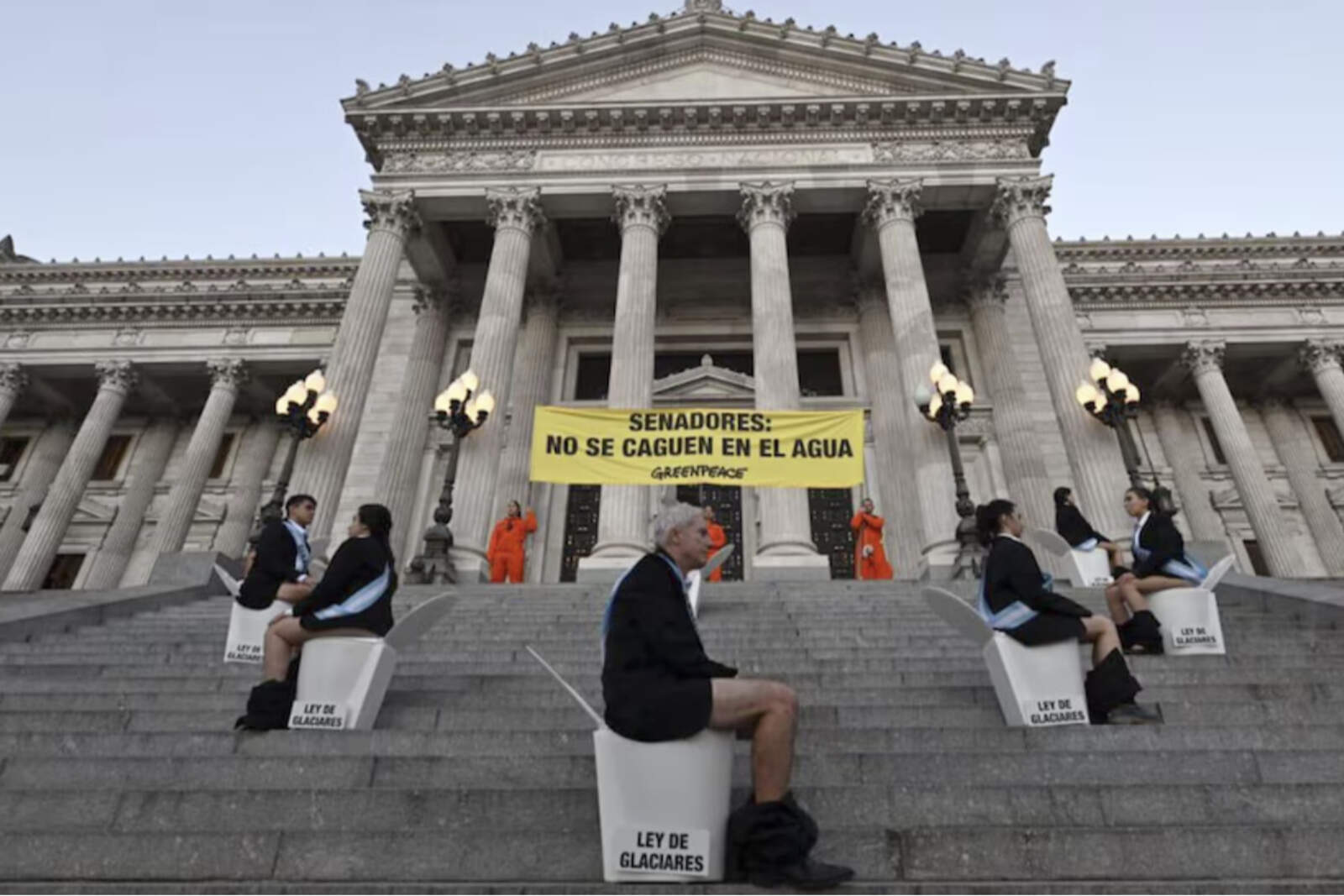
The activists staged a performance on the steps of the building. Dressed in suits, emulating legislators, they sat on toilets with the inscription "Glacier Law" and displayed a sign with the slogan "Senators: do not crap on the water".
Protestantes saltaron las rejas del Congreso a modo de manifestación contra la reforma
The organization described the intervention as a "peaceful act of resistance" aimed at "making the seriousness of the reform visible". They also stated that the detention of protesters is "concerning from a democratic point of view". However, their actions involved breaking the rules that maintain the security of the establishment just a few hours before the session.
What changes in the Glacier Law
The reform promoted by the ruling party seeks to update the scope of protected areas without eliminating protection over strategic freshwater reserves.
The current regulations protect both visible glaciers and smaller bodies covered or mixed with rock that form part of the periglacial environment. Any industrial activity, including mining, is prohibited there, which means a total underuse of resources.
Publicación de La Libertad Avanza Oficial en relación a la Ley de Glaciares
The new bill introduces a more precise technical criterion: protection would be limited to those periglacial landforms that have a "relevant and verifiable water contribution". That is, the areas that effectively fulfill a strategic function as freshwater reserves will remain protected.
In practice, this implies differentiating between areas with a demonstrable water function and other periglacial surfaces that are currently covered by a broad prohibition that, according to the ruling party, discourages key investments.
Provincial ownership and legal certainty
Another central axis of the debate is the application of Article 124 of the National Constitution, which recognizes the original ownership of natural resources as belonging to the provinces.
The bill keeps under the scope of the National Glacier Inventory (Ianigla) the task of differentiating areas with strategic resource reserves from those without them. At the same time, it reinforces the authority of the provinces to determine which areas constitute freshwater reserves. In case of differences between both entities, there is an ongoing debate over who would have the final say.
Delirio: vestidos de traje, realizaron una puesta en escena con inodoros y banderas
Development versus prohibition
The Government keeps that the reform entails updating a law passed in 2010 under criteria that are considered excessively broad and restrictive. Today Argentina's urgent needs are growth and development, by exploiting our capacities to the fullest.
The new approach proposes to separate more precisely the strategic reserves of water resources from other periglacial areas, allowing productive activities in zones that do not fulfill a verifiable water function.
In a context of global competition for mining investments, the modification is key to attracting capital, generating employment, and taking advantage of strategic resources. The session in the Upper House is scheduled for 11 a.m. and the ruling party is expected to have just enough support to move forward with the initiative.