Economic promotion concentrates $4.8 trillion; total tax expenditure is equivalent to 3.4% of GDP
Compartir:
The 2026 Budget that the Government is seeking to bring to the chamber will add a chapter that usually flies under the radar but moves gigantic figures: tax exemptions and reduced rates for different regimes, with benefits for companies of almost $5 trillion.
According to the detail included in the bill, these benefits are explained mainly by economic promotion regimes, whose fiscal cost amounts to $4.8 trillion, equivalent to 0.47% of GDP. That number is part of a larger package, the so-called "tax expenditure," which for 2026 would be around $35 trillion and would represent 3.4% of Gross Domestic Product.
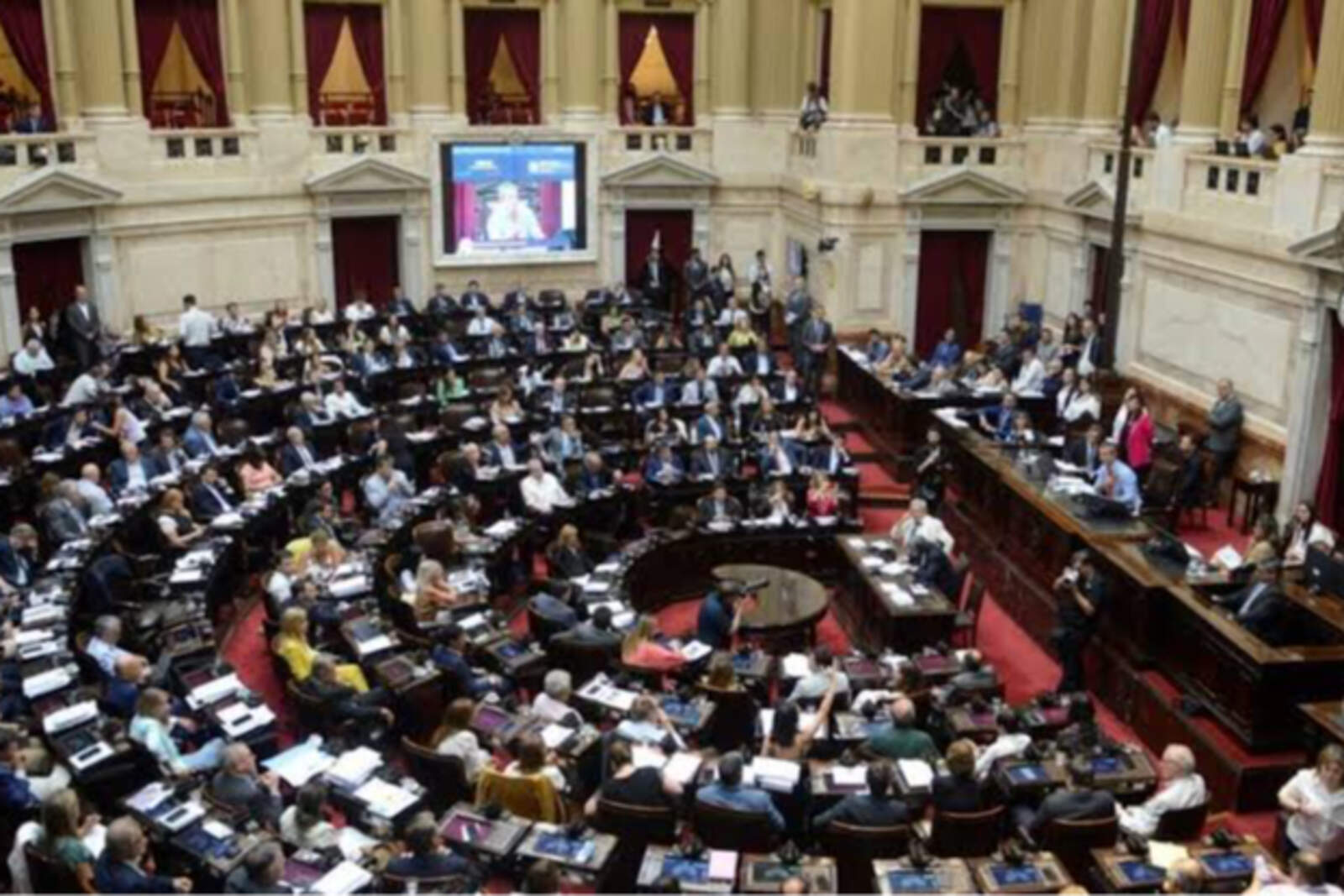
El congreso debate el presupuesto.
Within the menu of promotion schemes, one of the heaviest items is the special regime for Tierra del Fuego, with an estimated fiscal cost of $1.7 trillion (0.17% of GDP), based on exemptions from VAT, Income Tax, import duties, and a reduced rate of excise taxes. The "strengthening of micro, small, and medium-sized enterprises" regime also appears, which will entail in 2026 more than $1 trillion due to the possibility of deducting the check tax payment from Income Tax.
The list also includes mining promotion with tax advantages (almost $600 billion) and the promotion of the knowledge economy ($491 billion), which includes a tax credit voucher and differential treatment in Income Tax. Other schemes are added to this, such as the auto parts regime, estimated at $272 billion, and the Mutual Guarantee Companies regime, a usual vehicle for SME financing, with a fiscal cost of $291 billion.
Javier Milei.
"Tax expenditure" is not limited to companies. The bill includes exemptions and reduced rates related to goods, services, and individuals. In that broad outline, it includes benefits such as the simplified tax regime for small taxpayers (monotributo)—which by definition has a lower unified burden—, whose fiscal cost is estimated at almost $10 trillion for next year. The exemption from Income Tax for members of the Judiciary is also included.
The 2026 Budget more clearly exposes a tax expenditure framework that the Government has decided to make transparent and quantify. Far from granting discretionary privileges, these are inherited regimes and productive promotion mechanisms that Javier Milei's administration seeks to review, organize, and subject to evaluation, in line with the central objective of putting public finances in order without slowing down economic activity.