Immigration in Spain is no longer a temporary phenomenon but has become a structural component of society. According to the latest issue of Panorama Social published by Funcas, the proportion of the population of foreign origin—whether born outside the country or with at least one immigrant parent—has reached historic figures: 36% among those under 20 years old and 39% among those under five, making it a decisive factor in the country's demographic, social, and political future. In total, more than 11.7 million residents in Spain, 24.3% of the population, are of foreign origin.
The study, coordinated by Jacobo Muñoz and with contributions from researchers such as María Miyar, Alejandro Portes, and Rosa Aparicio, offers a detailed snapshot of the second generation of immigrants: those born in Spain to two foreign parents represent 17% of the young population, while generation 2.5 (one foreign parent) accounts for 9% and generation 1.5 (born abroad, arrived before age 11) an additional 4%. Among children under five, 25% belong to the second generation, 10% to generation 2.5, and 4% to generation 1.5, consolidating 39% of early childhood as being of foreign origin.
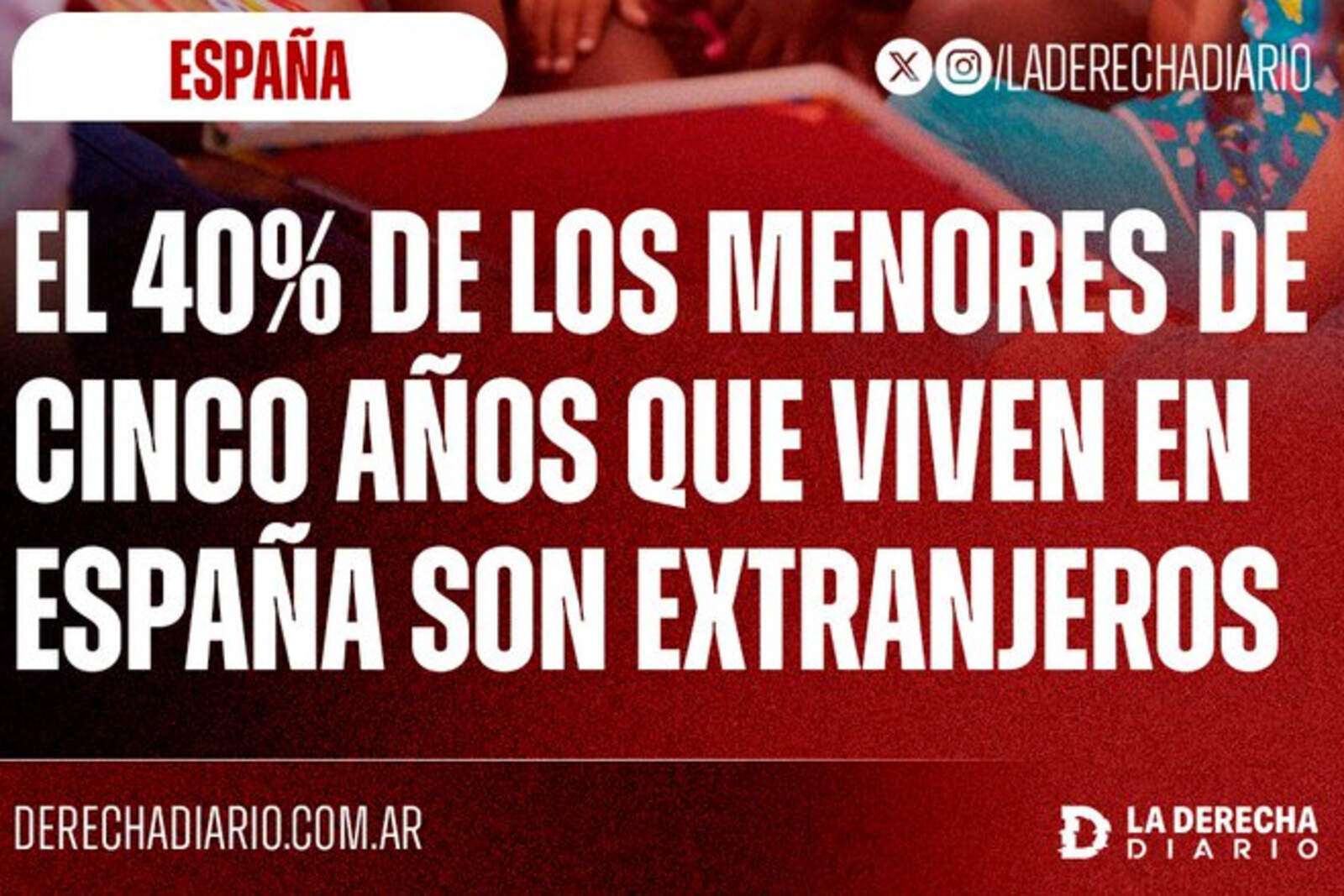
El 40% de los niños menores de cinco años que viven en España son de origen extranjero
A revealing fact is the composition by nationality: one third of the second generation comes from Moroccan families, doubling the proportion of the first generation, while the population of non-Moroccan African origin increases from 3% to 7%. This diversity also impacts education: mothers of the second generation show lower educational levels than Spanish mothers, especially among Moroccan and African families, while mothers from Venezuela or Argentina have profiles equal to or higher than native mothers.
Social and educational integration shows both progress and challenges. The ILSEG study reveals that children of immigrants are equally divided between those who self-identify as Spanish and those who do not. Among those born in Spain (second generation), 82% identify as Spanish, compared to 40% of those who arrived at an early age.
However, gaps in education and employment persist: only 28% of children of immigrants accessed university, compared to 43% of children of natives, with notable differences depending on the parents' nationality. In non-manual occupations, only 18% of children of immigrants reached positions of responsibility, compared to 27% of children of natives, while children of Western Europeans exceed 30% and those of Ecuadorian or Filipino origin barely reach 9-10%.
El 40% de los niños menores de cinco años que viven en España son de origen extranjero
From a labor perspective, second-generation women achieve more favorable integration than men, and the Latin American generation achieves better results than the first generation. The overall improvement is such that, in some cases, inequality with respect to the native population practically disappears.
Nevertheless, Héctor Cebolla points out that the positive effect of preschool education on secondary school performance is lower in second generations, reflecting the unequal quality of early childhood schools. Assessments in mathematics, science, and reading comprehension confirm the educational gap, while university access rates for the second generation remain below those of children of Spaniards from households with low educational levels.
On the social level, Clara Cortina, Albert Esteve, and Anna Turu observe that mixed unions with the native population are more frequent in the second generation, especially among those with higher educational levels. However, populations of African and Asian origin show lower integration in this respect, while Europeans and Americans have higher rates of union with natives.
These structural data are also reflected in specific cases of insecurity and immigration management. Recently, Catalonia was at the center of controversy when the Mossos d'Esquadra arrested a 23-year-old Moroccan man accused of raping a minor under the care of the Generalitat during the Fiestas del Tura in Olot. The Generalitat, according to VOX, prioritizes spending on unaccompanied foreign minors (up to 50,000 euros per year per child) over the education of Catalan students (5,000 euros per year), highlighting the far-left's negligence in security and educational policies.