
La Derecha Diario logo
ESX logoInstagram logoYouTube logoTikTok logo
ARGENTINABOLIVIAECUADORISRAELMEXICOURUGUAY
  • ESXInstagramYouTubeTikTok
  • Secciones
  • ARGENTINA
  • BOLIVIA
  • ECUADOR
  • ISRAEL
  • MEXICO
  • URUGUAY
  • Países
  • La Derecha Diario logoLA DERECHA DIARIO
  • La Derecha Diario México logoLA DERECHA DIARIO MÉXICO
  • La Derecha Diario Uruguay logoLA DERECHA DIARIO URUGUAY
  • La Derecha Diario Ecuador logoLA DERECHA DIARIO ECUADOR
  • La Derecha Diario Bolívia logoLA DERECHA DIARIO BOLÍVIA
  • La Derechadiario República Dominicana logoLA DERECHADIARIO REPÚBLICA DOMINICANA
  • La Derecha Diario Israel logoLA DERECHA DIARIO ISRAEL
  • La Derecha Diario Estados Unidos logoLA DERECHA DIARIO ESTADOS UNIDOS
  • Temas
  • GUERRA EN IRÁN
  • El Diario
  • QUIENES SOMOS
  • AUTORES
  • PUBLICIDAD
  • DONAR

Saudi Arabia activated a strategic oil pipeline that could unlock the crisis in the Strait of Hormuz

Saudi Arabia activated a strategic oil pipeline that could unlock the crisis in the Strait of Hormuz
porEditorial Team
Argentina

The East-West Pipeline pipeline could provide Saudi Arabia and its allies with some peace of mind in the face of the oil situation.


The growing tension in the Middle East and the interruptions in shipping through the Strait of Hormuz have brought to the fore alternative energy infrastructures built by the main producers in the Gulf to reduce their dependence on that strategic route. These include the “East-West Pipeline” (Saudi Arabia), an oil pipeline that allows Saudi Arabia to export oil to the Red Sea without having to cross the

strait.

The Strait of Hormuz is considered one of the most sensitive points in the global energy system. Between 17 and 20 million barrels of oil pass through this maritime corridor daily, which represents approximately one fifth of the world's supply. Due to its closeness and its proximity to Iran, the passage has become a tool of geopolitical pressure in

times of crisis.

Faced with this vulnerability, Saudi Arabia developed an infrastructure during the 1980s aimed at ensuring the continuity of its exports in the event of interruption of maritime traffic. The system, operated by Saudi Aramco, connects oil fields in the east of the country with the port of Yanbu, located on the Red Sea coast, through a network of pipelines of approximately

1,200 kilometers in length.

After several expansions, the pipeline currently has a total capacity of up to 7 million barrels per day. However, not all of this volume is destined for exports, since around 2 million barrels a day are used to supply refineries within the country. This leaves approximately 5 million barrels potentially available for overseas shipments through the port of Yanbu

.
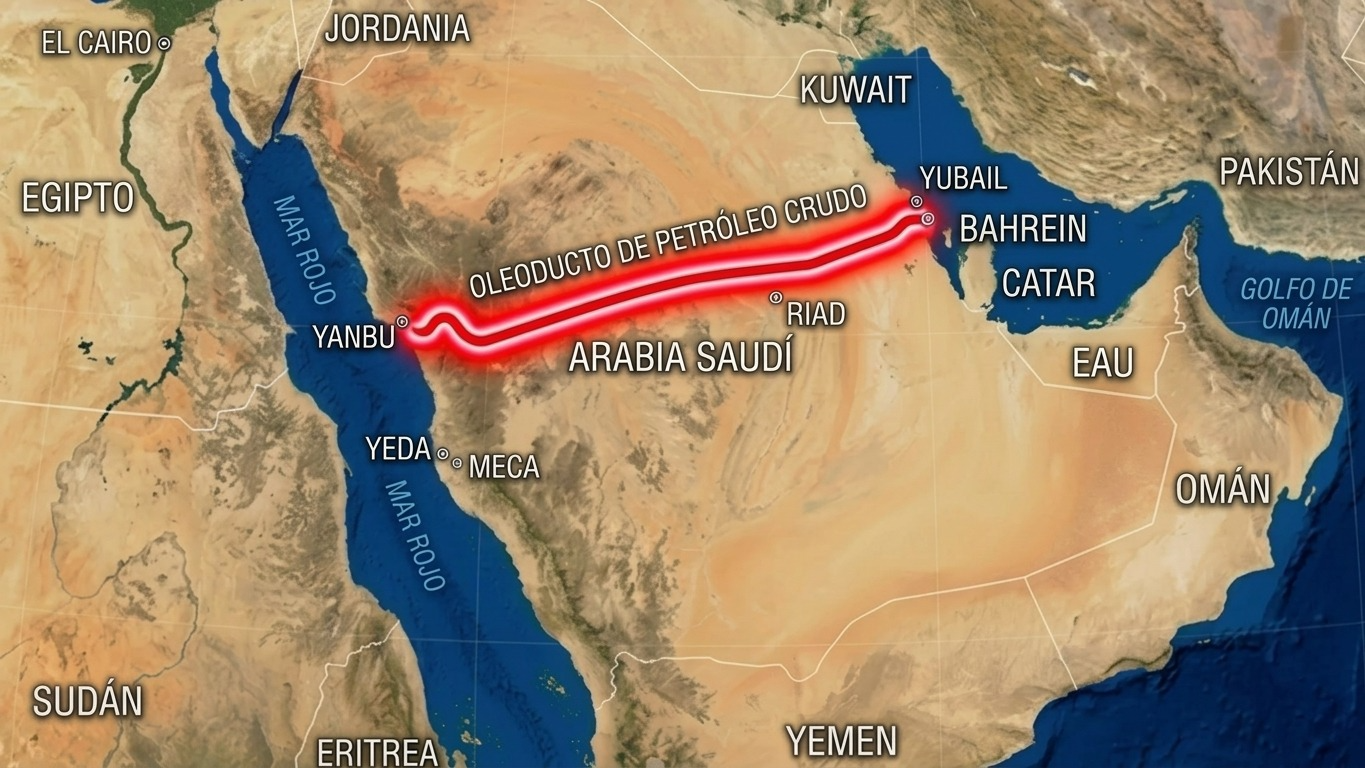
The “East-West Pipeline” pipeline has the capacity to transport the equivalent of 7 million barrels of oil per day without depending on the Strait of Hormuz

However, there are logistical limitations. The carrying capacity of the Yanbu oil terminals is estimated at around 4 million barrels per day, making port infrastructure the main bottleneck in the system. In addition, historical export levels from that port have been significantly lower, indicating that reaching the theoretical maximum would require operational and logistical adjustments


.

The executive director of Saudi Aramco, Amin Nasser, recently warned that the current crisis represents the biggest challenge the regional oil industry has faced. As he noted, a prolonged closure of the Strait of Hormuz could cause serious consequences for the global energy market

.

Recent data reflect the potential impact of interruptions in the strait. Before the conflict, Gulf ports could carry up to about 20 million barrels a day. However, in some recent days that volume has fallen to approximately 3 million barrels due to difficulties with maritime traffic

.
The president of the oil company Aramco stressed that the situation in the Strait of Hormuz is one of the biggest crises in the sector ever seen

Saudi Arabia isn't the only country that has developed alternative routes to bypass the strait. The United Arab Emirates has the “Abu Dhabi Crude Oil Pipeline”, an oil pipeline that connects the Abu Dhabi oil fields to the port of Fujairah, on the Sea of Oman. This system has an estimated capacity of between 1.5 and 1.8 million barrels per day and allows crude oil to be exported without going through the Strait of Hormuz

.

Together, these infrastructures could divert a significant part of the Gulf's oil flow in the event of a crisis, although analysts warn that they would not be sufficient to fully replace the volume that normally crosses the strait.

The situation is also having direct effects on energy markets. Oil prices have fluctuated strongly since the beginning of the crisis, reflecting investor concern about a possible prolonged supply interruption

.
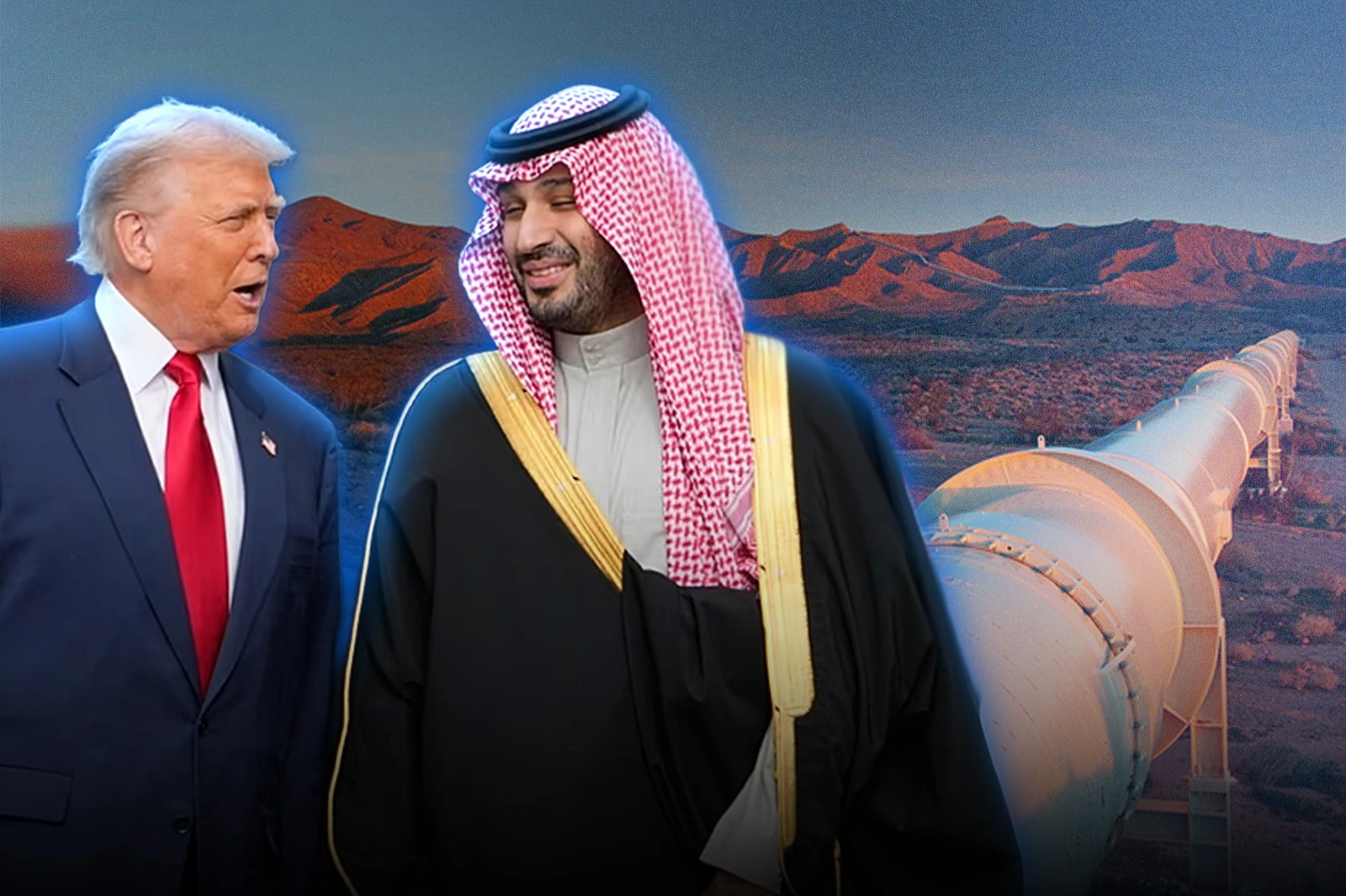
In the context of the Strait of Hormuz crisis, Trump has ordered the attack on the Iranian island of Kharg, responsible for much of the Khamenei regime's oil production


Noticias relacionadas

Mostaza will invest US$ 40 million and open 30 stores in Argentina during 2026

Mostaza will invest US$ 40 million and open 30 stores in Argentina during 2026

Lionel Messi was disappointed by the cancellation of the Final

Lionel Messi was disappointed by the cancellation of the Final

The Ides of March Where was Julius Caesar killed?

The Ides of March Where was Julius Caesar killed?

Iran admitted that in negotiations with Trump it threatened to produce nuclear bombs

Iran admitted that in negotiations with Trump it threatened to produce nuclear bombs

Faced with threats from Russia, Finland considers lifting the ban on nuclear weapons

Faced with threats from Russia, Finland considers lifting the ban on nuclear weapons

Trump used Tucker Carlson to give false information to Iranian officials and expose the Ayatollah

Trump used Tucker Carlson to give false information to Iranian officials and expose the Ayatollah

La Derecha Diario logo
TwitterInstagramYouTubeTikTok

Nosotros

  • Quienes Somos
  • Autores
  • Donar

Privacidad

  • Protección de datos
  • Canales
  • Sitemap

Contacto

  • info@derechadiario.com.ar
PUBLICIDAD