Within the framework of the AmCham Summit, the inflow of global capital driven by economic stability and RIGI positions Argentina as a mining player and opens up a historic opportunity for growth, exports and employment
The figures reflect the potential: in 2025, Argentine mining reached a record of more than USD 6 billion in exports, representing about 7% of total foreign sales.
Projections indicate that the sector could triple these numbers, reaching between USD 15,000 and 18,000 million annually over the next decade, generating more than 80,000direct jobs and at least 150,000 indirect jobs.
This growth occurs in parallel with a global trend marked by the energy transition. As they pointed out at the meeting, “the future will be electric”, which increases demand for minerals such as copper and lithium. In this context, Argentina faces the opportunity to “jump on the bandwagon” of development
In a global context marked by growing demand for strategic minerals, Argentina is beginning to consolidate itself as an attractive destination for long-term investments in the mining industry. The combination of greater macroeconomic stability and the implementation of new capital-friendly regulatory frameworks is reconfiguring the country's positioning, which is now able to attract the attention of international funds willing to
finance large scale developments.
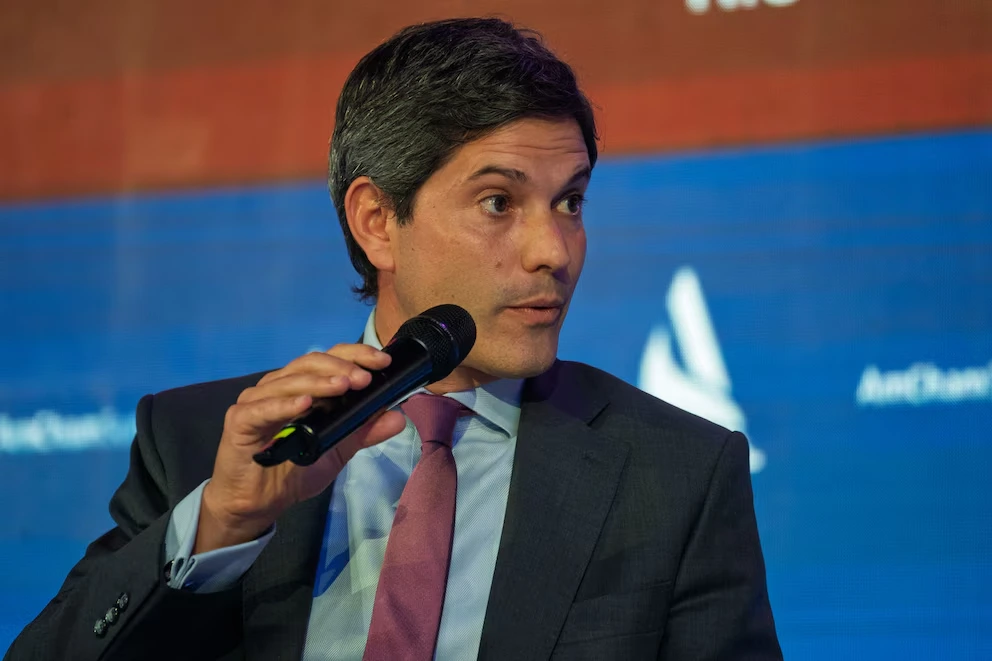
The magnitude of this shift was reflected in the AmCham Summit, held at the Buenos Aires Convention Center (CEC), where 1500 attendees —including businessmen, officials and industry leaders— agreed on a diagnosis: Argentina is experiencing an unprecedented moment of attracting capital. In this context, Ignacio Costa, CEO of Rio Tinto Lithium, was forceful: “We have never seen such great multilateral interest as the one we are having in
Argentina.” Ignacio Costa, General Manager of Rio Tinto Lithium An emblematic case is that of the Anglo-Swiss mining company Glencore, which has been present in the country for more than 30 years.
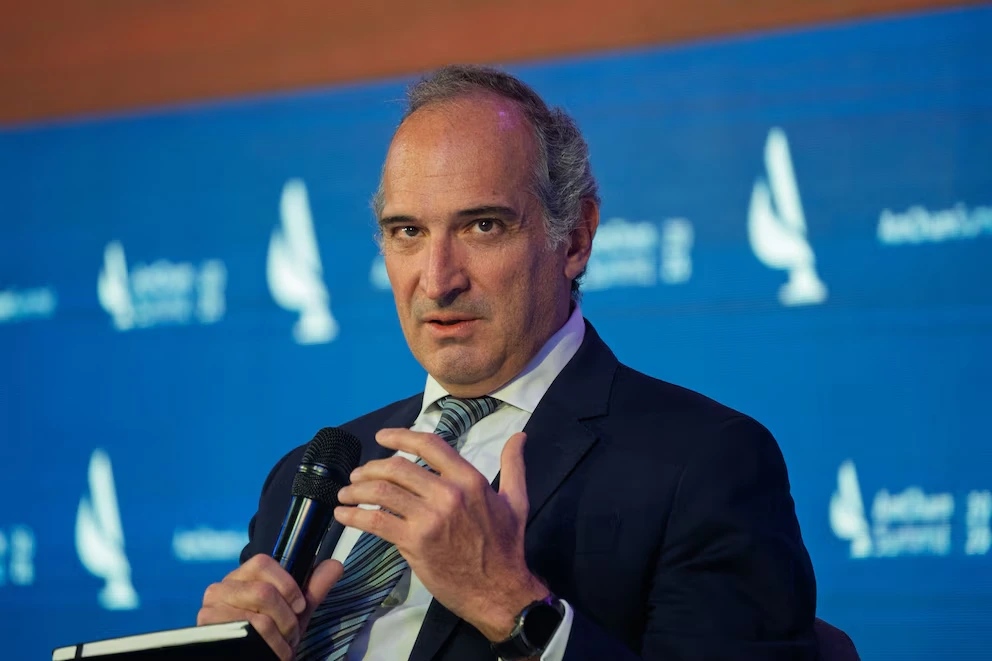
Its CEO, Martín Pérez de Solay, detailed an ambitious investment plan for USD 13.5 billion, including USD 4.5 billionin the Agua Rica mine (Mara) and USD 9 billion in Pachón. This scheme would allow copper production to resume in 2028 and sustain it “for up to 70 years
”.
The executive explained that the change in perspective began two years ago, driven by the combination of strong global demand for copper and a shift in Argentine economic policy: “We began to see a very strong global demand for copper and an Argentina that was beginning to make changes and that promised a lot in terms of stability, since if a country is stable in its accounts, it can give stability to projects and thus help things to grow.”
The objective, as detailed, is to move from a stage of paralysis to an orderly sequence of development: to restart Agua Rica in 2028, to add production phases with Bajo la Alumbrera and Bajoel Durazno, and to move with Pachón towards a first operation in 2034.“We captured a unique opportunity with tangible impact for the communities and provinces where we work. Mining is going to develop the interior of the country,” he said.
From a macroeconomic point of view, the mining sector is taking on an increasingly important role. It currently generates an export balance of USD 9 for every USD 1 imported, in addition to leading in levels of labor formality, salaries and productive chains. However, the main challenge identified is infrastructure, especially the need to improve routes and transport systems to ports.
. Martín Pérez de Solay, CEO of Glencore Argentina
The new regulatory framework also plays a central role. Ignacio Costa stressed that RIGI makes it possible to equate Argentina's tax burden with that of countries such as Chile and Peru, traditional leaders in the sector. “It's all combined with an international opportunity that requires electricity and clear rules of the game,” he said.
Along these lines, Rio Tinto announced multilateral funding for its Rincón lithium project in Salta, totaling USD 2.5 billion, of which USD 1.7 billion comes from organizations such as the IFC, the Inter-American Development Bank and the Bank of Japan. In addition, the company expanded its operational presence to Salta, Jujuy and Catamarca, highlighting a territorial impact with a multiplier effect of two,
three and even five times.
For its part, the Newmont mining company, with operations on five continents, presented its strategy in Argentina after a temporary withdrawal. The company plans a five-year plan for the Cerro Negro mine, in Santa Cruz, and highlighted local development initiatives, such as municipal trusts that increased gas connectivity from 44% to 96%. Its Country Manager, María Eugenia Sampalione, said: “Mining has the obligation to look at the long term, prevent scenarios and create
spaces for understanding with communities.”
The consensus among businessmen, governors, legislators and authorities present was clear: Argentine mining development requires maintaining macroeconomic stability, consolidating solid legal frameworks and advancing a federal vision that articulates policies between nations and provinces. In this scenario, infrastructure and predictability appear as indispensable conditions for transforming the current surplus into sustained growth
and wealth generation.
In an industry where projects are planned for decades, the country has managed in the last two years to reverse its image and gain ground on the global map. This change in trend responds to a renewed capacity to attract investment, which opens the door to a structural transformation of Argentina's productive and export profile. Since mining is a capital-intensive activity with an extended horizon, predictability is key