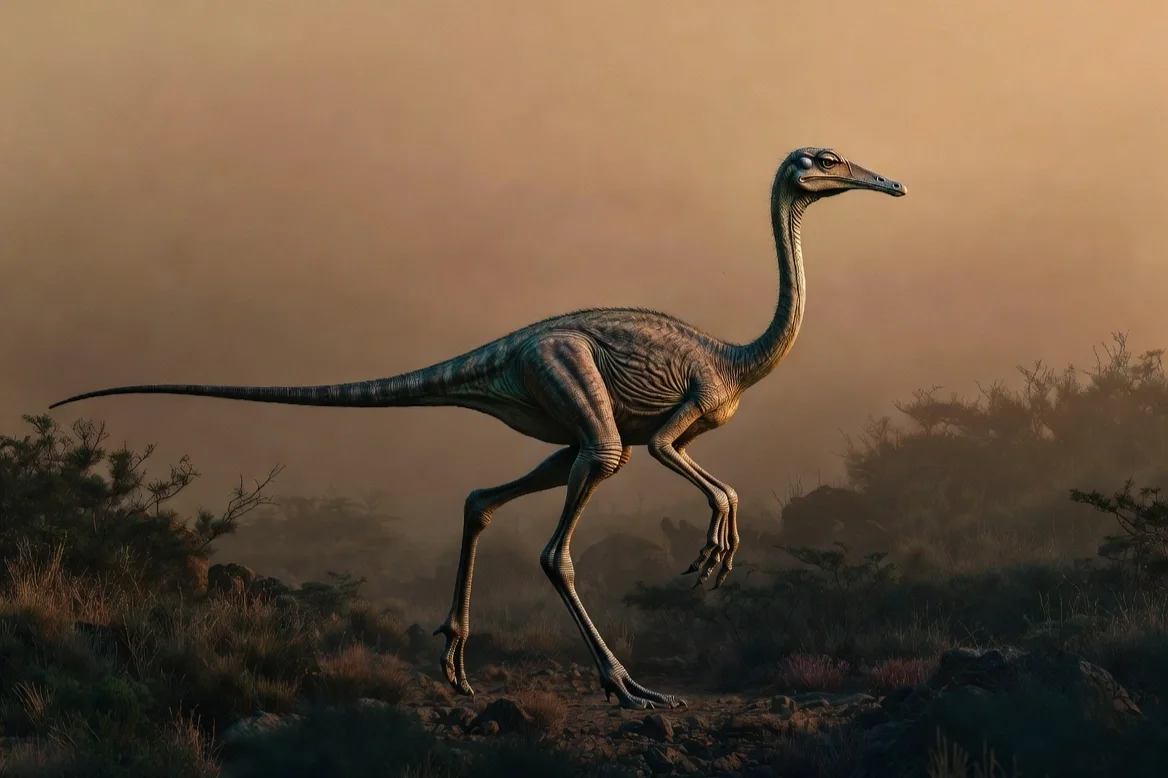
In a finding that surprises the scientific community, researchers identified a new species of reptile from the Triassic period that looks more like an ostrich dinosaur than any modern crocodile. This is Labrujasuchus expectatus, a distant relative of crocodiles that walked on two legs, had very small arms, and a toothless beak.
This discovery, published in the Journal of Vertebrate Paleontology, comes from the famous Ghost Ranch site in New Mexico, United States. During the Triassic, about 200 million years ago, animals experimented with very varied body forms, and this specimen is a clear example of those evolutionary surprises.
Scientists explain that Labrujasuchus belonged to the group of shuvosaurids, within the archosaurs that would later give rise to modern crocodiles. However, its appearance was completely different: bipedal, with reduced forelimbs and a beak similar to that of some birds.
This bizarre creature shows how evolution can take unexpected paths, with strategies that would later succeed in dinosaurs and birds.
A world full of strange experiments
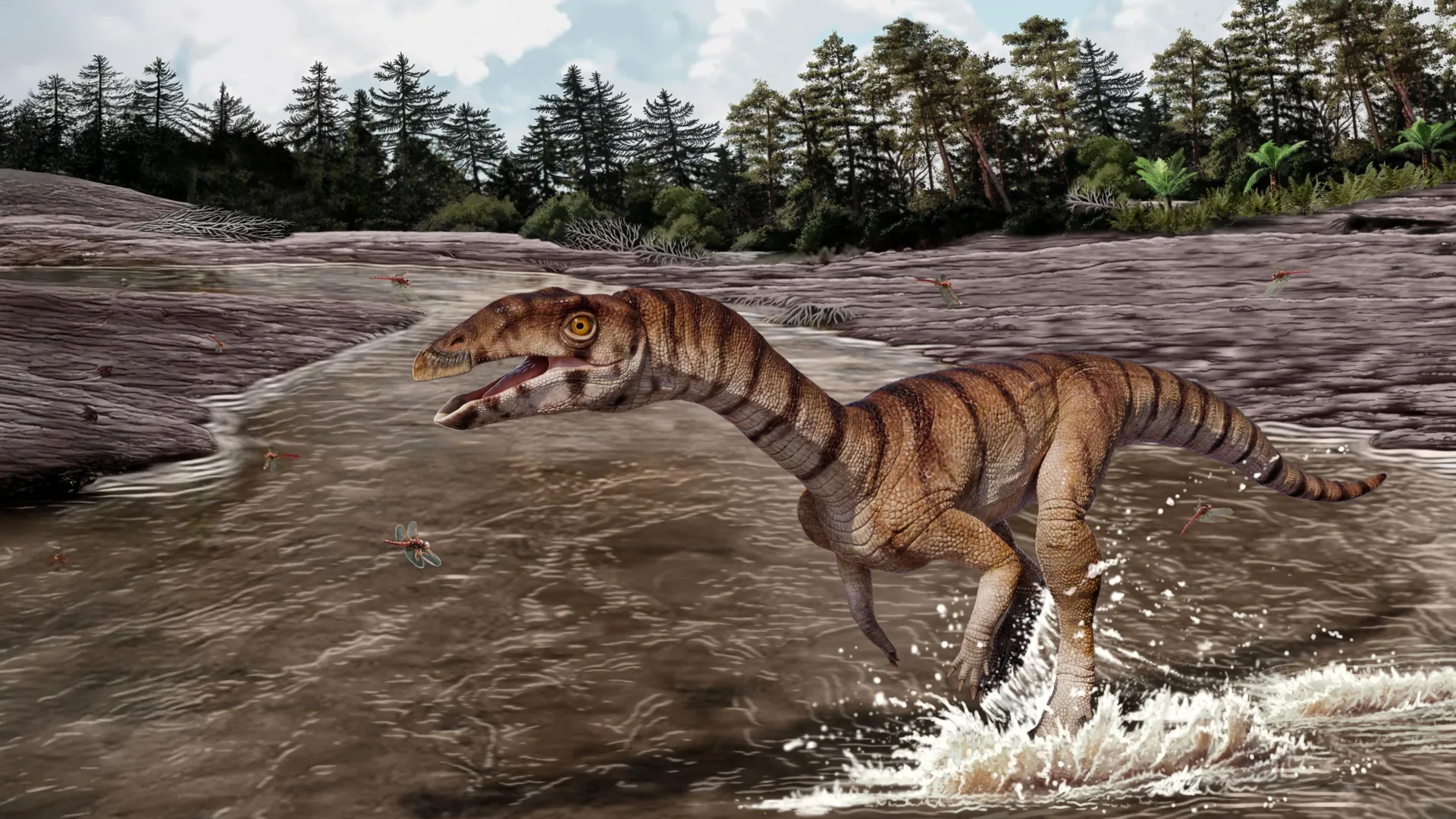
The Triassic was a period of great changes, where reptiles with curious adaptations appeared. There were bipedal lagerpetids, distant relatives of dinosaurs, and others like Drepanosaurus, which lived in trees with enormous claws. Labrujasuchus adds to this list of unusual creatures.
The shuvosaurids developed body plans that closely resemble bipedal theropods, although they were on a different branch of the evolutionary tree of reptiles. "We see many successful strategies of modern animals and non-avian dinosaurs that first emerged in the Triassic, and shuvosaurids are a great example of convergent evolution," said Dr. Alan Turner, the lead author of the study.
Bipedalism in crocodile relatives is striking, but it worked well for these animals, just as it later did for dinosaurs and birds.
Only five species of shuvosaurids are known so far, making this new fossil particularly valuable. Researchers had already found remains of shuvosaurids in older and more recent layers, and they were hoping for something intermediate. The name "expectatus" precisely reflects that fulfilled expectation.
The meaning of the name and the location of the discovery
The genus Labrujasuchus refers to "Ranchos de los Brujos," the old Spanish name for Ghost Ranch, combined with "suchus," which means crocodile in Greek. The site is famous for its exceptionally well-preserved Triassic fossils and has been key to understanding that era.
Ghost Ranch remains a fundamental place for paleontology. Every summer, teams of scientists and volunteers excavate in the Hayden Quarry, revealing more details of that unique prehistoric ecosystem.
This discovery helps fill a gap in the fossil record and confirms that there was more diversity than previously thought in that family of reptiles. The Triassic seems like an almost alien world compared to the present, but many of its body innovations anticipated what would come later in dinosaurs, birds, and other groups.
Studying these early evolutionary experiments allows for a better understanding of how life adapted and diversified over time. Labrujasuchus expectatus is another reminder that evolution always holds surprises.