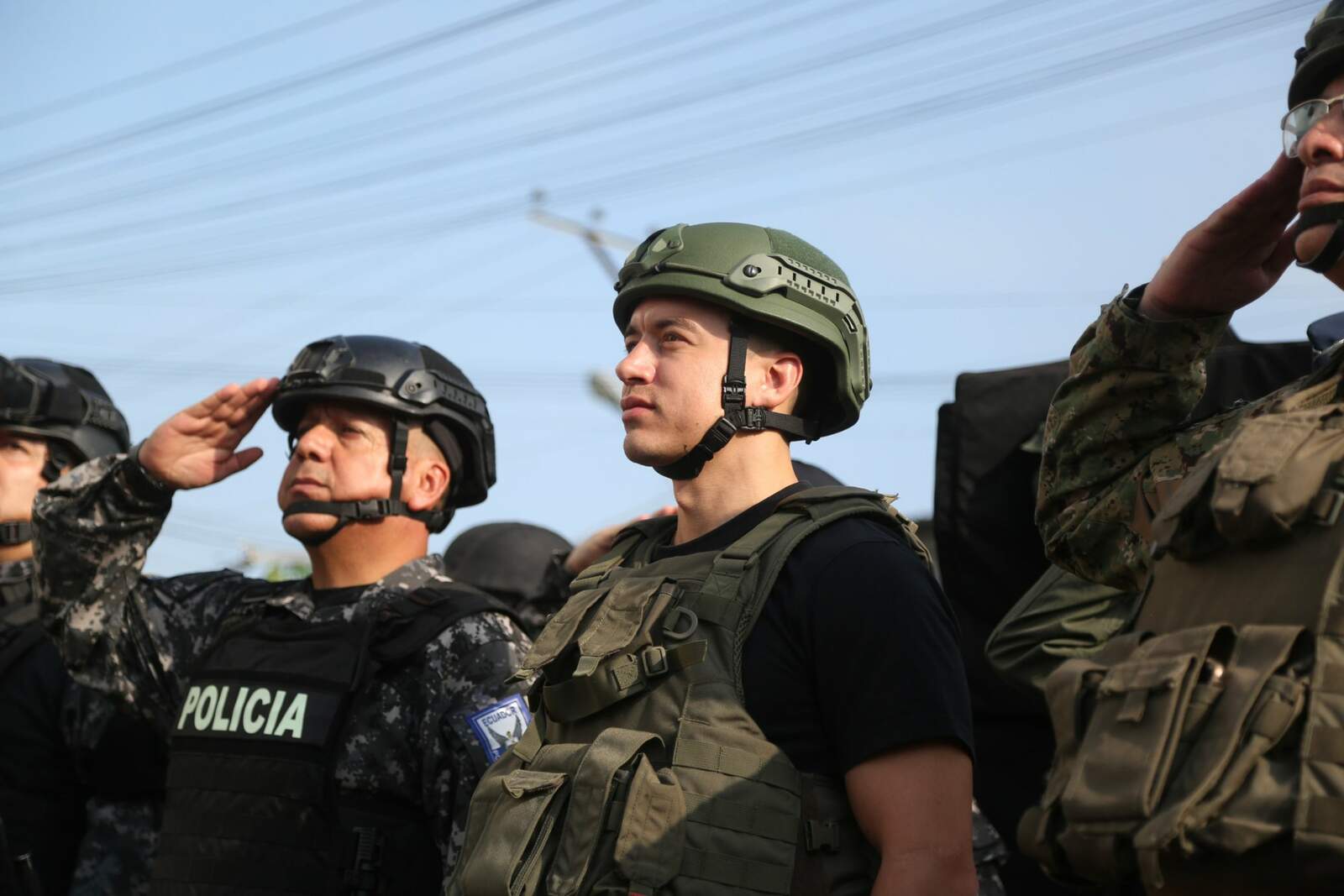

Since assuming the presidency of Ecuador, Daniel Noboa faced a series of unprecedented challenges in the field of security, which forced him to take drastic decisions to restore law and order in a country mired in the chaos of organized crime.
With the objective of exterminating mafias, drug trafficking and terrorist organizations, Noboa proved to be a leader capable of implementing reforms necessary to guarantee peace and stability in Ecuador.
An unprecedented security crisis
On January 7, 2024, Ecuador was shaken by the escape of one of the most powerful leaders of organized crime, José Macias Villamar, alias “Fito”, from the
Litoral Penitentiary.This event, accompanied by a series of attacks and kidnappings, marked the beginning of what President Noboa did not hesitate to describe as an “internal armed conflict” with the intervention of the Armed Forces to combat transnational organized crime groups.
In response, and to defend the Ecuadorian people, President Noboa declared a state of emergency and, with the support of the Armed Forces, launched operations to neutralize criminal organizations that were destroying the country.
Noboa's strategies to combat organized crime
As a result of these interventions, more than 8600 criminals were arrested, and around 241 were accused of terrorism. Among the most notable measures is the deportation of 1,500 foreign prisoners, mainly from Colombia, Peru and Venezuela, who were responsible for a large part of the criminal activities inside
Ecuadorian prisons.During a referendum held in April 2024 by the Government of Noboa, the Ecuadorian population approved a series of reforms that strengthened the president's security strategy, including close collaboration between the Armed Forces and the National Police, as well as the tightening of penalties for crimes related to drug trafficking.
This popular support strengthened the position and image of Noboa, who was firm in the fight for citizen security.