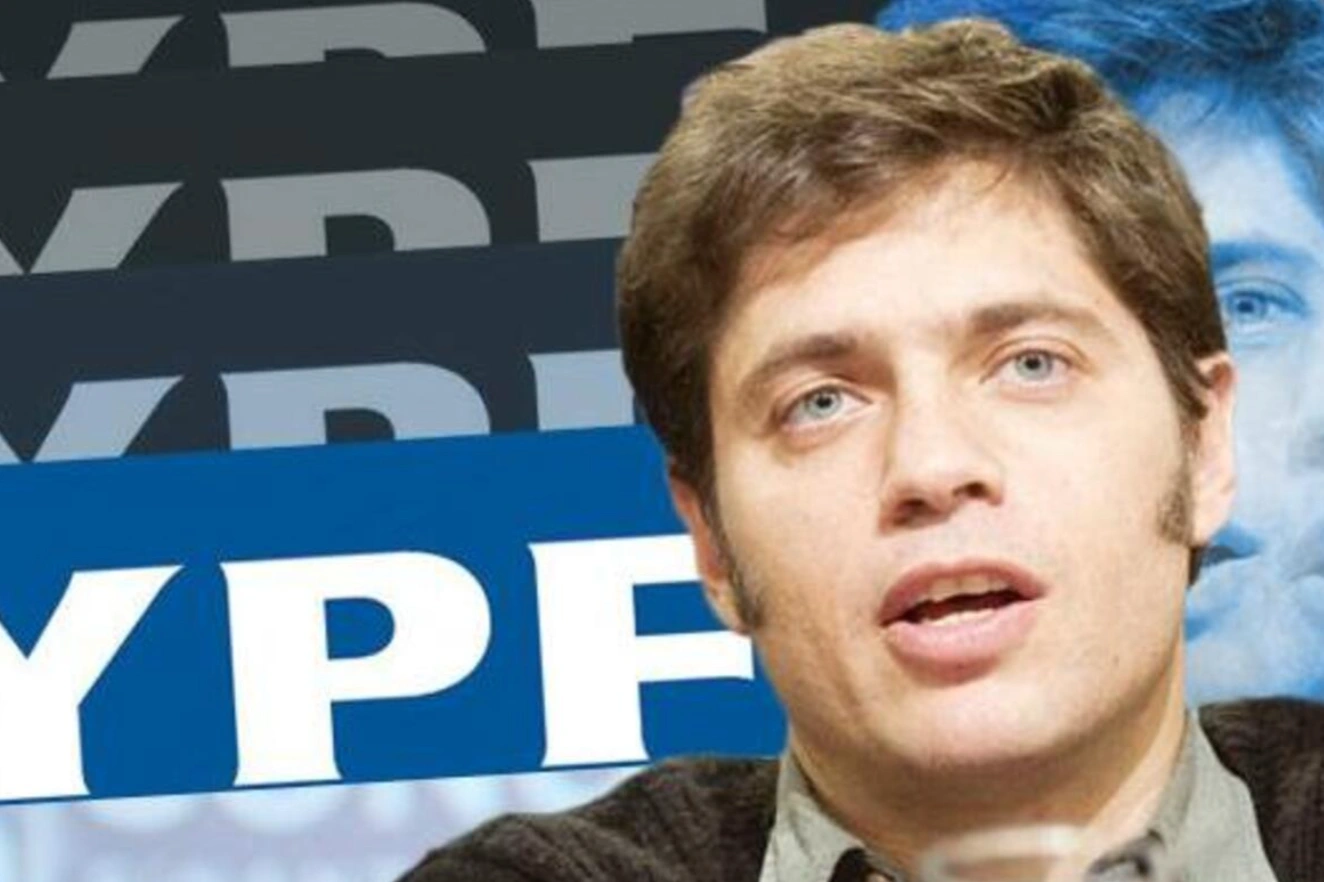

The ruling that prevented looting and exposed the cost of populism

The ruling that prevented looting and exposed the cost of populism
YPF and the dangerous idea that power can take what is foreign
porEditorial Team
Argentina

YPF and the dangerous idea that power can take what is foreign

Compartir:

For years, decisions were celebrated in Argentina that, in any other context, would have been seen as what they really were: acts of political appropriation. The expropriation of YPF was presented as a gesture of sovereignty, a historic recovery, a national epic. But behind the story there was something much simpler and much more serious: the conviction that a group of people with power can dispose of what is not theirs. YPF was not a mistake. It was a definition.

This was not a bad technical evaluation or a wrong economic calculation. It was a decision taken by specific individuals who exercised political power, based on a deep-rooted idea: that private property can be subordinated to defined ends from power. If power can decide what's yours, then it was never really yours. It was something they let you have... until they decided to keep

it.

That is the central difference that is often hidden. In the market, exchanges are voluntary: no one can appropriate what is others without consent. On the other hand, when state power intervenes, what appears is another logic: individuals who can impose decisions on others, force, transfer resources without agreement. It's not an efficiency issue. It is a problem of legitimacy. The expropriation of YPF was not simply a bad economic decision; it was the use of coercion by those in power to advance the property of

others.

For years, that decision was celebrated. Those who promoted it obtained recognition, political capital and public validation. There was talk of energy independence, resource recovery, and national dignity. The benefit was immediate for those who made the decision. The cost, on the other hand, did not go away. It was only shifted in time and transferred to others. Those who decide capture immediate benefits. Those who did not participate in those decisions end up bearing the consequences

.

That is the mechanism. Always the same. But the problem is not only when the bill appears, but that from the beginning there were people forced to pay. Because every intervention involves a transfer: what some gain, others lose without having chosen it.

Unlike the market, where exchange creates value for both parties, state action implies that some benefit at the expense of others through force.

Today, even in the face of a ruling favorable to the Argentine State at the judicial level, the underlying issue remains intact. There was no direct economic harm in this specific case. But that doesn't change the nature of what happened. The legitimacy of an action does not depend on its outcome, but on its principle. And the principle that was at stake was the violation of property rights.


Reducing the problem to whether or not there was an economic cost would be to stay on the surface. The point is not a company or an isolated episode. It's a way of understanding power. A logic in which those who govern arrogate to themselves the power to redefine rights according to their objectives. An idea in which property is not a limit to power, but a variable subject to political decision.

When property becomes negotiable, it ceases to exist as a right.

And without clear rights, there is no possible order. There is no investment, there is no social coordination, there is no sustainable growth. But above all, there is no justice. Because what is at stake is not only the efficiency of the system, but the legitimacy of the rules that govern interaction between individuals

.

When those in power decide on what is others, they don't just alter prices or expectations. They violate the basic principle on which any free society is built: that each person is the owner of what they legitimately produce and acquire. That is the point that is often hidden behind the technical debate. Figures, strategies or specific managers are discussed, but the central question is avoided: on what principle can someone be forced to give up what is

theirs.

YPF was not an anomaly. It was the most visible expression of that problem. That is why the debate should not focus on how much it cost or on who was at fault in specific cases. That's accessory. The central thing is something else.

The problem is to believe that those in power can appropriate what is others and remain legitimate.

Because the consequences are not accidental. They are inevitable. They can be postponed, they can be disguised, but they cannot be avoided. And even if the one-off result seems favorable, the precedent that is established is deeper and more dangerous

.

That politicians can make progress on property and continue to be validated.


Noticias relacionadas

Israel advances in the elimination of Hezbollah and creates a security zone in Lebanon

Israel advances in the elimination of Hezbollah and creates a security zone in Lebanon

It's official: Franco Colapinto will hold an exhibition in Buenos Aires

It's official: Franco Colapinto will hold an exhibition in Buenos Aires

Japan rearms itself against China and shields its islands in the face of a possible war over Taiwan

Japan rearms itself against China and shields its islands in the face of a possible war over Taiwan

Trump explodes against the United Kingdom and France: “Learn to fight alone or we won't help you anymore”

Trump explodes against the United Kingdom and France: “Learn to fight alone or we won't help you anymore”

Estonia and Latvia reported the activity of foreign drones on the border with both countries

Estonia and Latvia reported the activity of foreign drones on the border with both countries

What Clarín doesn't tell you: Marolio will build a mega-industrial hub in General Rodríguez and create up to 700 jobs

What Clarín doesn't tell you: Marolio will build a mega-industrial hub in General Rodríguez and create up to 700 jobs

La Derecha Diario logo
ESX logoInstagram logoYouTube logoTikTok logo
ARGENTINABOLIVIAECUADORISRAELMEXICOURUGUAYDERECHA DIARIO TV
  • ESXInstagramYouTubeTikTok
  • DERECHA DIARIO TV
  • Secciones
  • ARGENTINA
  • BOLIVIA
  • ECUADOR
  • ISRAEL
  • MEXICO
  • URUGUAY
  • Países
  • La Derecha Diario logoLA DERECHA DIARIO
  • La Derecha Diario México logoLA DERECHA DIARIO MÉXICO
  • La Derecha Diario Uruguay logoLA DERECHA DIARIO URUGUAY
  • La Derecha Diario Ecuador logoLA DERECHA DIARIO ECUADOR
  • La Derecha Diario Bolívia logoLA DERECHA DIARIO BOLÍVIA
  • La Derechadiario República Dominicana logoLA DERECHADIARIO REPÚBLICA DOMINICANA
  • La Derecha Diario Israel logoLA DERECHA DIARIO ISRAEL
  • La Derecha Diario Estados Unidos logoLA DERECHA DIARIO ESTADOS UNIDOS
  • Temas
  • GUERRA EN IRÁN
  • JUICIO POR YPF
  • El Diario
  • QUIENES SOMOS
  • AUTORES
  • PUBLICIDAD
  • DONAR
La Derecha Diario logo
TwitterInstagramYouTubeTikTok
Derecha Diario TV

Nosotros

  • Quienes Somos
  • Autores
  • Donar

Privacidad

  • Protección de datos
  • Canales
  • Sitemap

Contacto

  • info@derechadiario.com.ar
PUBLICIDAD