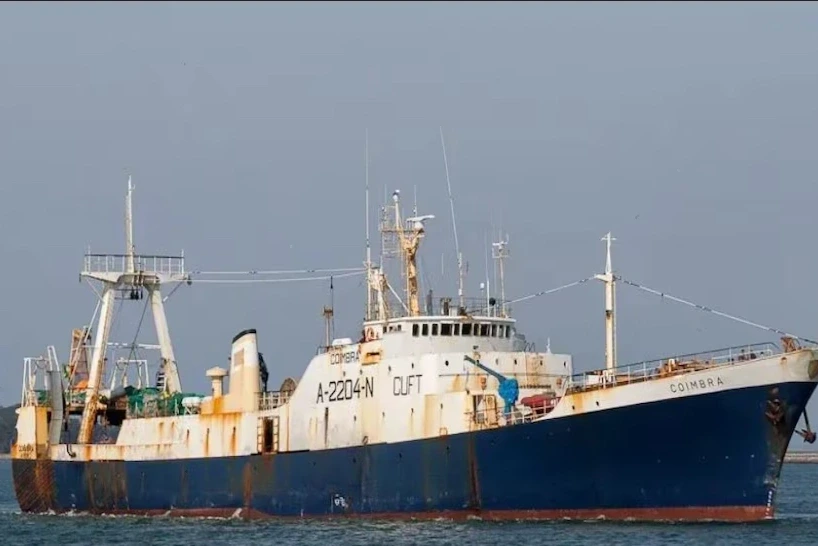
The national Government is making decisive progress in controlling illegal fishing by applying sanctions against a foreign vessel operating within the Exclusive Economic Zone (EEZ). This is the Coimbra trawler, detected through technological monitoring systems within the framework of a new scheme that reinforces the State's capacity to identify and punish
violations in real time.
The Ministry of Agriculture, Livestock and Fisheries, under the Ministry of Economy, specified that the operation was carried out under Provision 20/2026 of the Undersecretary for Aquatic Resources and Fisheries. The regulations mark a substantive change: violations detected by electronic means become fully evidentiary, allowing for sanctions to be advanced without the need for face-to-face intervention on the
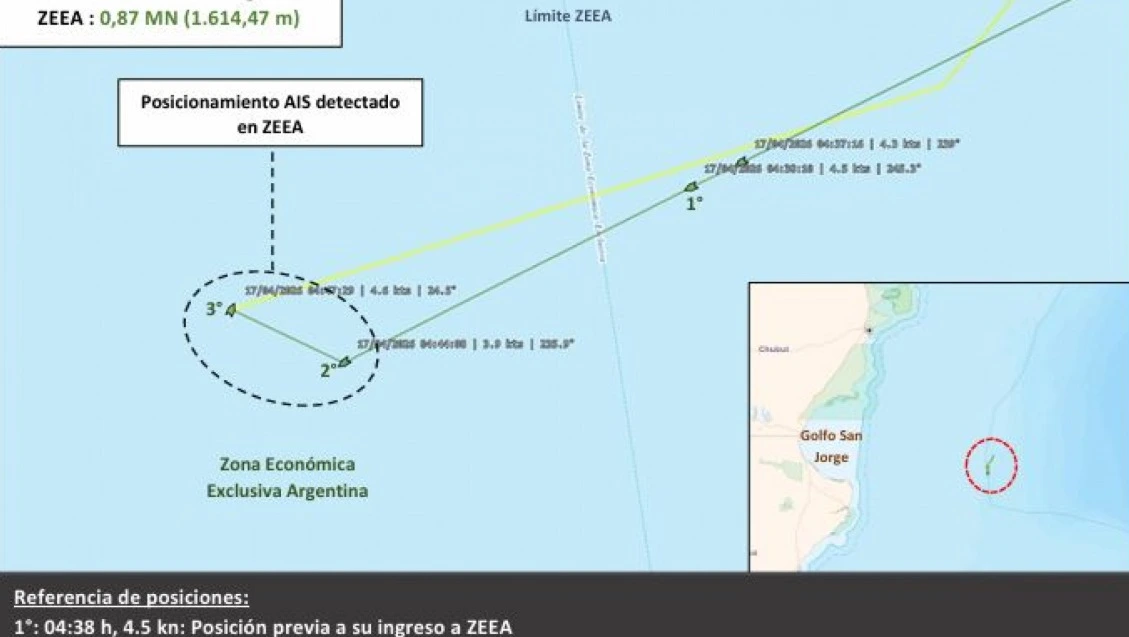
spot. Image released by the Secretary of Agriculture, Livestock and Fisheries.
The case originated on April 17, when the Argentine Naval Prefecture, through the Coast Guard System, identified the Portuguese-flagged vessel “Coimbra”, carrying out fishing activities within the EEZ, an area where resource exploitation is strictly regulated and reserved for the
country.
Until now, many violations relied on the physical presence of patrols at sea, limiting control capacity. With this new system, the State can detect, record and sanction illegal maneuvers more accurately and quickly, using robust digital evidence
.
This tool not only improved the operational efficiency of the controls, but it also strengthens the defense of the resources of the Argentine Sea. The possibility of generating files based on electronic records makes it possible to advance more effective sanctions and to reduce impunity in illegal activities that historically affected
the sector. The location of the vessel was revealed digitally.
In addition, the Coimbra case sets a precedent: any illegal incursion into Argentine waters can be detected and sanctioned even without direct contact. This introduces an immediate deterrent effect on foreign fleets operating on the 200 mile limit or within mile
.
The measure reflects a change in focus on state management. The emphasis is no longer only on reaction, but on prevention and intelligent control, with technological tools that allow us to monitor in real time what is happening in one of the most sensitive strategic areas of the country.