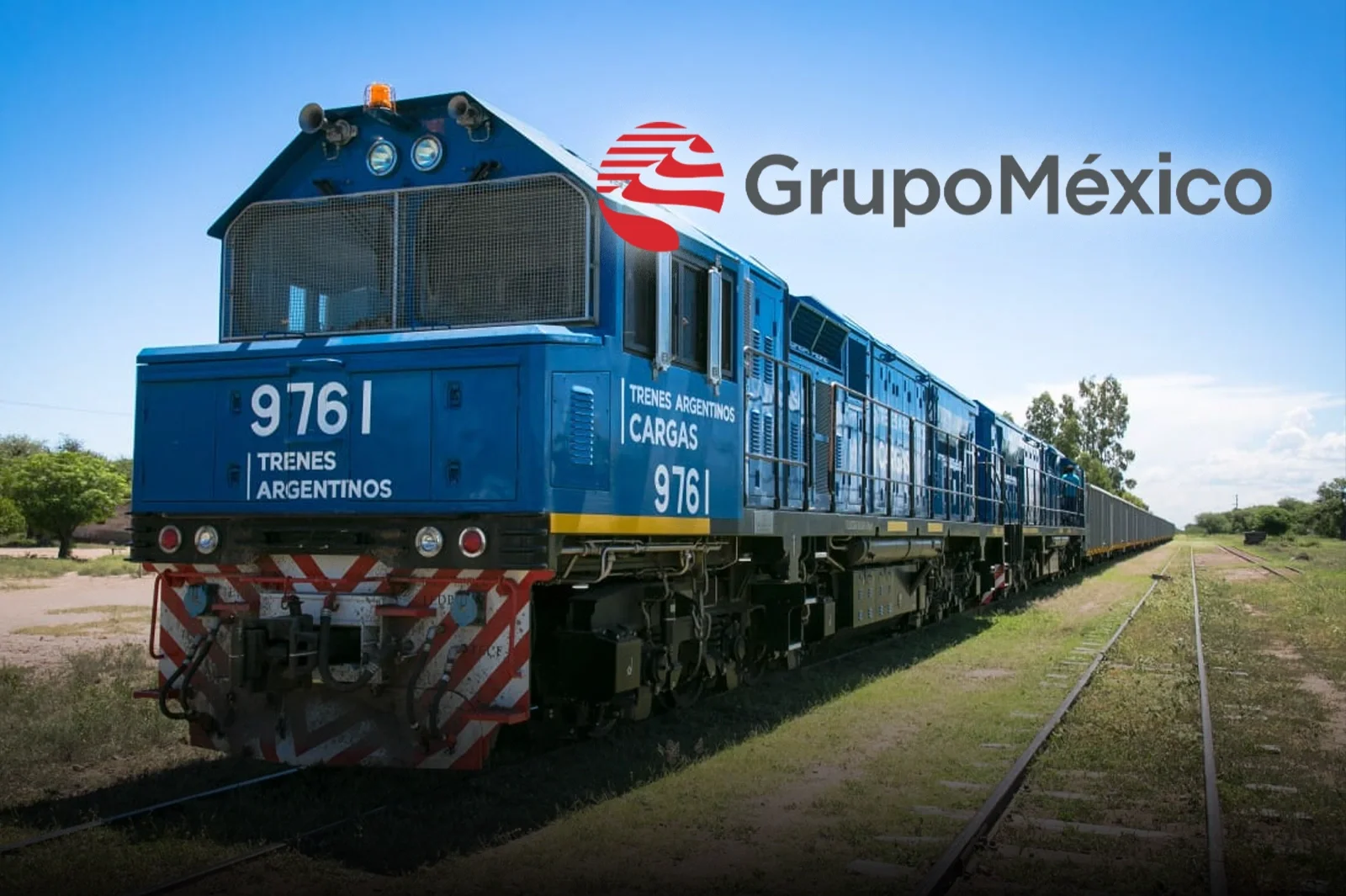
The Mexican precedent is one of the company's strong points. Almost three decades ago, Grupo México took over the concession of the Ferrocarril Pacífico Norte and other corridors that were under poor state operation. Since then, it has invested nearly US$8,000 million to rebuild infrastructure, incorporate technology, and professionalize the system.
According to data released by the company itself, its railway division went from transporting just 5 million tons annually before the concession to moving over 133 million tons per year. The company also managed to increase the average speed of trains, extend the capacity of convoys, and operate an integrated network with Mexico, the United States, and Canada.
Grupo México Transportes
The proposal for Argentina would not be limited to a specific segment. Industry sources indicated that GMXT intends to participate in all tenders related to the freight railway corridors promoted by the government, with a comprehensive view of the network and its regional connections with Chile, Bolivia, and Paraguay.
In addition to the railway business, the conglomerate confirmed that it has already begun work related to mining exploration in the country and is also analyzing opportunities in electricity generation. The company understands that logistics infrastructure, mining, and energy are part of the same productive growth agenda.
Grupo México Transportes confirmed its interest in participating in the privatization of Argentine freight trains and is analyzing an investment exceeding US$3,000 million to modernize key corridors linked to agriculture, mining, and energy, in a sign of confidence towards the privatization process promoted by the government of Javier Milei.
The Mexican company, one of the main railway operators in North America, will seek to compete for the operation of the Belgrano, San Martín, and Urquiza lines, considered strategic for reducing logistics costs and improving the export competitiveness of various productive sectors. The investment would include infrastructure, rolling stock, workshops, locomotives, and operational systems.
Belgrano Cargas Train
GMXT's interest comes just days before the government publishes the terms to advance with one of the most relevant privatization processes in freight transport. The company maintains that Argentina is experiencing an unprecedented window of opportunity, marked by economic reforms, greater regulatory predictability, and a new favorable climate for long-term investments.
Railway modernization is seen as a central condition to support the growth of mining, Vaca Muerta, and agro-industry. In particular, the freight corridors could become a decisive tool for transporting lithium, copper, energy inputs, agro-industrial production, and goods intended for export.