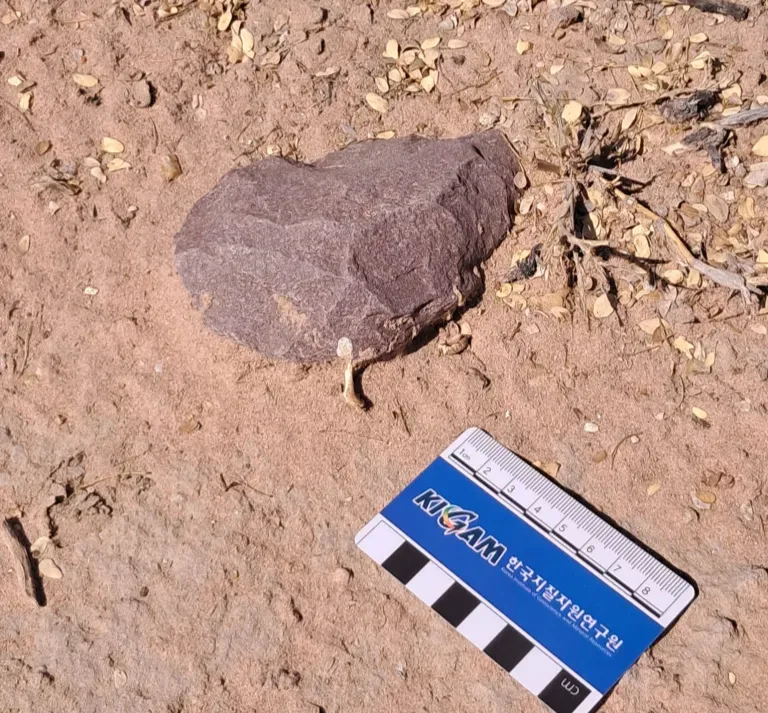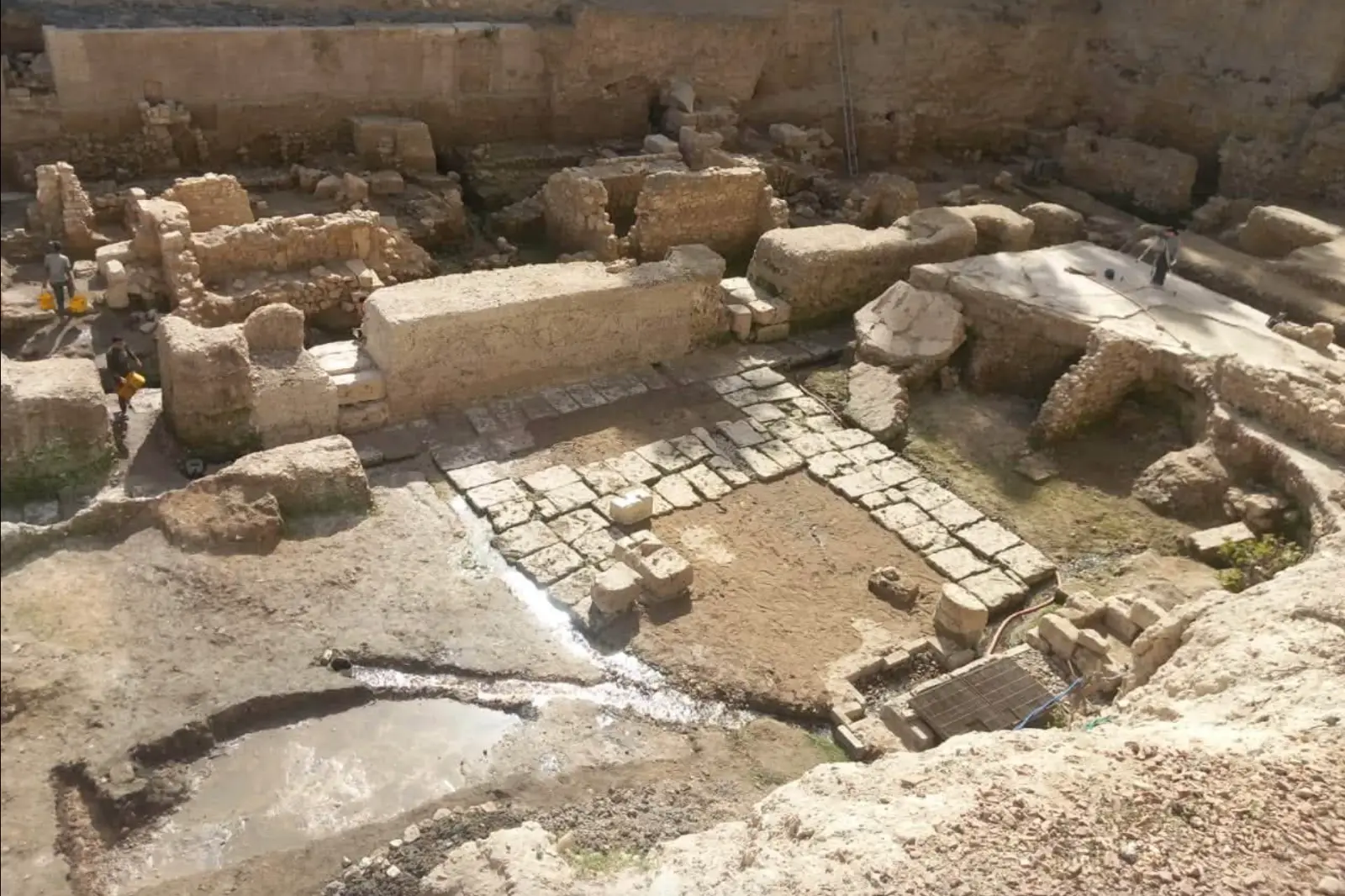

A team of archaeologists from the University of Wrocław, Poland, recovered nearly 100 prehistoric hand axes in the Okwa Valley, a little-explored region of the Kalahari Desert in Botswana. The discovery also includes stone remnants left as a result of the manufacturing of these tools.
The research, led by Mirosław Masojć, director of the Archaeology Institute at that university, aims to identify the earliest evidence of human presence in the region and reconstruct the environmental conditions in which those populations developed.
The pieces belong to the Acheulean tradition, a lithic industry characteristic of the Lower Paleolithic that emerged in Africa and later spread to Europe and Asia.
A technology that emerged 1.7 million years ago
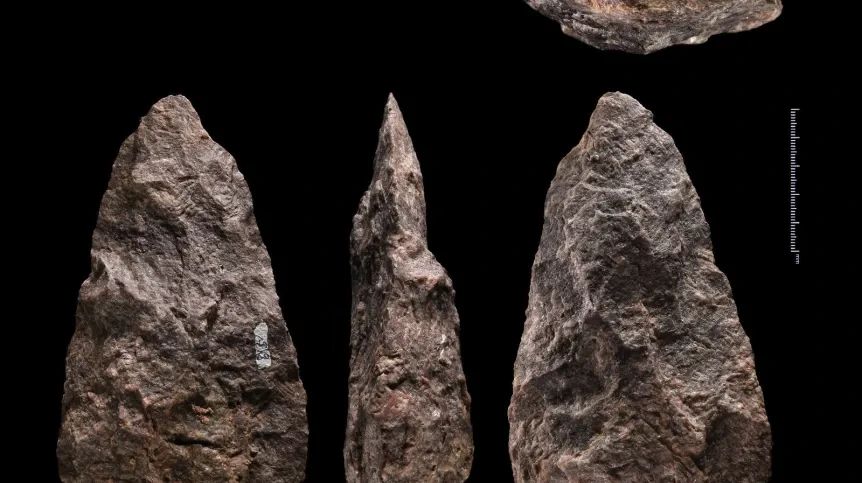
Hand axes, also known as bifaces, are one of the most representative tools of Acheulean technology.
Their manufacture involved working both sides of a stone by deliberately removing fragments until achieving an appropriate shape and edge.
This technological tradition appeared approximately 1.7 million years ago and lasted until about 200,000 years ago, although researchers have not yet determined the exact age of the specimens recovered in the Kalahari.
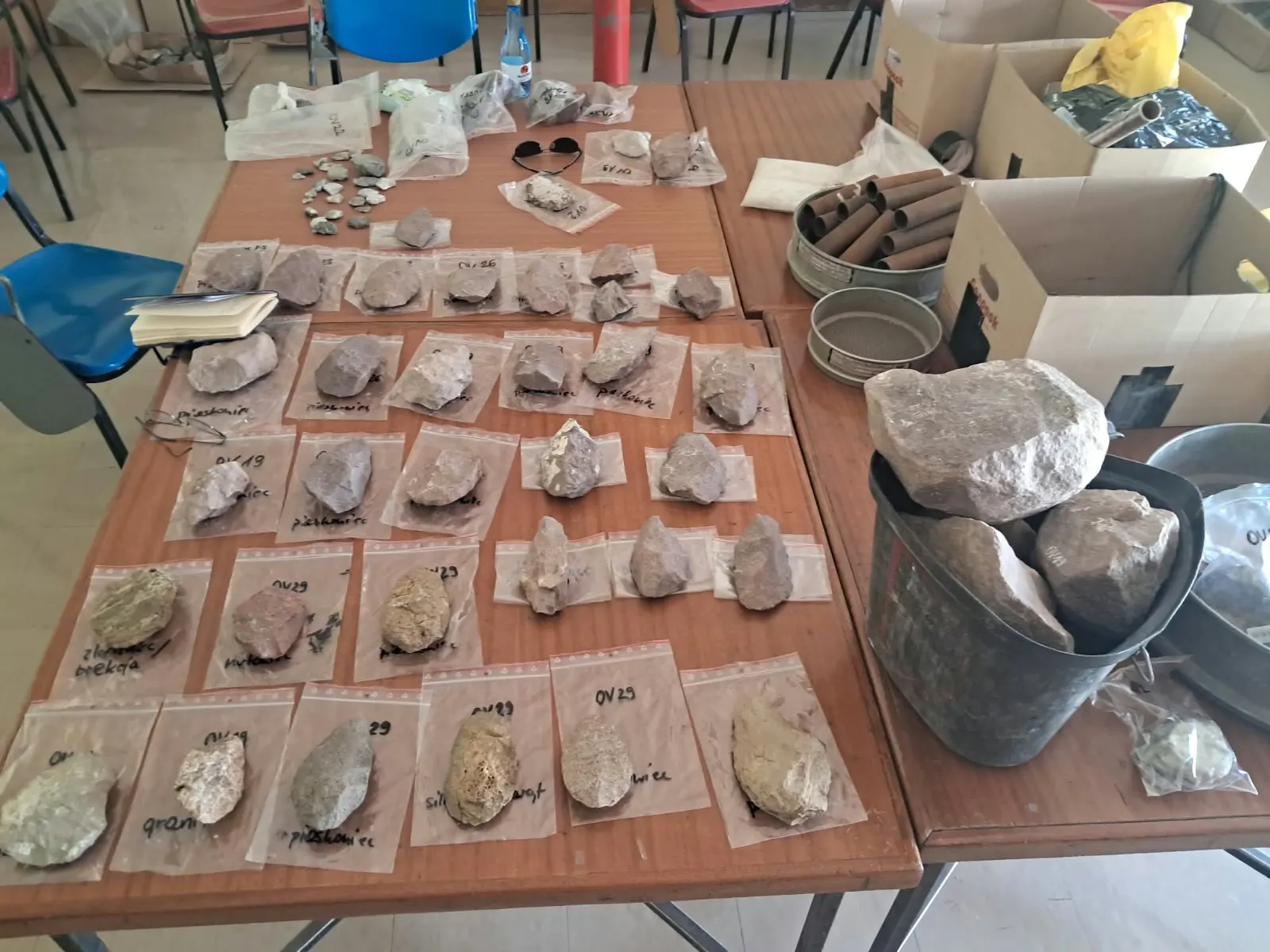
During the 2026 campaign, specialists identified around 40 axes at the same archaeological site, accompanied by remnants of their manufacture.
The presence of these fragments will allow for the study of the procedures used to transform large blocks of raw material into tools and determine the characteristics of the selected rocks.
The Kalahari had rivers and lakes during the Pleistocene
The Okwa Valley extends from the vicinity of the border between Botswana and Namibia to the ancient lake system of Makgadikgadi, in the center of Botswana.
Although it currently constitutes a mostly dry river system, extensive networks of rivers and lakes existed there during the Pleistocene, favoring the presence of early human groups.
Geologists have identified sedimentary deposits corresponding to different stages of operation of those bodies of water.
A significant portion of the tools was located near the ancient shoreline of a vanished lake.
The investigation of these sediments will establish relationships between environmental variations and periods of human occupation, as well as understand how those populations exploited the available resources.