Norwegian authorities are holding in custody a Chinese citizen suspected of being involved in an espionage case linked to the illegal obtaining of satellite data, in an investigation that has raised concerns in the area of European technological security and has revived the debate about intelligence operations associated with the communist regime in the continent.
The woman was arrested this week and will remain in pre-trial detention for up to four weeks, a Norwegian court decided as the investigation progresses. The Norwegian Security Police (PST) accuses her of complicity in an attempt to install a receiver designed to capture information from satellites in polar orbits, a technology that can be used
to collect sensitive strategic data.
According to the authorities, the purpose of the device was to intercept satellite signals that could compromise fundamental interests ofNorway if obtained by a foreign state. The case is being investigated on suspicion of “complicity in attempted serious espionage against State secrets”, a crime that, if the charges are confirmed, could carry sentences of up to ten years in prison under
Norwegian law. Norwegian security forces arrested a Chinese citizen accused of carrying out espionage for the communist regime
The police operation included searches in two different locations in the country. One of them was carried out in northern Norway, on an island near the Andøya space center, a key infrastructure within European efforts to expand its presence in the aerospace sector
.
The other record took place in the Innlandet region, in the south of the country. During these operations, the authorities confiscated the equipment used to capture satellite data and confirmed that the project was dismantled
before it became operational.
The PST noted that the case could be linked to the use of a company registered in Norway that would have acted as a front for the interests of a foreign state actor. Although not all the details of the investigation have been revealed, the authorities indicated that there are several other people involved in the same file, without specifying their identities or nationalities
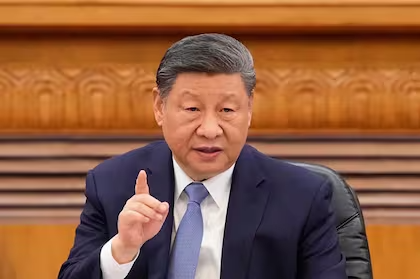
. The company Andøya Space denied any link with the woman accused of working for the Xi Jinping regime
Police prosecutor Thomas Blom explained that the objective of the operation was to prevent the implementation of a data reception system that could have allowed access to sensitive information from satellites in polar orbits. This type of satellite is used for Earth observation, navigation and communication tasks, and can have both civil and military applications.
The case has generated concern in the Norwegian and European space sector environment, especially because of the proximity of one of the registers to the Andøya space center, a key facility in the development plans for satellite launches in the Arctic. However, the company Andøya Space denied any relationship with the person under investigation or with the activities under suspicion, assuring that no interference has been detected
in its operations. The
Norwegian authorities stress that the investigation is ongoing and that the international connections of the case are still being analyzed. Meanwhile, the arrest has reopened the debate over the security of sensitive technological infrastructures in Europe, especially in sectors such as space exploration and the collection of satellite data
. Norway has yet to file complaints against the Chinese government, but all options are on the table
The incident has also been interpreted in European security circles as part of a wider pattern of concerns about technological espionage activities attributed to foreign actors. In this context, the Norwegian case reinforces attention to the protection of critical infrastructures and the surveillance of possible covert operations in the scientific and technological fields
.
Although no formal charges have been filed against the Chinese government, the case has generated criticism and suspicion surrounding the use of shell companies and commercial networks to access sensitive technology abroad. Norwegian authorities are continuing the investigation while evaluating the full scope of the operation and the possible involvement of