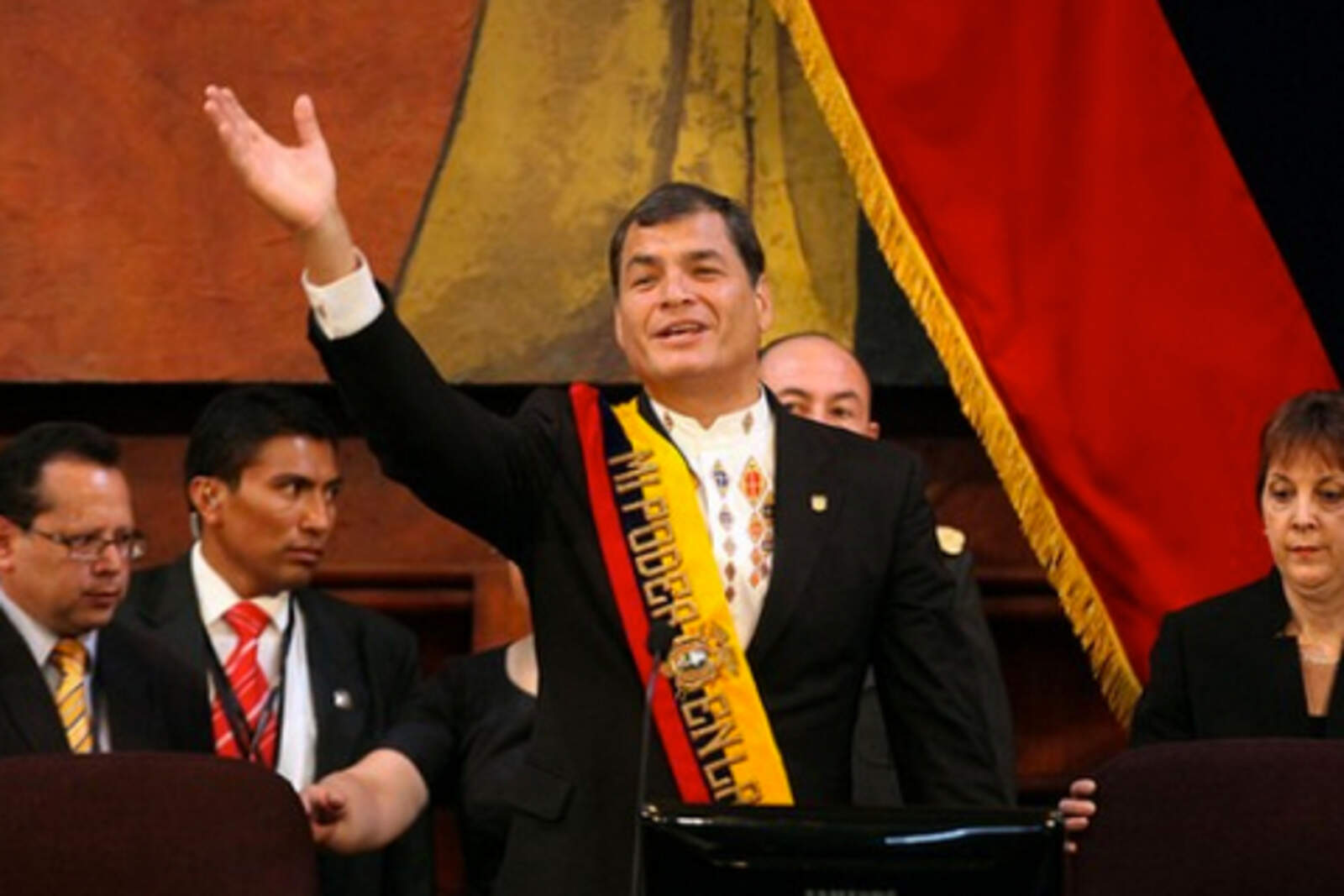
The administration of former socialist dictator Rafael Correa in Ecuador, since his rise to power in 2007, is known as the “Citizens' Revolution”, a series of reforms that sought to impose a dictatorial socialist regime in the country
.
However, after a decade of government, only one legacy remained marked by authoritarianism, corruption and the destruction of the country's democratic bases.
Correa's political practices and the power dynamics of his regime made it clear that his vision of “21st century socialism” was the excuse to consolidate his own control and enrich his close circle, as is always the case with left-wing politicians.
Media control and the persecution of the opposition Since the
beginning of his term in office, Correa presented himself as a popular leader, promoting a discourse against “corrupt elites” and using his oratory on sabbatinas — weekly broadcasts on national television — to cultivate his dictatorial cult
of personality. These broadcasts not only served to expose their false "achievements “, but to attack and persecute the opposition, the media and any figure who dared to question their regime.
This control over the media and the state apparatus was one of the fundamental pillars of the self-described “Citizen Revolution”, as documented by Ecuadorian journalists Mónica Almeida and Ana Karina López in their book “The Malograda Revolution”. According to the authors, propaganda, ideologization, espionage and corruption were the main characteristics of the
corrista regime.
One of the most critical aspects of Correa's presidency was his treatment of the opposition and the press.
The persecution of journalists, the use of intelligence services to spy on opponents and judicial manipulation to silence those who did not align with their political vision were common practices. The case of the “sabatinas” is a clear example of how Correa used State resources to impose his lies and exercise control over information, while persecuting his critics and distorting reality.
Ideology and educational manipulation at the service of power
The ideology that underlies the “Citizens' Revolution” was also a tool to consolidate power, not to benefit the Ecuadorian people. Correa used the education system to impose his political vision, altering textbooks and promoting a message of "fighting the
elites”.
Despite the fact that his government falsely presented itself as a "defender of the poor “, the policies implemented mainly benefited the great interests close to the regime. The anti-oligarchic discourse proved to be a justification for the concentration of power and the manipulation of institutions in favor of their political group
.
Corruption as an engine of the corrista regime
The large amount of corruption, one of the most serious problems during the Correa administration, is another central issue in the analysis of his legacy. The “Bribes 2012-2016” case is irrefutable proof of the illegality in which the regime operated
.
High-ranking officials, including Correa himself, were part of a bribery network that financed his party, Alianza PAIS, at the expense of public resources.
The conviction of Correa in 2020 for this scandal, together with the disqualification of him and his vice-president Jorge Glas from entering the United States due to their involvement in acts of corruption, highlights the darkness of Rafael Correa's socialist regime.
The fact that Correa escaped to Belgium after his conviction for corruption and obtained political asylum, thus evading Ecuadorian justice, reflects the authoritarian and corrupt nature of him and his government.
The former dictator Correa and his entourage were enriched at the expense of the Ecuadorian people, leaving a country plundered, with weakened institutions and a seriously compromised democracy.
The “Citizens' Revolution” was nothing more than a project of concentration of power and personal enrichment, accompanied by socialist reforms that sought to destroy the country. All this, together with his authoritarian methods and the multiple allegations of corruption that characterized
his administration.
According to Ecuadorian authorities, corruption during the decade of Rafael Correa's administration (2007-2017) shows figures that local and international organizations estimate between 30,000 and 70 billion dollars in damages to the State.