A recent report exposed a systematic strategy promoted by Russia to expand its influence in Latin America through the use of social networks and the training of content creators aimed at spreading disinformation.
According to the research, more than a thousand Latin American influencers are used in programs linked to communication structures close to the Russian government.
These initiatives include training in digital content production, audience management and narrative construction, with the objective of amplifying messages aligned with Moscow's geopolitical interests.
The scheme is supported by a network of state media and digital platforms that operate in different languages, including Spanish, which facilitates its penetration into the region. Among the main actors are RT and Sputnik, both repeatedly identified by Western governments as tools of
international propaganda. RT, or Russia Today, Russian state news outlet
According to the report, the strategy is not limited to the dissemination of news, but aims to shape perceptions through the repetition of certain approaches: questioning Western institutions, relativising international conflicts and amplifying critical discourses towards liberal democracies. In many cases, these contents are presented in informal or entertainment formats on Latin American social networks, making it difficult to identify them as pieces
of propaganda.
Security and communication specialists warn that this type of operation seeks to generate informational confusion and erode the credibility of traditional sources. In a digital environment where verification is increasingly complex, the circulation of ambiguous or partially false content can influence public opinion and political debate
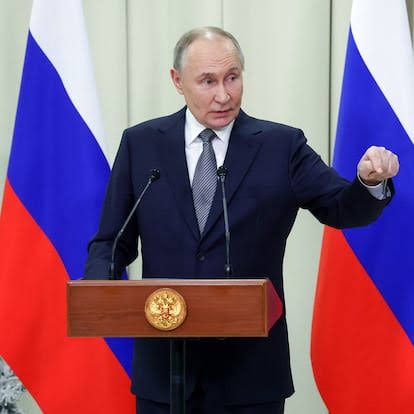
. Vladimir Putin, current president of the Russian Federation
The case highlights the growing weight of the informational dimension in international disputes. Beyond the military or economic sphere, competition between States also develops in the field of communication, where the ability to install narratives becomes a strategic factor
.
In this context, Russia's activity in Latin America reflects a commitment to consolidating its presence in the region through digital tools, in a global scenario where information has become a key resource of power.