
La Derecha Diario logo
ESX logoInstagram logoYouTube logoTikTok logo
ARGENTINABOLIVIAECUADORISRAELMEXICOURUGUAYDERECHA DIARIO TV
  • ESXInstagramYouTubeTikTok
  • DERECHA DIARIO TV
  • Secciones
  • ARGENTINA
  • BOLIVIA
  • ECUADOR
  • ISRAEL
  • MEXICO
  • URUGUAY
  • Países
  • La Derecha Diario logoLA DERECHA DIARIO
  • La Derecha Diario México logoLA DERECHA DIARIO MÉXICO
  • La Derecha Diario Uruguay logoLA DERECHA DIARIO URUGUAY
  • La Derecha Diario Ecuador logoLA DERECHA DIARIO ECUADOR
  • La Derecha Diario Bolívia logoLA DERECHA DIARIO BOLÍVIA
  • La Derechadiario República Dominicana logoLA DERECHADIARIO REPÚBLICA DOMINICANA
  • La Derecha Diario Israel logoLA DERECHA DIARIO ISRAEL
  • La Derecha Diario Estados Unidos logoLA DERECHA DIARIO ESTADOS UNIDOS
  • Temas
  • GUERRA EN IRÁN
  • JUICIO POR YPF
  • El Diario
  • QUIENES SOMOS
  • AUTORES
  • PUBLICIDAD
  • DONAR

The United States and China launch their own stations after the dismantling of the International Space Station

The United States and China launch their own stations after the dismantling of the International Space Station
porEditorial Team
Argentina

The withdrawal of the ISS in 2030 will mark the beginning of a new space race, with the United States redefining its strategy to sustain its orbital presence in the face of the Chinese advance

Compartir:

In a context of growing global competition, the reconfiguration of the American space plan—aligned with a vision of firm leadership such as that promoted by Donald J. Trump—exposes a central premise: space is no longer just exploration, but power. Faced with the Chinese advance, Washington seeks to avoid any strategic vacuum, even if that means abandoning old free market dogmas in favor of more direct control

.

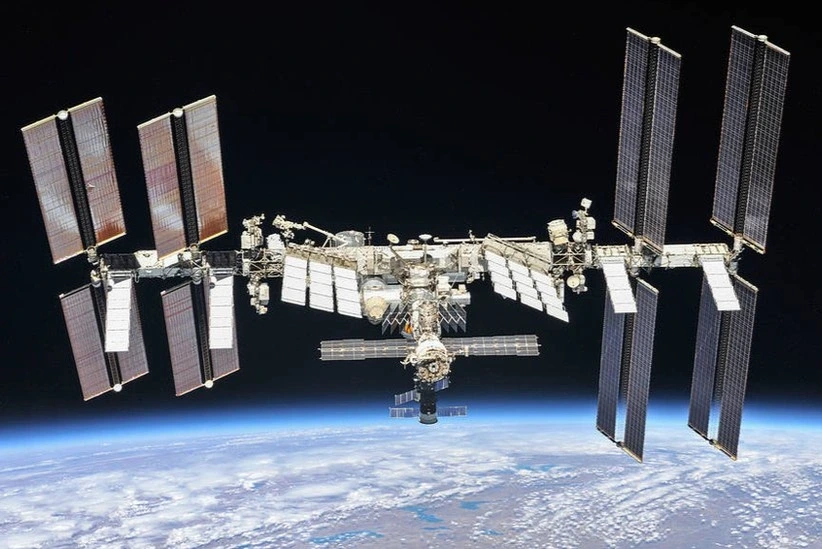
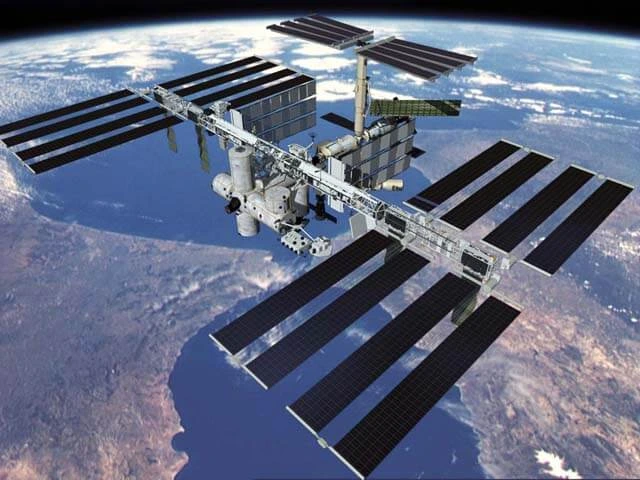
As the year 2030 approaches, the international space scene is moving towards a profound transformation. The imminent withdrawal of the International Space Station (ISS) marks the end of an era of global cooperation and opens the way to a new phase characterized by direct competition between powers. Both the United States and China are already preparing to occupy that space with their own stations, in a context that many already describe as a true “space war”.

In 2030, the International Space Station will begin to be confiscated.

In this framework, the United States faces a key challenge: to avoid being left without a presence in low Earth orbit when the ISS is confiscated. Far from being just a technological issue, the problem has an obvious geopolitical dimension. Washington is not willing to give way to the sustained growth of China, which already operates its Tiangong station and continues to expand its capabilities

in space.

For years, NASA opted for a strategy based on the promotion of the private sector. Through the CLD (Commercial Low Earth Orbit Destinations) program, it funded projects such as Axiom, Starlab and Blue Reef with the objective of building a self-sufficient commercial ecosystem in orbit. The idea was that these stations could offer services to governments, companies and even tourists, thus consolidating a dynamic space market

.

However, after more than two decades of commercial activity in orbit, the results have not lived up to expectations. NASA itself recognizes that no “revolutionary products” or scalable business models have emerged. Microgravity manufacturing failed to consolidate a solid industry, and space tourism remains a limited promise. In concrete terms, the market has not demonstrated the capacity to sustain orbital infrastructure on its own

.

This relative failure not only poses an economic problem, but also a strategic one. If the United States withdraws from low orbit without a robust alternative, the risk of a vacuum in human presence is real. And that vacuum could quickly be filled by China, a scenario that in Washington is considered directly unacceptable

.
Donald Trump
Donald Trump

Faced with this scenario, NASA decided to rethink its approach. The new plan leaves total dependence on the private sector and proposes a hybrid model with greater state control. Instead of delegating the development of complete stations, the agency plans to build a central core under its direct control: a module with its own energy, propulsion, life support and cooling systems, designed according to NASA standards but manufactured by private companies

.

From this core, commercial modules would be attached, giving shape to a more flexible architecture but with a crucial difference: initial control would no longer be in the hands of the market. This change seeks to ensure a seamless transition after the retirement of the ISS, reusing existing infrastructure, transferring equipment and, eventually, allowing these structures to be

separated and multiplied.
The International Space Station
The concept, described as a kind of “orbital mitosis”, is even reminiscent of the Russian model for its future ROS station.

In the long term, it could give rise to multiple stations derived from the same initial core, expanding the US presence in low orbit

.

This strategic shift completely reconfigures the space ecosystem. Some private companies, such as Axiom or Blue Origin, could adapt relatively easily to this new modular scheme.

However, other projects — such as Starlab, with strong European participation — face a more uncertain future and could require profound redesigns.

In addition, the decision was not agreed with traditional partners such as Europe, Canada or Japan, which introduces additional tensions in an area historically marked by international cooperation.

Behind all this redesign, a central issue persists: funding. Not only is NASA redefining the future of low orbit, but it is also maintaining enormous commitments such as the Artemis program, the development of a lunar base and other strategic projects. Sustaining all of these initiatives simultaneously involves significant budgetary pressure

.

Noticias relacionadas

North Korea launched missiles into the Sea of Japan again and raises tension to the maximum

North Korea launched missiles into the Sea of Japan again and raises tension to the maximum

The three key agreements that Milei and Netanyahu sealed to deepen the alliance between Argentina and Israel

The three key agreements that Milei and Netanyahu sealed to deepen the alliance between Argentina and Israel

Poland detains a soldier accused of spying for Russia and reinforces security alerts

Poland detains a soldier accused of spying for Russia and reinforces security alerts

Noboa blames Petro for the security crisis on the border with Colombia

Noboa blames Petro for the security crisis on the border with Colombia

Luisa González reappears in Spain with Gustavo Petro at the height of progressivism

Luisa González reappears in Spain with Gustavo Petro at the height of progressivism

Superclasico: the best memes left behind by Boca's victory at Monumental

Superclasico: the best memes left behind by Boca's victory at Monumental

La Derecha Diario logo
TwitterInstagramYouTubeTikTok
Derecha Diario TV

Nosotros

  • Quienes Somos
  • Autores
  • Donar

Privacidad

  • Protección de datos
  • Canales
  • Sitemap

Contacto

  • info@derechadiario.com.ar
PUBLICIDAD