In an unprecedented event that confirms the international appeal of Argentina's new economic direction, the state oil company of Abu Dhabi, ADNOC, is finalizing its entry into the Liquefied Natural Gas (LNG) project led by YPF. Under the management of Javier Milei, the country is moving toward becoming an energy-exporting powerhouse, with investments that could exceed 45 billion dollars and generate more than 50,000 jobs.
The Abu Dhabi National Oil Company (ADNOC), one of the four largest oil companies in the world, is about to join the mega Liquefied Natural Gas (LNG) production project headed by YPF together with multinationals Shell and ENI. The inclusion of the Arab giant could be formalized next week, during Adipec, a globally significant event to be held in the United Arab Emirates, where the president of YPF, Horacio Marín, will hold a key meeting with ADNOC authorities.
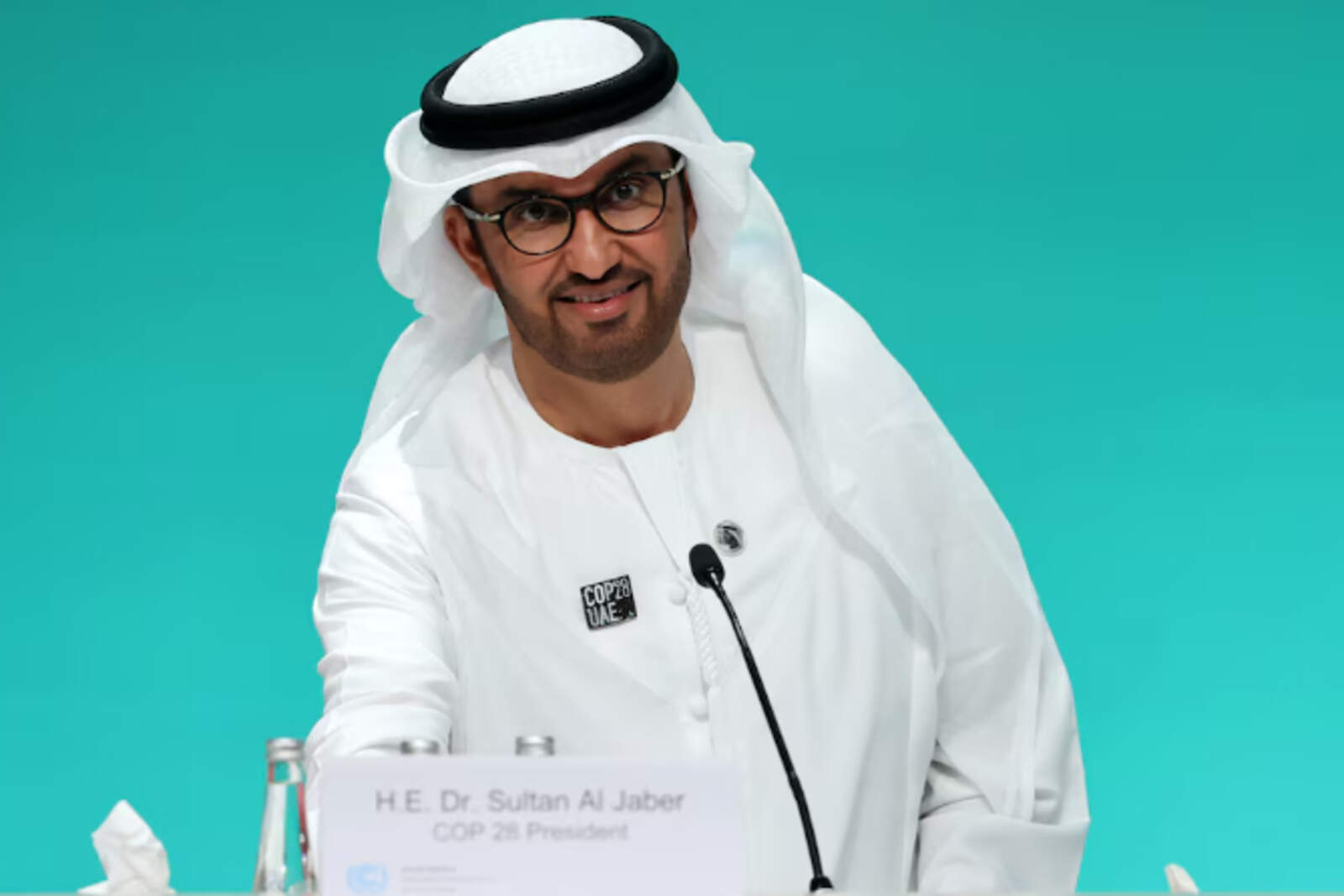
Dr. Sultan Ahmed Al Jaber.
The entry of ADNOC, considered a "global player" in the energy sector, would consolidate a top-tier international consortium, with equal participation from the four companies. The Argentine state company, strengthened by the new economic and regulatory framework promoted by the government of Javier Milei, is once again on the radar of the world's major capital investors.
Founded in 1971, ADNOC is responsible for the production, refining, storage, and distribution of oil and gas in Abu Dhabi. The company not only represents a substantial part of the GDP of the United Arab Emirates, but also leads energy transition and green hydrogen production projects, positioning itself as one of the most diversified oil companies on the planet.
According to consulted sources, ADNOC could operate in Argentina through XRG, its international subsidiary, expanding the Persian Gulf's presence in the Southern Cone.
The Argentina LNG project, led by YPF, foresees an initial production of 12 million tons per year of LNG (MTPA), expandable to 18 MTPA, with potential exports of USD 20 billion per year. The facility will include two floating liquefaction plants off the coast of Río Negro, each with a capacity of 6 MTPA, although the possibility of adding a third is not ruled out.
Italian ENI, headed by its CEO Claudio Descalzi, signed the final engineering agreement together with Horacio Marín in Buenos Aires, a step prior to the final investment decision (FID). Descalzi estimated that infrastructure investment will range between USD 25 billion and USD 30 billion, while Marín added that an additional USD 15 billion will be required for drilling and production expansion.
"It will be necessary to double current oil activity, which will generate about 50,000 direct and indirect jobs," said Marín, who indicated that financing will be structured through international loans for USD 20 billion, covering 70% of the total cost.
ADNOC, Abu Dabi.
The plan includes the construction of a 48-inch gas pipeline, with the capacity to transport up to 100 million cubic meters per day. "That gas pipeline will have seventy-five million cubic meters per day and can reach one hundred million with compressor plants. It exceeds the country's current annual production," explained Marín.
Phase one of Argentina LNG, led by Pan American Energy (PAE) together with Golar, YPF, Pampa Energía, and Harbour Energy, already has a final investment decision and plans to begin operations in 2027. The project plans to export LNG using two liquefaction vessels also located off the coast of Río Negro, with a total capacity of six million tons per year.
According to consulting firm Wood Mackenzie, Vaca Muerta is currently the largest unconventional hydrocarbon development outside North America. Meanwhile, Rystad Energy projects that floating LNG (FLNG) projects will reach their maximum capacity by the end of the 2030s, consolidating Argentina as a new global energy export hub.